5 Roommate Conflicts That Ruin Friendships Fast
You were so excited when your best friend said yes to splitting rent. You already knew each other's quirks, you laughed at the same jokes, and you figured living together would be like an extended sleepover. Fast forward six months: you haven't spoken in three days, there's a passive-aggressive note on the fridge about almond milk, and you're genuinely wondering if this friendship can survive until the lease ends.
You're not alone. Roommate conflicts that ruin friendships are staggeringly common — and they almost always follow predictable patterns. The cruel irony is that the closeness that made you want to live together is exactly what makes these conflicts so devastating. With a stranger, you can shrug off a dirty dish. With a friend, that dirty dish carries the weight of "I thought you respected me."
This article breaks down the five conflicts that most frequently turn friend-roommates into former friends — and what you can actually do about each one before the damage is done.
Key Takeaways
- The friendship premium makes everything harder. Conflicts with a friend-roommate feel like personal betrayals in a way that conflicts with a stranger simply don't. Recognizing this emotional amplification is the first step.
- Money and cleanliness aren't really about money and cleanliness. These surface-level disputes almost always mask deeper issues around respect, fairness, and feeling valued.
- Unspoken expectations are the #1 destroyer. Most friend-roommates skip the "awkward" conversations because they assume closeness equals alignment. It doesn't.
- Written agreements aren't cold — they're protective. Putting things in writing before conflict arises actually preserves warmth by removing guesswork.
- Addressing tension early is an act of love, not aggression. The longer you wait, the more resentment compounds.

Why Living With a Friend Is a Completely Different Game
Before diving into the five conflicts, it's worth understanding why friend-roommate disputes hit differently.
When you move in with a stranger from Craigslist or a Facebook group, there's a built-in emotional buffer. You expect some friction. You establish ground rules because you have to — you don't know this person. And if things go south, you lose a roommate, not a decade of memories.
With a friend, that buffer doesn't exist. Instead, you operate on a set of dangerous assumptions:
- "They already know what bothers me."
- "Bringing this up will make things weird."
- "If they really cared, they'd just notice."
- "We're close enough to figure it out as we go."
These assumptions are friendship logic, not roommate logic. And when the two collide, both the living situation and the friendship take damage simultaneously.
Let's look at where this plays out most destructively.
1. The Money Mismatch Nobody Talked About
What It Looks Like
One of you earns significantly more — or spends significantly differently — and no one acknowledged it before signing the lease. Maybe your friend suggests splitting a premium streaming bundle, upgrading the internet, or furnishing the living room at West Elm. To them, it's a reasonable quality-of-life improvement. To you, it's another $80 you didn't budget for.
Or the reverse: you keep suggesting nice dinners and group activities, oblivious to the fact that your friend is quietly panicking about their credit card balance.
Why It Ruins Friendships
Money conflicts between friend-roommates are uniquely painful because they force both people to confront an inequality they could politely ignore before. When you only saw each other for dinners and hangouts, financial differences were easy to navigate — each person could opt in or out. Under one roof, every shared expense becomes a negotiation, and opting out feels like a rejection.
The friend earning less feels embarrassed, then resentful. The friend earning more feels generous, then taken for granted. Neither says anything because "talking about money is awkward," and the silence festers.
What to Do Instead
- Have the income conversation before move-in. It doesn't have to be exact numbers, but a general "here's what I'm comfortable spending monthly" exchange is non-negotiable.
- Split proportionally, not equally, if incomes differ significantly. A 60/40 split on rent based on income — or giving the higher earner the bigger room at a higher price — removes ongoing tension.
- Create a shared expenses protocol. Agree on a monthly cap for shared household purchases. Anything above that cap requires a conversation.
- Use separate accounts for shared bills. Venmo requests between friends feel transactional, but a shared expense tracker (Splitwise, for example) makes it systematic rather than personal.
2. The Cleanliness Cold War
What It Looks Like
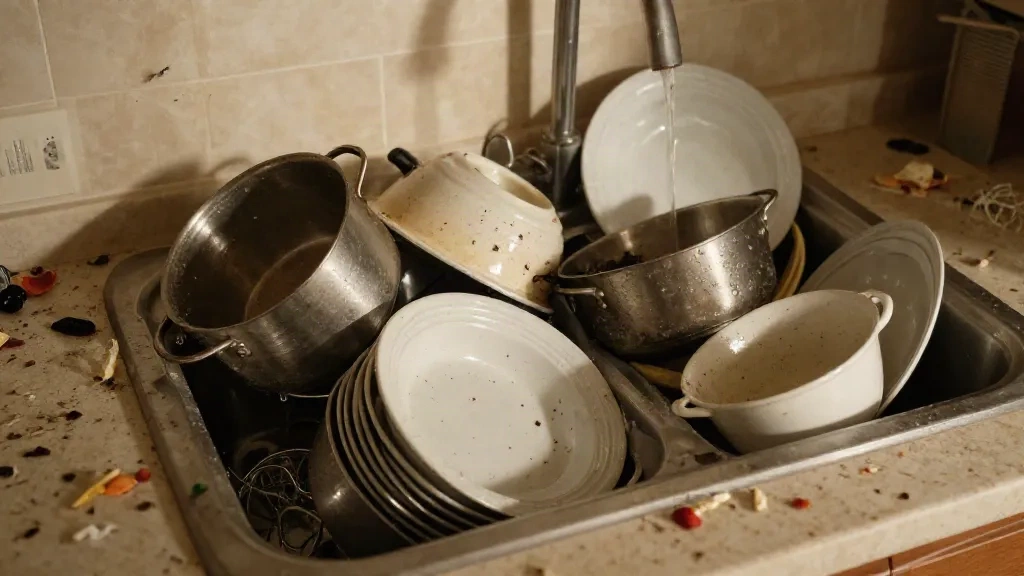
You wipe down counters after cooking. Your friend leaves a pan "soaking" for 36 hours. You consider this disrespectful. They consider you uptight. Neither of you says a word for two weeks, but you both feel it every time you walk into the kitchen.

Or maybe the roles are reversed — your friend maintains the common areas in silent martyrdom, growing more resentful with each load of dishes they wash that aren't theirs, while you remain blissfully unaware that anything is wrong.
Why It Ruins Friendships
Cleanliness conflicts are rarely about cleanliness. They're about respect and reciprocity. When your friend leaves a mess, what you actually think is: "They don't care about my comfort in my own home." When your friend nags you about a mess, what you actually think is: "They're trying to control me."
Between strangers, this gets resolved with a chore chart and a house meeting. Between friends, it triggers a much darker thought: "I thought I knew you. How can you live like this?"
What to Do Instead
- Define "clean" out loud. Seriously. One person's clean is another person's barely acceptable. Walk through each shared space and agree on a specific standard — not "keep the kitchen clean" but "dishes washed within 12 hours, counters wiped after cooking, trash taken out when full."
- Assign areas, not tasks. Rather than a rotating chore wheel (which requires tracking and breeds resentment), assign each person ownership of specific areas. You own the kitchen, they own the bathroom. Ownership breeds accountability.
- Set a weekly 20-minute reset. Pick a time — Sunday evening, for example — when you both spend 20 minutes tidying shared spaces together. Side-by-side effort prevents the "I'm the only one who cleans" narrative.
3. The Guest (or Partner) Who Basically Moved In
What It Looks Like
Your friend starts dating someone. Wonderful! Except now that someone is at your apartment five nights a week, using your Wi-Fi, eating food from the shared shelf, and occupying the bathroom during your morning routine. You signed up for one roommate, and you effectively have two.
Or it's not a partner — it's a rotating cast of friends who hang out in the living room until 1 a.m. on weeknights.
Why It Ruins Friendships
This conflict is an emotional minefield because raising it feels like attacking your friend's relationship or social life. You're not just saying "your guest is here too much" — you're saying something that sounds like "your partner isn't welcome" or "your other friends bother me." That's a deeply personal critique dressed up as a logistics complaint.
Friend-roommates often tolerate this situation far longer than stranger-roommates would, precisely because the stakes feel higher. By the time someone finally says something, months of resentment have accumulated, and the conversation lands like a bomb rather than a nudge.
What to Do Instead
- Establish a guest policy before anyone is dating anyone. This is infinitely easier when it's hypothetical. Something like: "Overnight guests more than two nights a week means we should talk about how it's affecting shared space."
- Frame it around impact, not judgment. "I need the apartment to myself a couple of evenings a week to decompress" is very different from "your boyfriend is here too much."
- Address utility costs directly. If a guest is functionally living there, it's reasonable to discuss splitting utilities three ways. Present it as fairness, not punishment.
4. The Noise and Schedule Collision
What It Looks Like
You work from home and need quiet mornings. Your friend works the service industry and comes home at midnight, winding down with TV and a late-night snack. Neither schedule is wrong, but they are fundamentally incompatible in a shared space without intentional management.

Or maybe it's subtler: one person takes work calls in the living room all day, one person plays music without headphones, one person's alarm goes off three times before they actually get up.
Why It Ruins Friendships
Noise and schedule conflicts create a sense of being trapped in your own home. You start dreading your roommate's presence — not because you don't like them, but because their existence in the apartment disrupts your ability to function. That dread curdles quickly into resentment, and resentment between friends feels like betrayal.
The friend dimension makes this worse because you feel guilty for being annoyed. "They're not doing anything wrong," you tell yourself, while your jaw clenches every time you hear their key in the door.
What to Do Instead
- Map out your schedules before move-in. Literally compare a typical Monday through Sunday. Where do your routines overlap in shared spaces? Where do they clash?
- Designate quiet hours. Not as a punishment, but as a mutual agreement. "After 10 p.m. and before 8 a.m., we keep common areas at a low volume" protects everyone.
- Invest in physical boundaries. A white noise machine, a good pair of headphones, or even a simple "do not disturb" sign for a bedroom door can defuse 80% of noise-related tension.
- Build in buffer time. If your schedules are drastically different, agree on one or two shared meals or hangouts per week so the friendship has a space to breathe outside of logistics.
5. The Unspoken Expectation of Built-In Best-Friend Time
What It Looks Like
One of you moved in expecting a built-in social life — movie nights, cooking together, always having someone to talk to. The other moved in expecting to save on rent and have a comfortable place to recharge alone. Neither communicated these expectations, and now one person feels rejected while the other feels suffocated.
This is the roommate conflict that ruin friendships most insidiously because it doesn't look like a conflict at all. There's no dirty dish, no unpaid bill, no loud music. Just a slow, quiet erosion of the friendship as both people feel misunderstood.
Why It Ruins Friendships
Before living together, your friendship had natural rhythm — you chose when to hang out, which meant every interaction was intentional. Now, proximity replaces intention. You see each other in pajamas, in bad moods, in the boring mundanity of daily life. For one person, that's intimacy. For the other, it's overexposure.
The friend who wanted connection starts interpreting closed bedroom doors as personal rejection. The friend who wanted space starts feeling trapped and performative, pretending to be "on" when they just want to eat cereal in silence. Both start avoiding each other, and the avoidance creates the very distance the friendship couldn't afford.
What to Do Instead
- Name your social needs explicitly. "I'm an introvert who needs a few evenings alone each week to recharge" is not an insult. It's information that protects the friendship.
- Schedule intentional friend time. This sounds overly structured, but it works. A weekly Wednesday dinner or a Saturday morning coffee run gives your friendship dedicated space that doesn't depend on proximity.
- Normalize the closed door. Agree early on that a closed bedroom door means "I need space" and that it's never personal. Remove the guesswork.
- Maintain outside social lives. The healthiest friend-roommate pairs are the ones who don't rely exclusively on each other for social fulfillment. Keep seeing other friends, pursuing solo hobbies, and leaving the apartment independently.
The Thread That Connects All Five Conflicts
Look at these five scenarios again. Every single one traces back to the same root cause: unspoken expectations amplified by emotional closeness.
With a stranger, you'd have the awkward conversation because you'd have no choice. With a friend, you skip it because you assume the friendship will handle it. It won't. Friendship is not a substitute for clarity.
The single most protective thing friend-roommates can do is create a written roommate agreement before — or immediately after — moving in. Not a legal document. Not a formal contract. Just a simple, shared record of what you've agreed to: guest policies, cleanliness standards, quiet hours, how you'll split costs, and how you'll raise issues when they come up.
Consider formalizing your agreements with a tool like Servanda before conflicts escalate — having a structured, written reference point removes the emotional charge of "I thought we agreed on this" arguments and makes revisiting terms feel routine rather than confrontational.
How to Have the Hard Conversation (Without Blowing Up the Friendship)
If you're already in one of these conflicts, here's a framework that works:
- Lead with the friendship. "I care about our friendship and I care about living here being good for both of us. That's why I want to bring something up."
- Describe impact, not character. "When dishes sit in the sink for a few days, I feel stressed in the kitchen" — not "You're messy."
- Propose, don't demand. "Could we try a system where we each handle dishes within a day? I'm open to other ideas too."
- Listen for the underneath. If they get defensive, they're probably feeling criticized. Acknowledge that. "I'm not saying you're doing anything wrong. I'm trying to make sure we're both comfortable."
- Follow up in writing. After the conversation, send a casual text: "Thanks for talking that out. Just so we're on the same page — we agreed to X, Y, and Z. Sound right?" This isn't paranoia. It's care.
Frequently Asked Questions
How do you resolve roommate conflict without ruining the friendship?
Address issues early, before resentment builds. Frame every conversation around the shared goal of protecting both the living situation and the friendship. Focus on specific behaviors and logistics rather than personality critiques, and always propose solutions rather than just airing complaints.
Should you live with your best friend?
It depends entirely on whether you're both willing to have uncomfortable conversations proactively. The friendships that survive roommate life are the ones where both people treat the living arrangement as its own relationship that needs explicit rules and regular check-ins — separate from the friendship itself.
What's the biggest mistake friend-roommates make?
Assuming that closeness eliminates the need for clear agreements. Friends actually need more structure than strangers because the emotional stakes are higher. The most common regret among former friend-roommates is "we should have talked about that before it became a problem."
How do you tell your roommate something bothers you without being confrontational?
Use "I" statements focused on your experience rather than "you" statements focused on their behavior. For example, "I have a hard time sleeping when there's noise in the living room after midnight" is much easier to receive than "You're too loud at night." Timing matters too — bring it up during a calm, neutral moment, never in the heat of frustration.
Is it normal for roommates who are friends to fight?
Absolutely. Sharing a living space with anyone — friend, partner, family member — creates friction. The question isn't whether conflict will happen, but whether you've built a way to handle it that doesn't require either person to choose between their comfort and the friendship.
Protect the Friendship Before the Lease Does the Damage
Living with a friend can be one of the best chapters of your life — or one of the most painful. The difference almost never comes down to compatibility. It comes down to preparation.
The five conflicts outlined here — money mismatches, cleanliness wars, uninvited guests, schedule collisions, and unspoken expectations about togetherness — are predictable. That means they're preventable. Not through vague promises to "just talk about stuff," but through specific, written, mutually agreed-upon standards that take the guesswork out of cohabitation.
Your friendship survived years without a shared kitchen. Give it the structure it needs to survive one with a lease attached. Have the awkward conversation today. Write down what you agree to. And remember: the friend who's willing to set boundaries with you is the friend who plans on keeping you around.