5 Roommate Conflicts That Seem Small But Ruin Lives
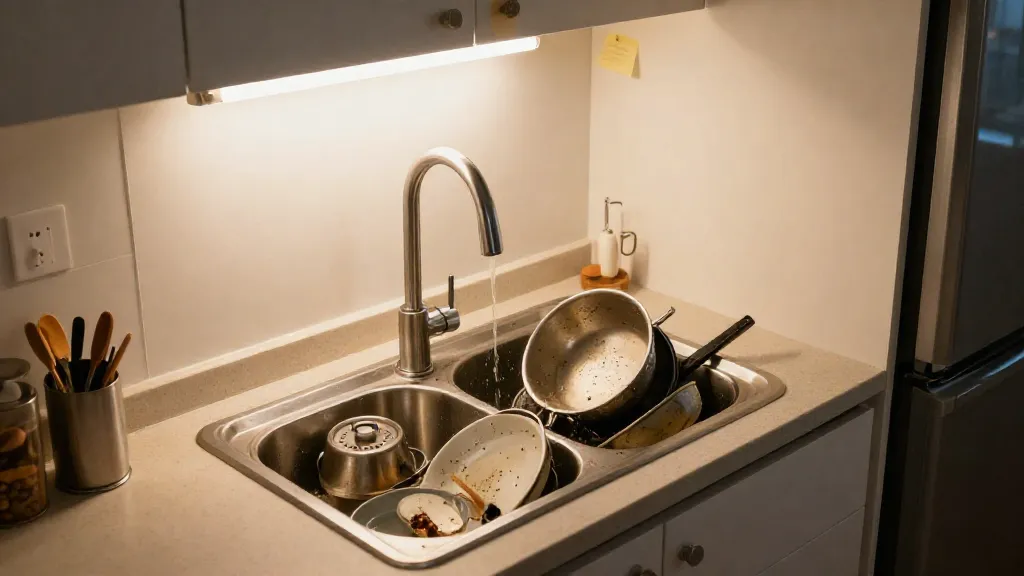
There's a post on Reddit that's haunted me since I first read it. A user described how a single unwashed pan—left in the sink on a Tuesday night—became the reason they lost their best friend of twelve years. Not the pan itself, obviously. But the pan was the first domino. It led to passive-aggressive sticky notes, then silent treatment, then a screaming match at 1 a.m., then a lease broken two months early with neither person speaking to the other again.
The comment section was full of people saying the same thing: "This happened to me too."
Roommate conflicts rarely start as blowouts. They start as eye rolls. A bitten tongue. A "whatever, it's not worth bringing up." But those small irritations don't dissolve—they calcify. And by the time you finally say something, you're not arguing about dishes anymore. You're arguing about respect, boundaries, and whether this person even cares about you at all.
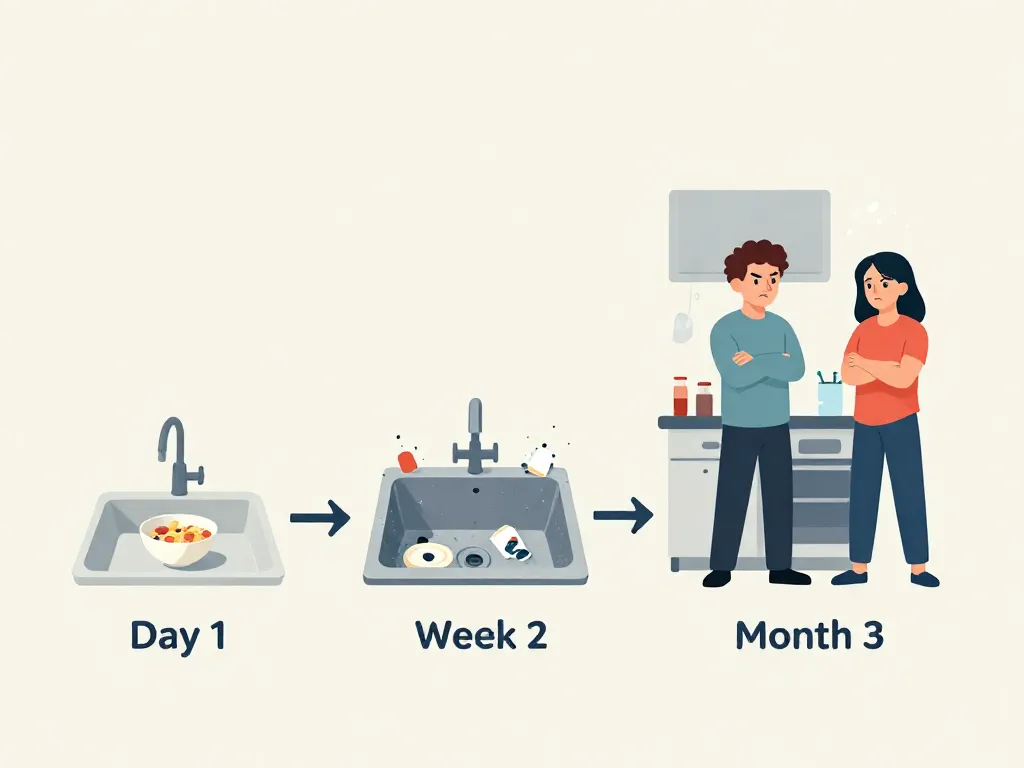
Here are five conflicts that seem trivial on day one and become unbearable by month three—plus what to do before you reach that point.
Key Takeaways
- Small roommate conflicts compound over time. A single unwashed dish isn't a problem; a pattern of unwashed dishes is a statement about respect.
- The most dangerous moment is when you decide "it's not worth mentioning." That silence doesn't prevent conflict—it delays and amplifies it.
- Written agreements aren't overkill; they're insurance. Putting expectations on paper before friction starts removes the awkwardness of bringing them up later.
- Early, specific, low-stakes conversations prevent late, vague, high-stakes explosions. Address the behavior, not the character.
- Most roommate fallouts aren't caused by bad people—they're caused by mismatched assumptions. What's "normal" to you may be unthinkable to someone else.
1. The Dish Standoff: When Cleanup Becomes a Power Struggle
How It Starts
Your roommate leaves a cereal bowl in the sink. You wash it because it takes ten seconds and you're not petty. The next day, there's a pot with dried pasta stuck to it. You leave it this time, figuring they'll get to it. They don't. By Friday, the sink is a biohazard and you're furious—not about the dishes, but about the fact that you're apparently the only person in this apartment who functions like an adult.
A Quora user put it perfectly: "I didn't mind doing dishes. I minded being the only one who minded."
Why It Escalates
Dishes are never really about dishes. They're a proxy for a deeper question: Who carries the invisible labor in this household? When one person consistently cleans up and the other doesn't, a parent-child dynamic forms. The cleaner starts to resent the mess-maker. The mess-maker starts to resent being monitored. Neither person signed up for this dynamic, but neither knows how to name it.
What Actually Works
- Agree on a specific, measurable standard. "Keep the kitchen clean" means different things to different people. "All dishes washed or in the dishwasher before bed" is a standard you can actually hold each other to.
- Create a rotation if shared cleaning is the plan. Apps like shared chore charts work, but so does a simple whiteboard on the fridge.
- Bring it up the second time it happens, not the twentieth. The second time is a pattern worth mentioning. The twentieth time is a grudge.
2. Noise and Sleep Schedules: The Conflict You Can't Compromise Away
How It Starts
You have a 7 a.m. alarm. Your roommate has a 7 a.m. bedtime. Or maybe it's subtler than that—they take phone calls on speaker in the living room at 11 p.m., or their alarm goes off six times every morning because they're a serial snooze-button offender.
One Reddit user described it this way: "My roommate wasn't loud. She just existed at the wrong hours. The blender at 6 a.m. The TV at midnight. She wasn't doing anything wrong. Our lives just didn't overlap."
Why It Escalates
Sleep deprivation changes your brain chemistry. It makes you irritable, paranoid, and unable to give anyone the benefit of the doubt. After a week of broken sleep, your roommate's normal speaking voice sounds like an act of aggression. After a month, you start to believe they're doing it on purpose.
This is the roommate conflict with the shortest fuse. People can tolerate a messy kitchen for months. They can tolerate lost sleep for about ten days before they snap.
What Actually Works
- Map out your schedules before you move in together—or as soon as you realize there's a mismatch. This isn't about controlling each other's lives. It's about identifying the friction windows (the hours where one person needs quiet and the other is active).
- Establish "quiet hours" as a household norm, not a personal favor. When quiet hours are framed as a shared agreement rather than one person's demand, they're much easier to follow.
- Invest in physical solutions. A white noise machine, a good pair of earplugs, a rug under the desk chair—these small purchases can eliminate 80% of noise friction.
- Headphones after 10 p.m. is a reasonable, specific agreement. It's not about policing behavior; it's about respecting shared walls.

3. The Uninvited Guest: When Their Social Life Invades Your Home
How It Starts
Your roommate's partner starts coming over on weekends. Then weekdays. Then you notice their shampoo in the shower and their shoes by the door. You didn't agree to a third roommate, but functionally, you have one—and they're not paying rent.
Or maybe it's not a partner. Maybe your roommate hosts friends three nights a week, and you come home to a living room full of people when all you wanted was to eat leftovers in your pajamas in silence.
Why It Escalates
This conflict hits at something primal: the feeling of not being safe in your own home. Your apartment is supposed to be the one place where you can decompress. When someone else's social calendar dictates the energy of your space, you lose that refuge. And the resentment builds fast because the intrusion feels so personal—even when your roommate genuinely doesn't realize they're doing anything wrong.
A Reddit user in a particularly painful thread wrote: "I stopped going to the living room. Then I stopped going to the kitchen when they were there. Eventually I was paying $900/month to live in my bedroom."
What Actually Works
- Set a guest policy before there's a specific guest to argue about. This removes the personal sting. You're not saying "I don't like your boyfriend." You're saying "We both agreed overnight guests are capped at three nights a week."
- Define "overnight" explicitly. Does it mean sleeping over? Does it mean being present past midnight? Different people have different definitions, and the ambiguity is where conflict hides.
- Address the cost issue directly if a guest is using shared resources. Extra showers, utilities, groceries—these add up. It's not petty to bring it up. It's honest.
- Use "I" statements that focus on your experience, not their behavior. "I feel like I can't relax in the common areas" lands differently than "You always have people over."
4. Money and Shared Expenses: The Awkwardness That Becomes Rage
How It Starts
You split groceries, and your roommate buys $40 worth of organic snacks that only they eat. Or you Venmo-request your half of the electric bill, and they "forget" to pay it three months in a row. Or they suggest splitting dinner when they ordered a $25 entrée and you had a side salad.
Money conflicts between roommates have a unique toxicity because they combine two things people hate talking about: finances and fairness.
Why It Escalates
When someone owes you money, every interaction gets filtered through that debt. You watch them order DoorDash and think, "You can afford that but not the $47 you owe me for internet?" You stop seeing a roommate and start seeing a ledger. And because most people find it deeply uncomfortable to talk about money, the debt just... sits there, growing barnacles of resentment.
A Quora user captured the emotional spiral: "I didn't want to be the person who brought up $20. But after three months of being shorted on bills, I realized I'd lost $200 and a friendship."
What Actually Works
- Use a bill-splitting app from day one. Splitwise, Venmo, or even a shared spreadsheet removes the need for anyone to be the "bill collector." The app is the bad guy, not you.
- Separate what can be separated. If grocery sharing creates friction, stop sharing groceries. Assign shelves in the fridge. This isn't a failure of community—it's a recognition that financial boundaries protect relationships.
- Agree on a payment deadline for shared bills. "Rent and utilities paid by the 3rd of every month" eliminates the ambiguity that lets people "forget."
- Have the awkward conversation when the amount is small. It's infinitely easier to say "Hey, can you Venmo me for the electricity?" when it's $30 than when it's $300.
5. Temperature and Shared Spaces: The War of the Thermostat
How It Starts
You like the apartment at 72°F. Your roommate likes it at 66°F. You adjust the thermostat. They adjust it back. Nobody says anything. You both just silently nudge it in opposite directions for weeks like some kind of passive-aggressive chess match.
Or it's not the thermostat. It's the living room TV being permanently tuned to a show you hate. Or the bathroom counter covered in someone else's products. Or the shared closet that's 90% their stuff.
Why It Escalates
These conflicts feel too petty to bring up, which is exactly what makes them so dangerous. You can't bring yourself to say, "Can we talk about the thermostat?" because it sounds ridiculous. So you suffer in silence—sweating or freezing—and the irritation leaks out sideways. You become snappish about unrelated things. You start avoiding common spaces. The apartment stops feeling like a shared home and starts feeling like a cold war.
The danger here is the meta-conflict: the fact that you feel you can't bring it up becomes its own source of frustration.
What Actually Works
- Name the absurdity and lean into it. "I know this sounds silly, but can we figure out a thermostat situation that works for both of us?" Acknowledging that it feels trivial actually makes the conversation easier, not harder.
- Find the third option. Instead of fighting over 66 vs. 72, try 69 with a personal space heater or fan. Most of these conflicts have creative solutions that neither person thinks of because they're stuck in a binary.
- Assign zones where possible. If the bathroom counter is a battleground, divide it with a visual marker. If the living room TV is contested, alternate nights or agree on a shared-show list.
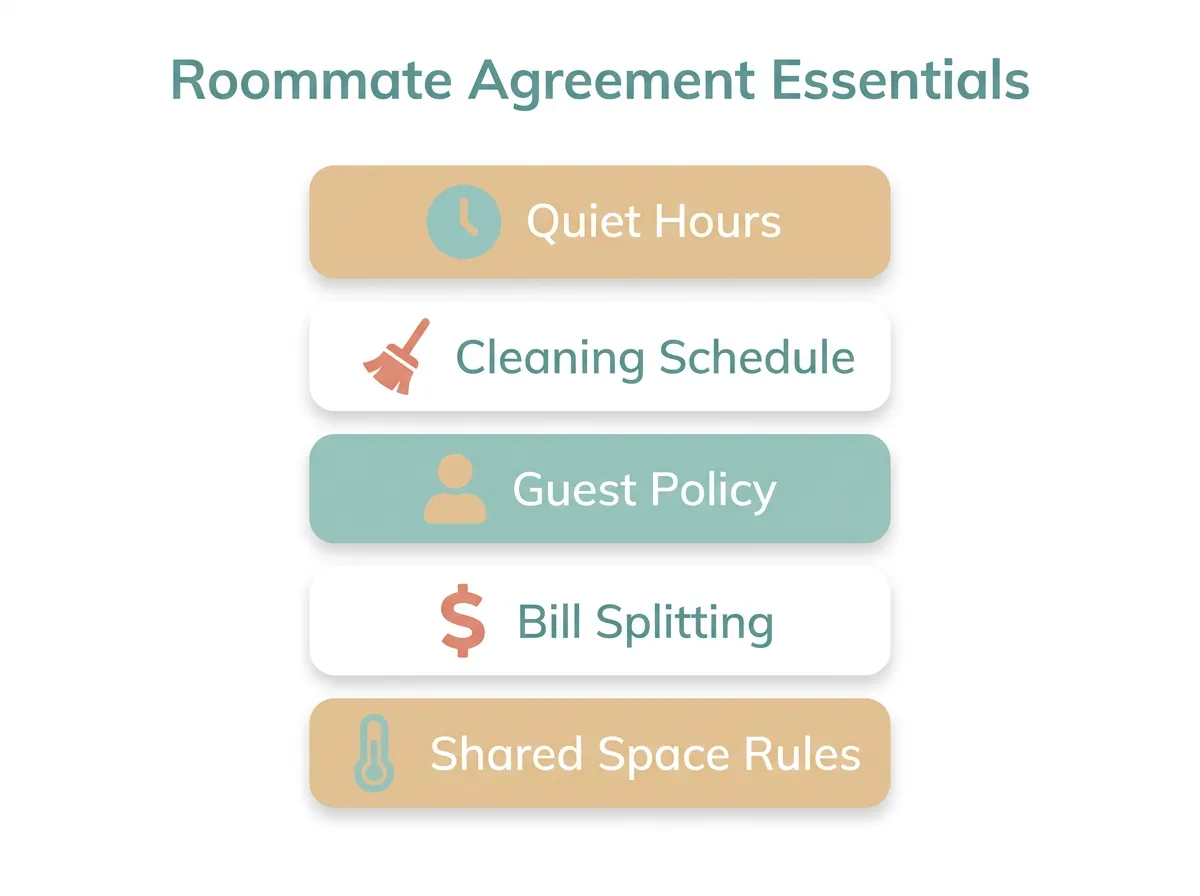
- Write it down. This is where many roommates roll their eyes—but putting your agreements in writing transforms them from verbal promises (easily forgotten or reinterpreted) into reference documents. Tools like Servanda help roommates formalize these kinds of agreements before they become emotional flashpoints, which is especially useful when you're drafting terms for everything from quiet hours to thermostat settings.
The Pattern Behind All Five Conflicts
If you read through these five scenarios, you'll notice a shared structure:
- A minor irritation occurs. (Dishes in the sink. A degree on the thermostat.)
- Someone decides it's not worth mentioning. ("I don't want to be dramatic.")
- The irritation repeats and becomes a pattern. (Now it's not one dish—it's every dish, every day.)
- The pattern gets interpreted as a character flaw. ("They're lazy." "They don't respect me.")
- The explosion happens over something trivial. ("You left the light on" becomes a 45-minute argument about everything.)
The intervention point is step two. The moment you think, "It's not worth mentioning," that's your signal that it absolutely is worth mentioning—while it's still small, while the stakes are low, while you can still bring it up with a smile instead of a scream.
How to Have the Small Conversation Before It Becomes the Big One
- Be specific, not general. "Could you wash your dishes before bed?" works. "Could you be cleaner?" doesn't.
- Frame it as a system problem, not a person problem. "I think we need a system for dishes" is easier to hear than "You need to wash your dishes."
- Propose a solution, not just a complaint. Bringing an idea to the table signals that you're trying to solve a problem, not start a fight.
- Do it in person, not over text. Tone doesn't translate in writing. A casual "Hey, can we figure out the guest situation?" over coffee reads very differently from a text that says the same words.
FAQ
How do I bring up a small roommate issue without making it awkward?
The key is to raise it when you're calm—not when you're annoyed. Frame it as a logistics question, not an accusation. Something like, "Hey, can we sort out a system for [dishes/guests/bills]?" signals collaboration, not criticism. The earlier you bring it up, the less emotional charge it carries.
Is a roommate agreement really necessary?
It might feel like overkill, but written agreements are the single most effective tool for preventing roommate conflicts from escalating. They don't have to be formal or legalistic—a shared Google Doc with your agreed-upon norms (quiet hours, guest policies, cleaning responsibilities) gives you something concrete to reference when memories and expectations diverge.
What do I do if my roommate gets defensive when I bring up a problem?
Defensiveness usually means someone feels attacked. Reframe the conversation away from blame: "I'm not saying you're doing anything wrong—I just want to make sure we're on the same page about [X]." If they remain defensive, suggest revisiting the conversation after some time. Some people need to process before they can engage productively.
How do I know if a roommate conflict is worth addressing or if I should let it go?
Ask yourself: "If this happens ten more times, will I still be fine with it?" If the answer is no, bring it up now. The whole point is to address things when they're still small enough to resolve without drama. If you're already fantasizing about a passive-aggressive sticky note, it's past time to talk.
Can a bad roommate situation actually affect your mental health?
Absolutely. Research consistently shows that housing instability and interpersonal tension at home contribute to anxiety, depression, and sleep disorders. Your home is your nervous system's safe zone. When that environment becomes tense or unpredictable, your stress response stays activated. Taking roommate conflicts seriously isn't being dramatic—it's protecting your wellbeing.
Moving Forward
None of these five conflicts—dishes, noise, guests, money, shared spaces—are inherently life-ruining. A pan in the sink is just a pan. A degree on the thermostat is just a degree. What ruins relationships isn't the issue itself. It's the silence around it. The weeks of swallowed frustration. The assumption that your roommate should just know what bothers you.
They don't know. And you wouldn't know their pet peeves either, unless they told you.
The most resilient roommate relationships aren't the ones where nobody gets annoyed. They're the ones where both people feel safe enough to say, "Hey, this small thing is bugging me—can we figure it out?" That's the whole intervention. One honest sentence, delivered early, in good faith.
Don't wait for the explosion. Have the boring conversation now. Your future self—and your friendship—will thank you.