5 Roommate Fights Everyone Has (And How to Fix Them)
It's 11:47 PM on a Tuesday. You have a presentation at 8 AM. And your roommate just invited six friends over for an impromptu movie night — complete with a speaker that could rattle fillings loose. You're lying in bed, jaw clenched, composing a text message you'll either regret sending or regret not sending.
Sound familiar? You're not broken, and neither is your living situation. These roommate fights are so universal they're practically a rite of passage. A 2023 survey by Apartment List found that nearly 70% of renters who've had roommates report experiencing recurring conflicts — most commonly over cleanliness, noise, and shared expenses. The good news? Every single one of these fights is fixable, not with vague advice about "just talking it out," but with specific strategies, actual scripts, and a willingness to treat your shared home like what it is: a partnership.
This guide breaks down the five most common roommate fights and gives you concrete, tested ways to resolve each one — starting tonight.
Key Takeaways
- The five most common roommate fights center on chores, noise, guests, shared expenses, and personal space — and every one of them is solvable with the right approach.
- Scripts work better than silence. Having exact phrases ready removes the anxiety of confrontation and keeps conversations productive.
- Written agreements aren't overkill — they're the single most effective way to prevent recurring arguments.
- Timing matters as much as wording. Raising issues when you're calm (not mid-frustration) changes the entire outcome.
- Fights are symptoms, not the disease. Most roommate conflicts stem from mismatched expectations, not bad character.

Fight #1: The Chore War
What It Looks Like
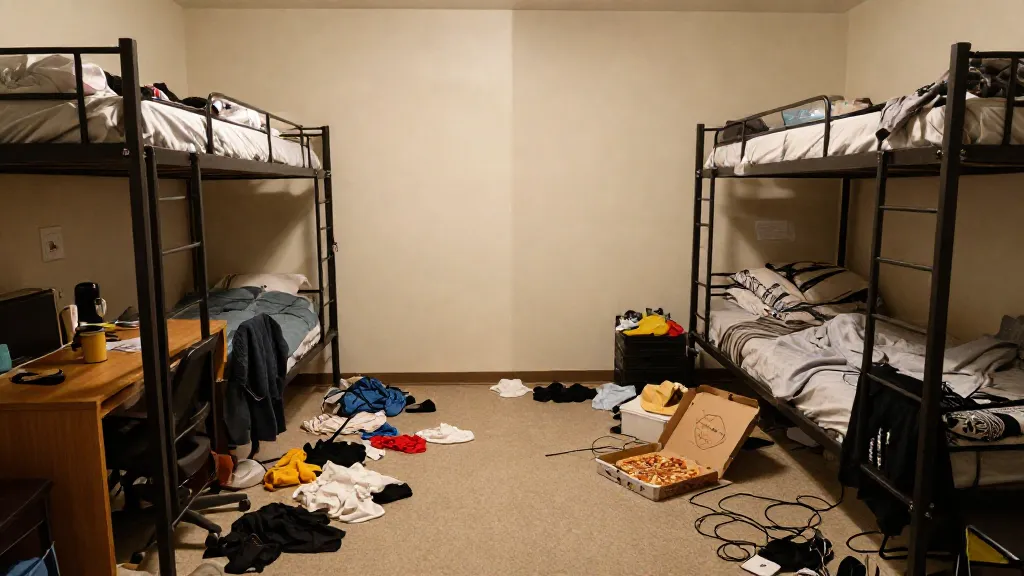
Dishes crusted over in the sink. A bathroom that hasn't been cleaned since move-in day. A passive-aggressive sponge placement that somehow communicates more anger than words ever could. The chore war is the single most reported roommate conflict, and it escalates fast because it's not really about dishes — it's about feeling like you're carrying an unfair load.
Why It Happens
People grow up with wildly different cleanliness standards. Your roommate who leaves crumbs on the counter isn't trying to disrespect you; they genuinely might not register it as messy. Meanwhile, you're staring at those crumbs like they're a personal insult. Neither standard is objectively "right," which is exactly what makes this fight so sticky.
How to Fix It
Step 1: Define "clean" together. Sit down and literally walk through the shared spaces. What does a clean kitchen look like to each of you? Get specific. "Clean" means wiped counters, dishes washed within two hours, and trash taken out when full — not "things are generally tidy."
Step 2: Build a rotation, not a wishlist. Use a simple weekly chore chart. Alternate tasks so nobody is permanently stuck scrubbing toilets. Digital tools like shared Google Sheets or Notion boards work well for this.
Step 3: Use this script when things slip:
"Hey, I noticed the kitchen hasn't been wiped down this week. I know we're both busy — can we reset on our rotation starting Monday?"
This script works because it references an existing agreement (the rotation), avoids blame, and proposes a specific action.
What doesn't work: Cleaning your roommate's mess yourself and seething about it. Posting chore charts without discussing them first. Weaponizing cleanliness as moral superiority.
Fight #2: The Noise Battle
What It Looks Like
Loud music at midnight. Alarm clocks that go off for 45 minutes. Phone calls on speaker in the living room. Video games with the volume cranked. The noise battle is especially destructive because it impacts sleep, and sleep deprivation makes every other conflict worse.

Why It Happens
Noise tolerance is deeply personal and often tied to how someone grew up. A person who shared a room with three siblings might barely notice a TV blaring at 1 AM. Someone who grew up in a quiet house might feel their nervous system spike when a door closes too hard.
How to Fix It
Step 1: Establish "quiet hours." This doesn't have to be militant — just a shared understanding. For example: after 10 PM on weeknights and 12 AM on weekends, keep noise to headphone level.
Step 2: Invest in solutions, not arguments. A $20 pair of earplugs, a white noise machine, or a headphone agreement can save months of tension.
Step 3: Use this script for the first conversation:
"I've been having trouble sleeping on weeknights when there's noise past 10. Could we try quiet hours on work nights and see how it goes? I'm flexible on weekends."
The phrase "see how it goes" signals that this is a trial, not a demand. It gives your roommate room to say yes without feeling controlled.
Step 3b: When it happens in the moment:
"Hey, I've got an early morning — would you mind switching to headphones? I really appreciate it."
Direct, polite, and specific. No sighing. No slamming doors. Just a clear request.
Fight #3: The Guest Problem
What It Looks Like
A significant other who's over five nights a week but doesn't pay rent. Friends who treat your apartment like a hangout spot every Friday. Guests who use your food, your towels, and your patience. Or the reverse: a roommate who never wants anyone over, ever, making you feel like you live in a library.
Why It Happens
Guest conflicts sit at the intersection of personal boundaries, financial fairness, and lifestyle compatibility. When someone's partner is essentially a fourth roommate, it changes the apartment's dynamic — utility bills go up, shared spaces shrink, and privacy evaporates. But the person bringing guests over often doesn't see it that way because they're focused on their relationship, not your electricity bill.
How to Fix It
Step 1: Set a guest policy early. Ideally, do this at move-in. If you didn't, it's never too late. Cover three things: - How many nights per week can a guest stay overnight? - Do guests need a heads-up or advance notice? - What's the expectation around shared resources (food, bathroom, Wi-Fi)?
Step 2: Address the "unofficial roommate" scenario directly:
"I really like [partner's name], and I'm glad you're happy. I've noticed they've been staying over most nights, and it's starting to affect my comfort in shared spaces. Could we talk about a guest limit that works for both of us?"
Starting with something genuine ("I'm glad you're happy") prevents defensiveness. Naming the impact on you — not judging their choices — keeps the conversation productive.
Step 3: Put it in writing. Guest policies feel awkward to formalize, but they prevent the most explosive roommate blowups. Even a simple text thread confirming "three overnight guests per week max" gives you something to reference later without it devolving into a he-said-she-said.
Fight #4: The Money Conflict
What It Looks Like
Split grocery bills where one person eats organic and the other eats ramen. A utility bill that tripled because someone runs the AC at 65 degrees. Venmo requests that sit unpaid for weeks. Shared subscriptions that only one person actually uses. Money conflicts between roommates are uniquely uncomfortable because they feel petty — arguing over $12 for dish soap feels ridiculous, until those $12 charges pile up over months.

Why It Happens
People have different financial realities and different relationships with money. One roommate might be saving aggressively and tracking every expense; the other might be more relaxed and assume things even out. Neither approach is wrong, but the collision is painful.
How to Fix It
Step 1: Separate what should be separate. Unless you genuinely cook and eat together, don't split groceries. Buy your own food. Label shelves in the fridge if you need to. This one change eliminates an enormous category of money resentment.
Step 2: Use an app for shared expenses. Splitwise, Venmo, or a simple shared spreadsheet removes the emotional charge from financial conversations. It's not "you owe me" — it's "the app says the balance is $34."
Step 3: Have a monthly money check-in. Five minutes. That's all it takes. Go over shared costs, settle up, and flag anything that feels uneven. This script helps:
"Can we do a quick check-in on shared expenses this weekend? I want to make sure we're both feeling good about how things are split."
Step 4: Address non-payment directly but gently:
"Hey, the utility payment from last month is still outstanding — are you able to send that this week? If money's tight, we can figure out a plan."
That last line matters. It opens a door for honesty without shaming anyone.
Fight #5: The Boundary Blur
What It Looks Like
Borrowed clothes returned unwashed (or not returned at all). A roommate who walks into your room without knocking. Eating your labeled food. Using your toiletries. Reading your mail. Or the emotional version: a roommate who treats you as their de facto therapist, unloading heavy emotional content without asking if you have the bandwidth.
Why It Happens
Boundary conflicts often stem from different assumptions about what "sharing a home" means. Some people grew up in households where everything was communal — food, space, belongings. Others grew up with firm personal boundaries. Neither is wrong, but the mismatch creates friction that can feel deeply personal, even violating.
How to Fix It
Step 1: Name the boundary without apologizing for it.
"I'm pretty particular about my personal stuff. I'd appreciate it if you asked before borrowing anything — even small things. It's just how I'm wired."
The phrase "it's just how I'm wired" depersonalizes the boundary. You're not accusing them of stealing; you're explaining a need.
Step 2: Address food boundaries specifically. Label your food with your name. If something gets eaten anyway:
"Hey, I had some leftovers in the fridge that are gone — was that you? No big deal this time, but going forward, anything with my name on it is off-limits. I'll do the same with yours."
Step 3: Set emotional boundaries with care.
"I care about what you're going through, and I want to be honest — I don't have the capacity for heavy conversations right now. Can we revisit this tomorrow?"
This is hard to say. It's also one of the most important roommate skills you can develop. You can be a good roommate without being an unpaid therapist.
Putting It All Together: The Roommate Agreement That Actually Works
Notice a pattern? Every fix above eventually points to the same thing: a clear, written agreement created when everyone is calm. Not a legalistic 10-page document — just a shared understanding of the basics, put into words and saved somewhere you can both access.
A solid roommate agreement covers:
- Chores: Who does what, and how often
- Quiet hours: When and what they mean
- Guests: Overnight limits, advance notice expectations
- Expenses: What's shared, how it's tracked, when it's settled
- Personal boundaries: Borrowing policy, room privacy, food rules
Tools like Servanda can help you create written agreements that cover these areas and prevent future conflicts — especially useful when you're not sure how to structure the conversation or want a neutral framework to start from.
The best time to make this agreement is move-in day. The second-best time is right now.
FAQ
How do I bring up a roommate conflict without starting a bigger fight?
Timing and framing are everything. Choose a calm, neutral moment — not right after the annoying thing happened. Start with an observation, not an accusation: "I've noticed..." instead of "You always..." Framing the issue as a shared problem to solve together ("How can we handle this?") rather than a complaint dramatically reduces defensiveness.
Is it normal to fight with your roommate?
Absolutely. Conflict is a natural part of sharing space with another person. Research consistently shows that the majority of roommates experience recurring disagreements. Having fights doesn't mean you're incompatible — it usually means you haven't aligned on expectations yet. The roommates who never fight are often the ones who are silently resentful, which is worse.
Should roommates have a written agreement?
Yes, even if you're living with a close friend. Written agreements aren't about distrust — they're about clarity. Memory is unreliable, and what feels "obvious" to one person is invisible to another. A simple document covering chores, guests, quiet hours, and expenses can prevent the vast majority of roommate blowups before they start.
What do I do if my roommate won't compromise?
First, make sure you're proposing actual compromises and not just restating your preference. If you've genuinely tried — offered flexible solutions, used calm language, put things in writing — and your roommate refuses to engage, it may be time to involve a neutral third party like a resident advisor, mediator, or landlord. Some situations aren't fixable through conversation alone, and that's not a failure on your part.
How do I deal with a roommate's partner who is always over?
This is one of the most common and most uncomfortable roommate fights. Start by separating the person from the problem — you're not asking your roommate to break up; you're asking for shared space boundaries. Propose a specific overnight limit (e.g., three nights per week) and suggest that if the partner stays more than that, contributing to utilities is fair. Keep the conversation focused on impact, not judgment.
Moving Forward
Every roommate fight in this article has one thing in common: it feels uniquely awful when you're in it, and completely solvable once you step back and address it with clarity. You don't need to become best friends with your roommate. You don't need to have a perfectly harmonious home. You just need shared expectations, the courage to name problems early, and a few good scripts in your back pocket.
The fights will still come — that's just what happens when humans share a refrigerator. But with the right tools and the willingness to treat your roommate like a partner rather than an adversary, those fights become conversations. And conversations have solutions.
Start with one issue from this list. Pick the one that's been grinding on you the most. Use the script. See what happens. You might be surprised how quickly things shift when someone finally says the thing out loud.