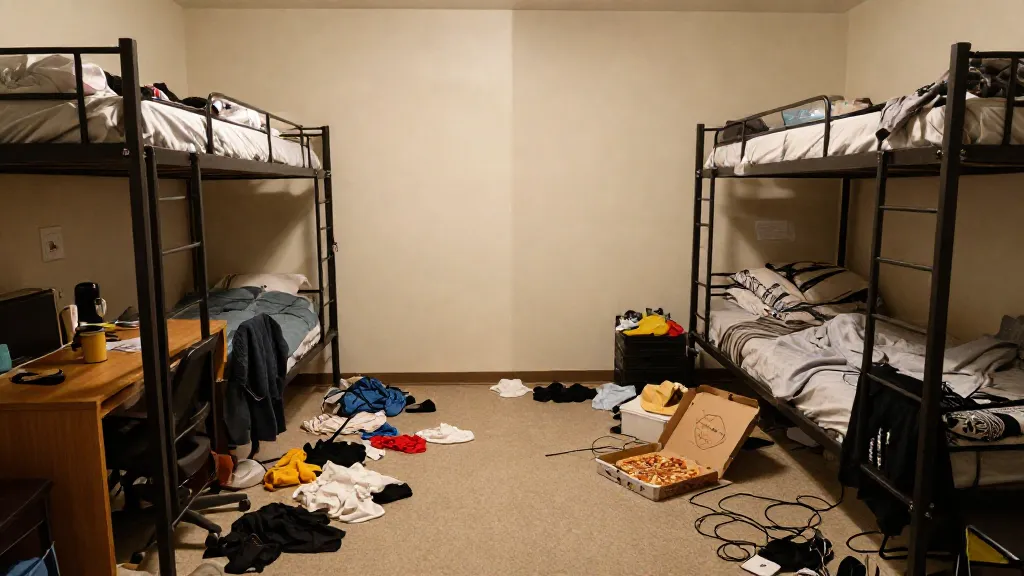
5 Roommate Fights That Start From Miscommunication
You come home after a long day. The kitchen sink is full of dishes—again. Your jaw tightens. You think: They obviously don't care about this space. They don't respect me. Meanwhile, your roommate genuinely planned to clean up after finishing a work deadline in an hour. They have no idea you're in the other room drafting a passive-aggressive text to your group chat.
This is the anatomy of almost every roommate fight. Not malice. Not incompatibility. Just two people operating on completely different assumptions without ever checking in. Research from campus housing studies and conflict resolution experts consistently points to the same finding: roughly 80% of roommate conflicts stem from poor communication, not fundamental personality clashes. The dishes aren't the problem. The silence around the dishes is.
This article breaks down five of the most common roommate fights that are actually miscommunication failures in disguise—and gives you concrete scripts and strategies to resolve each one.
Key Takeaways
- Most roommate fights are communication failures, not personality conflicts. The real issue is usually an unspoken expectation, not a character flaw.
- "Obvious" house rules are never obvious. What seems like common sense to you may not even register for your roommate. Write things down.
- Passive aggression is the single biggest accelerant. Every indirect hint, every sigh, every vague group chat message makes the conflict worse, not better.
- Short, specific, forward-looking conversations prevent 90% of blowups. You don't need a family meeting—you need one clear sentence.
- Agreements aren't about trust—they're about clarity. Putting expectations in writing isn't a sign of distrust. It's a sign of respect for everyone's peace of mind.

Fight #1: The Dirty Dishes Standoff (Unspoken Expectations)
What It Looks Like
One roommate leaves dishes in the sink for a few hours. The other roommate sees this as disrespectful. Days pass. Nobody says anything. Dishes pile up. Eventually, someone snaps—or worse, starts a group chat vent session that spirals into accusations about who does more around the house.
Why It's Actually a Communication Problem
This fight almost never happens between two people who have talked explicitly about dish expectations. The person leaving dishes might come from a household where "clean up before bed" was the norm. The person frustrated by the dishes might expect "clean as you go." Neither standard is wrong—but neither person has named their standard out loud.
The real conflict: two invisible rulebooks clashing in silence.
How to Fix It
- Name your specific preference without framing it as universal truth. Instead of "normal people wash their dishes right away," try: "I get stressed when dishes sit in the sink. Could we agree on a timeframe—like within two hours after a meal?"
- Propose a concrete, measurable agreement. Vague standards like "keep it clean" mean different things to every human alive. Instead: "All dishes washed or in the dishwasher by 10 PM."
- Put it in writing. Not as a legal threat, but as a shared reference point. A simple list on the fridge or a shared notes doc works. Tools like Servanda can help roommates create written agreements that prevent these kinds of recurring misunderstandings.
Fight #2: The Overnight Guest Situation (Assumed Boundaries)
What It Looks Like
Your roommate's partner starts staying over three, four, five nights a week. You didn't agree to a third roommate. You start feeling crowded in your own home. But you don't say anything because you don't want to seem controlling or jealous. Eventually, resentment builds until it erupts over something unrelated—like who forgot to buy toilet paper.
Why It's Actually a Communication Problem
Guest boundaries are one of the most emotionally loaded roommate topics, which is exactly why people avoid discussing them. Most roommates never set explicit guest policies because it feels awkward or premature. Then when the situation arises, nobody has a framework, and any conversation feels like a personal attack.
The real conflict: a boundary that was never drawn being treated as a boundary that was crossed.

How to Fix It
- Raise the topic proactively, not reactively. It's ten times easier to discuss guest expectations when nobody has a partner staying over yet. If that window has passed, frame it as a logistics conversation, not a complaint: "Hey, can we figure out a guest policy that works for both of us?"
- Use specific parameters. "Guests are fine" means nothing. Try: "Overnight guests are welcome up to two nights per week, with a heads-up text the same day."
- Separate the person from the policy. Emphasize that this isn't about their specific partner. It's about shared space: "I want you to have people over—I just want us both to feel comfortable in the apartment."
Fight #3: The Noise Dispute (Different Schedules, Zero Dialogue)
What It Looks Like
One roommate works from home and needs quiet mornings. The other works nights and unwinds with music or video calls at 1 AM. Neither has any idea about the other's schedule constraints. Tension builds. Someone eventually pounds on a wall or sends a clipped text: "Can you PLEASE keep it down."
Why It's Actually a Communication Problem
Noise conflicts feel personal because sound invades your space without permission. But in the vast majority of cases, the noisy roommate has no idea they're causing a problem. They aren't being inconsiderate—they're operating without information.
The real conflict: two schedules coexisting without anyone mapping them out.
How to Fix It
- Share your schedule early. During move-in or at the start of any new semester or season, do a quick five-minute schedule comparison. "I have early calls on Tuesdays and Thursdays" is all it takes.
- Agree on quiet hours with specifics. Not "be quiet at night" but "quiet hours from 11 PM to 7 AM on weekdays, midnight to 9 AM on weekends." Cover headphone use, phone calls, and anything else that applies.
- Create an in-the-moment signal. Agree on a no-drama way to signal "I need quiet right now"—a closed door, a specific emoji text, or even a small sign. This removes the friction of having to initiate a confrontation every single time.
Fight #4: The Money Tension (Vague Splitting, Quiet Resentment)
What It Looks Like
Roommates agree to "split everything evenly." Then one person buys expensive groceries. The other only eats ramen. Someone covers a utility bill and doesn't get paid back for three weeks. Nobody tracks anything. After two months, one roommate feels like they're subsidizing the other's lifestyle, and the other has no idea there's a problem.
Why It's Actually a Communication Problem
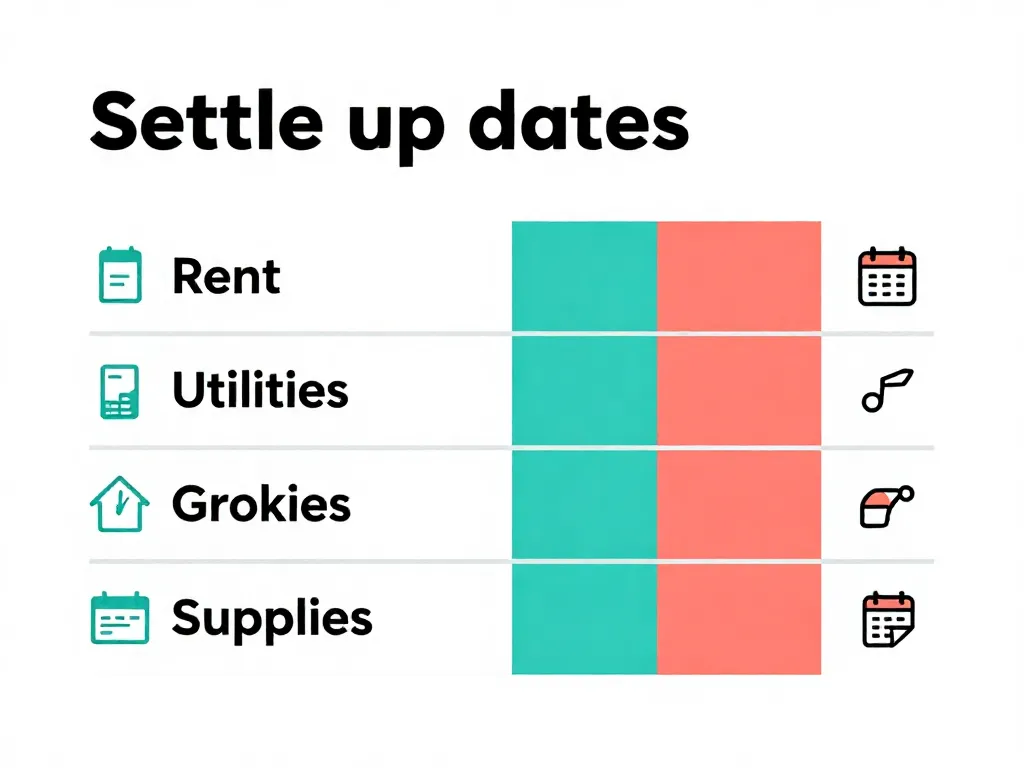
"Split things evenly" is one of the most dangerous phrases in a roommate relationship because it sounds clear but is actually wildly ambiguous. Does it mean split groceries? Just rent and utilities? What about household supplies? What happens when one person uses more electricity because they're home more?
The real conflict: a financial agreement that was never actually made—just assumed.
How to Fix It
- Get granular before money changes hands. During the first week of living together, list every shared expense category: rent, utilities, internet, groceries, cleaning supplies, toilet paper, and anything else. Decide explicitly what's shared and what's individual.
- Pick a tracking method and stick with it. Splitwise, a shared spreadsheet, or even a whiteboard on the fridge. The method matters less than the consistency. When expenses are visible, resentment has nowhere to hide.
- Set a payment cadence. "We settle up on the 1st and 15th of every month" eliminates the awkwardness of chasing someone for $12.
- Build in a review. Once a month, take five minutes to check: "Is this arrangement still working for both of us?" Financial situations change. Let the agreement change with them.
The Scripts That Actually Work
Here are three opening lines for money conversations that reduce defensiveness:
- "Hey, I want to make sure we're on the same page about shared expenses. Can we take a few minutes to map it out?"
- "I realized we never spelled out exactly how we're splitting [specific item]. What works for you?"
- "I've been tracking our shared costs and I want to make sure it feels fair to both of us. Can we look at this together?"
Fight #5: The Passive-Aggressive Spiral (Avoiding the Real Conversation)
What It Looks Like
Instead of saying "your alarm woke me up at 5 AM," one roommate starts slamming cabinets in the morning. Instead of asking for the rent contribution, someone leaves a Venmo request with no context. Post-it notes appear on shared surfaces. Sarcastic comments get dropped in front of mutual friends. The actual issue is never named, but the hostility is constant.
Why It's Actually a Communication Problem
Passive aggression isn't a personality trait—it's a symptom of someone who doesn't feel safe or equipped to communicate directly. Sometimes it comes from conflict-avoidant families. Sometimes it comes from a previous roommate who reacted badly to honest feedback. Whatever the cause, the pattern is always the same: indirect signals replace direct words, and the other person is left guessing what's wrong.
The real conflict: a fear of direct conversation creating a hundred indirect ones.
How to Fix It
- Catch yourself in the act. Next time you're about to drop a hint, write a vague note, or complain to a friend instead of your roommate, pause. Ask yourself: "Have I said this directly to the person who can actually change it?"
- Use the 24-hour rule. If something bothers you, give yourself 24 hours. If it still bothers you after a full day, it deserves a direct conversation. If it doesn't, let it go completely—no hints, no sighs.
- Lead with observation, not accusation. "I noticed the front door was unlocked when I got home" lands completely differently than "You always leave the door unlocked." One opens a conversation. The other starts a fight.
- Normalize small check-ins. If you build a habit of short, low-stakes conversations—"Hey, how's the apartment situation feeling for you?"—then bigger issues don't have to feel like a dramatic confrontation.
A Quick Guide: Direct vs. Passive-Aggressive Communication
| Passive-Aggressive | Direct |
|---|---|
| Leaving a sticky note about the mess | "Can we talk about kitchen cleanup timing?" |
| Slamming doors when you're frustrated | "I'm frustrated about something—can we chat tonight?" |
| Complaining to friends but not your roommate | Bringing the issue to your roommate first |
| Venmo-requesting with no context | "Hey, here's the utility breakdown for this month" |
| "It's fine" (when it's not fine) | "Actually, that does bother me. Here's why." |
The Pattern Behind All Five Fights
Look at every conflict above and you'll see the same three-step cycle:
- An expectation exists but goes unspoken. Someone assumes the other person "should just know."
- The expectation gets violated. Not out of disrespect, but out of ignorance.
- Resentment builds in the silence. By the time the conversation finally happens, it's charged with weeks or months of frustration.
The fix is always the same: name the expectation before it becomes a grievance. This doesn't require long, emotional conversations. It requires short, specific ones—ideally before any conflict has started.
The best time to set expectations is during move-in. The second-best time is now.
Frequently Asked Questions
How do I bring up a problem with my roommate without starting a fight?
Start with something specific and observable—not a character judgment. "I noticed the bathroom was still wet after your shower this morning" is factual. "You're a slob" is an attack. Keep the conversation short, propose a solution, and ask for their input. Most people respond well when they feel like collaborators, not defendants.
What should be in a roommate agreement?
At minimum: quiet hours, guest policies, cleaning responsibilities and frequency, how shared expenses are split and tracked, and how you'll handle future disagreements. The more specific, the better. "Keep common areas clean" is useless. "Wipe kitchen counters after cooking; vacuum shared spaces every Sunday, alternating weeks" gives everyone a clear standard.
Is it normal to fight with your roommate a lot?
Occasional friction is completely normal—you're sharing a living space with another human who has different habits, preferences, and stress levels. But if fights are happening weekly or tension feels constant, that's a sign the communication infrastructure is missing, not that you're incompatible. Most frequent fighters just need clearer agreements and a habit of direct conversation.
How do you deal with a roommate who avoids confrontation?
Make conversations feel low-stakes. Use neutral language, keep them brief, and don't ambush someone when they walk through the door. You can also try written communication—a calm, clear text or shared document can feel less threatening than a face-to-face talk for someone who's conflict-avoidant. Over time, positive experiences with direct communication build trust.
When should roommates involve a mediator?
If you've tried direct conversation more than once and the same issue keeps recurring—or if the conflict has escalated to the point where neither person can discuss it calmly—outside help makes sense. This could be a trusted mutual friend, an RA in campus housing, or a structured mediation process. The goal isn't to "win" but to get both people back on the same page.
Conclusion
The five fights in this article—dishes, guests, noise, money, and passive aggression—account for the vast majority of roommate conflicts. And every single one traces back to the same root cause: an unspoken expectation meeting an uninformed roommate.
The good news is that this means most roommate conflicts are fixable—and more importantly, preventable. You don't need to become best friends. You don't need to have identical living styles. You just need a few short, honest conversations and a willingness to put agreements into words.
Start this week. Pick the one area where tension is quietly building, and name it out loud. One sentence. One specific ask. That's all it takes to break the cycle before the next blowup.