Roommate Horror Stories: Lessons You Can Learn
You signed the lease thinking you'd found the perfect living situation. Your new roommate seemed normal during the apartment tour — friendly, employed, reasonably tidy. Fast forward three months, and you're lying awake at 2 a.m. while they host a Wednesday night karaoke session in the kitchen, their unwashed dishes have formed a small civilization in the sink, and you just discovered they've been "borrowing" your expensive shampoo since move-in day.
Nearly 40% of adults who've had roommates report at least one experience they'd describe as a nightmare. Most roommate horror stories share the same handful of root causes. Once you see those patterns, you can protect yourself before things spiral.

The Phantom Freeloaders: When Guests Become Unofficial Roommates
The Story
"Jamie" moved into a two-bedroom apartment with "Alex," splitting rent 50/50. Within a month, Alex's partner started staying over. First it was weekends. Then weekdays. By month three, the partner had a toothbrush in the bathroom, groceries in the fridge, and a dedicated spot on the couch — but was contributing zero dollars to rent or utilities.
When Jamie finally brought it up, Alex got defensive: "They're my guest. I can have whoever I want over." The electric bill had jumped 30%. The hot water was consistently gone by morning. Jamie felt like a stranger in their own apartment.
The Lesson
Guest policies need to be discussed before they become a problem. A simple written agreement covering overnight guest frequency (e.g., "Overnight guests are welcome up to three nights per week; anything beyond that requires a conversation about adjusted rent") eliminates most of this conflict.
What you can do right now:
- Define "guest" vs. "additional resident" in clear terms
- Agree on a maximum number of overnight stays per week or month
- Establish a trigger point where a frequent guest starts contributing to shared costs
- Put it in writing — even a shared Google Doc counts
The Disappearing Rent: Financial Conflicts That Ruin Everything
The Story
"Morgan" and "Taylor" found a great apartment and signed a joint lease. They verbally agreed to split rent evenly, with Taylor handling the Venmo transfer to the landlord each month. For three months, Morgan sent their half on time. In month four, Morgan got a notification: an eviction warning. Taylor had been pocketing Morgan's payments and only partially paying rent. The landlord didn't care who was at fault — both names were on the lease.
Morgan's credit took a hit. The friendship was destroyed.
The Lesson
Financial roommate conflicts are among the most damaging because the consequences — eviction records, credit damage, legal liability — follow you long after you move out. The core problem is almost always a lack of financial transparency and individual accountability.
What you can do right now:
- Pay the landlord directly whenever possible, even if it means two separate payments
- If one person collects rent, request monthly confirmation from the landlord that payment was received in full
- Write down who pays what, by when, and what happens if someone is late
- Discuss the plan for breaking the lease early, including who covers costs
The Cleanliness Chasm: Different Standards, Maximum Resentment
The Story
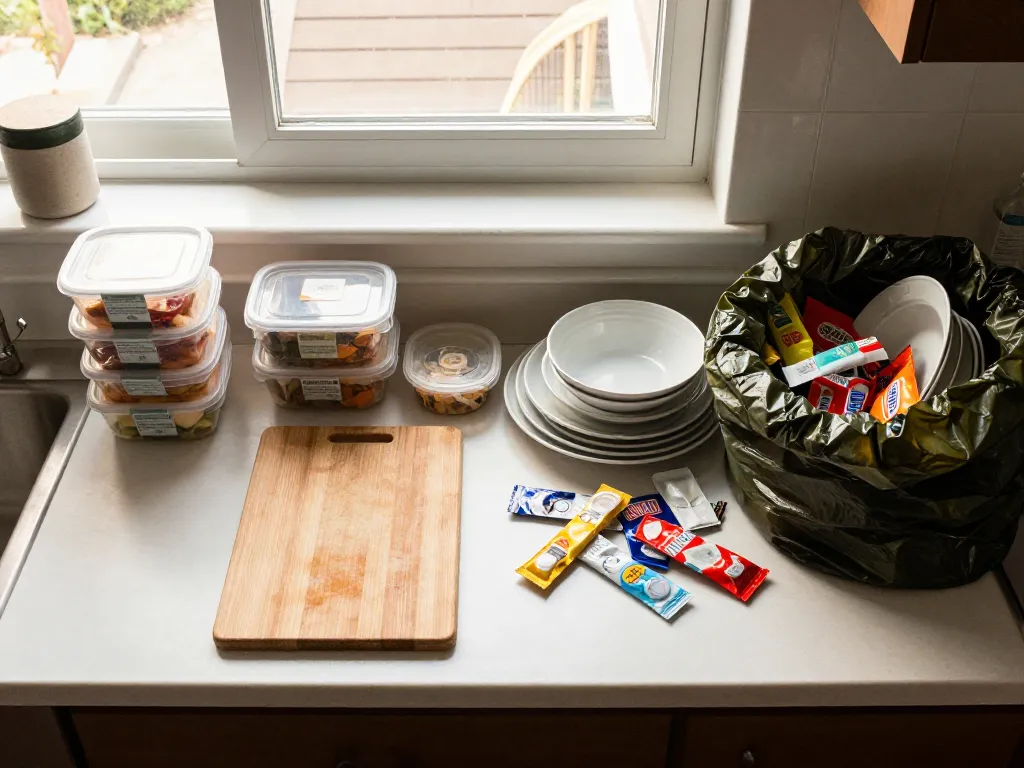
"Priya" considered herself reasonably tidy. Not spotless, but dishes done within a day, bathroom cleaned weekly, common areas generally presentable. Her roommate "Chris" had a different threshold — a much different threshold. Dishes stayed in the sink until every dish was dirty. Trash bags sat by the door for days. A mysterious smell emerged from Chris's room and migrated to the hallway.
Priya tried hints. She tried cleaning everything herself. She tried leaving passive-aggressive notes. Nothing worked. After six months of simmering resentment, Priya moved out mid-lease and ate the penalty.
The Lesson
Cleanliness conflicts are the number one source of daily roommate friction. They're corrosive because they happen every single day. Most people assume their cleanliness standard is "normal" and their roommate's is objectively wrong. In reality, both people grew up in different households with different norms. Neither is inherently right — but you need to agree on a shared standard for shared spaces.
What you can do right now:
- Before or right after moving in, walk through every shared space and explicitly define "clean enough" for each area
- Create a simple chore rotation (weekly works for most households) and post it somewhere visible
- Agree on a timeline for dishes — "same day" or "within 24 hours" removes ambiguity
- Separate personal messes from shared responsibility — your room is your business, the kitchen is everyone's business
The Noise Wars: Sleep, Schedules, and Sanity
The Story
"David" worked early mornings, starting his shift at 6 a.m. His roommate "Lena" worked in the service industry, getting home around midnight and unwinding until 2 a.m. — with music, phone calls, and cooking. Neither was doing anything unreasonable for their own schedule. But their routines were fundamentally incompatible, and neither had thought to discuss it before signing the lease.
What started as mild annoyance became sleep deprivation, which became hostility, which became shouting matches at 1 a.m. that woke up the neighbors.
The Lesson
This is one of the most common roommate conflicts because it doesn't require anyone to be a bad person. Two perfectly reasonable people with incompatible schedules can make each other miserable. If your potential roommate has a dramatically different work schedule or sleep pattern, this requires an honest conversation and a noise plan before move-in.
What you can do right now:
- Discuss sleep and work schedules before signing a lease together
- Agree on "quiet hours" for shared spaces
- Invest in practical solutions: headphones for late-night entertainment, a white noise machine for early sleepers, rugs to dampen footsteps
- Establish a non-confrontational signal for "I need it quiet right now" — a text is often less charged than a face-to-face request at midnight
The Boundary Bulldozer: When "What's Mine Is Yours" Goes Wrong
The Story
"Sam" moved in with a roommate who seemed generous to a fault — offering food, sharing Netflix passwords, lending clothes. It felt like instant friendship. But the generosity came with an unspoken expectation of reciprocity, and the boundaries dissolved in both directions.
Soon, Sam's roommate was wearing Sam's clothes without asking, eating Sam's groceries, and even using Sam's laptop "because mine is charging." When Sam tried to re-establish boundaries, the roommate accused Sam of being selfish and ruining the vibe.
The Lesson
Early, excessive generosity from a roommate can be a red flag. It's not always manipulative — sometimes people don't have strong personal boundaries and assume you don't either. But it sets a precedent that's hard to walk back. Healthy roommate relationships have clear, respected boundaries from day one.
What you can do right now:
- Label your food
- Establish a default of "ask first" for personal belongings, even if you'd usually say yes
- If a roommate offers something, you can accept without feeling obligated to open your own possessions to communal use
- Practice a simple script: "I appreciate you sharing, but I prefer to keep my things separate. It's nothing personal — it's just how I'm comfortable living."
How to Spot Red Flags Before You Sign
Most roommate horror stories have a prologue — small signs that were easy to dismiss at the time.
During the search:
- They rush the process and pressure you to commit quickly
- They're vague about employment or how they'll pay rent
- They dismiss your questions about habits, guests, or cleanliness as "overthinking it"
- They've had multiple short-term living situations without clear explanations
- They badmouth every previous roommate
During the first two weeks:
- Small boundary violations that they laugh off when you mention them
- Inconsistency between what they said during the search and how they actually behave
- Defensiveness or guilt-tripping when you raise minor concerns
- They immediately test limits — loud music, late guests, borrowing things
Trust the pattern. One late-night noise complaint is an accident. Three in two weeks is a preview.
Building a Roommate Agreement That Actually Works
The single thread connecting every story above is the same: no written agreement, or an agreement that was too vague to enforce. A roommate agreement doesn't have to be a legal contract or a twenty-page document. It just has to be specific enough that both people know what they agreed to.
A strong roommate agreement covers:
- Finances: Who pays what, by when, through what method, and what happens if payment is late
- Guests: Frequency, overnight policies, contribution thresholds
- Cleanliness: Shared space standards, chore division, timelines
- Noise: Quiet hours, headphone policies, notification for gatherings
- Personal property: Default rules for borrowing, shared vs. personal items, food separation
- Conflict resolution: How you'll raise issues and what happens if you can't agree
Tools like Servanda can help you create a structured, written roommate agreement that covers these areas — and provide a framework for working through disagreements when they come up, before they become the next horror story someone posts online.
The best time to write a roommate agreement is before move-in day. The second best time is today.
Frequently Asked Questions
Is it normal to have a bad roommate experience?
Absolutely. Surveys consistently show that a significant portion of people who've lived with roommates have had at least one seriously negative experience. Having a bad roommate situation doesn't mean you did something wrong — it usually means expectations weren't aligned and boundaries weren't established early enough.
How do I bring up a problem with my roommate without starting a fight?
Focus on the specific behavior and its impact on you, rather than characterizing your roommate as a person. "When dishes sit in the sink for multiple days, it attracts bugs and makes the kitchen hard to use" is much more productive than "You're a slob." Choose a calm moment and suggest a concrete solution.
Should I put roommate agreements in writing even if we're friends?
Especially if you're friends. Friendships make roommate conflicts harder to navigate because the emotional stakes are higher. A written agreement protects the friendship by removing ambiguity.
What should I do if my roommate refuses to follow our agreement?
First, reference the specific agreement point in writing. If the behavior continues, escalate to a house meeting or involve a neutral third party — a mutual friend, an RA if you're in student housing, or a mediation service. If the situation becomes untenable, review your lease terms for options. Document everything.
When is it time to just move out?
If you've clearly communicated your concerns, attempted to resolve them, and the behavior continues — or if you ever feel unsafe — it's time to explore your exit options. Review your lease for early termination clauses, subletting possibilities, or lease transfer options. Your peace of mind and safety are worth more than avoiding a move.