Screen Time Wars: When Coparents Have Different Rules
It's Sunday evening. Your eight-year-old just got back from their other parent's house. You ask how the weekend went, and the answer comes with a side of negotiation: "Dad lets me play on the iPad until bedtime. Why can't I do that here?"
Your stomach tightens. You've been working hard to limit screens on school nights, and now it feels like all that effort just got erased in 48 hours. You want to say something — to your child, to your coparent, to anyone who'll listen — but you're not sure what to say that won't start a fight or make things worse.
If you've lived some version of this moment, you're far from alone. Screen time is one of the most frequent flashpoints between coparents who have different rules across two households. It's personal, it's daily, and it's tangled up with bigger feelings about parenting values, control, and what's "best" for the kids. Let's untangle it.
Key Takeaways
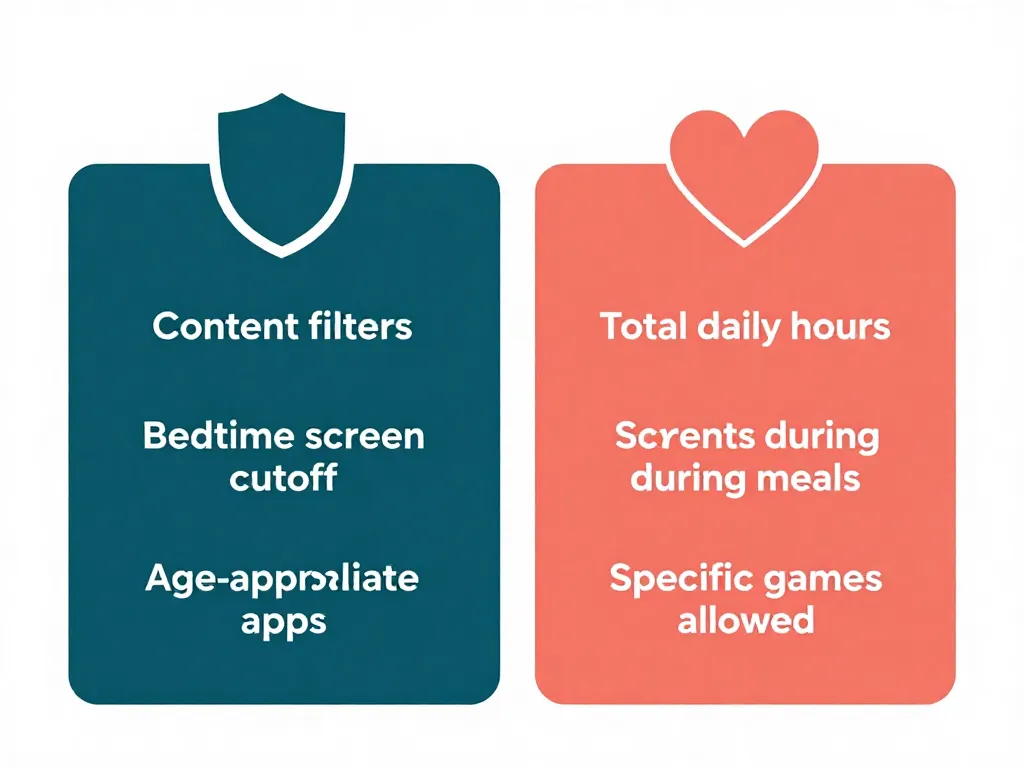
- Separate non-negotiable safety rules (like content filters and no screens before bed) from personal preferences (like total daily hours), and focus your coparenting conversations on the non-negotiables first.
- Instead of trying to make both households identical, propose a "minimum shared standards" agreement covering basics like parental controls, bedtime screen cutoffs, and age-appropriate content — and put it in writing using a tool like Servanda.
- Monitor your child's actual behavior — sleep quality, grades, mood, and ability to transition off screens — rather than fixating on what your coparent allows, since observable concerns are far more productive to discuss than general complaints.
- When raising screen time concerns with your coparent, lead with specific observations about your child's experience, propose solutions rather than demands, and leave room for their input.
- Avoid editorializing about your coparent's rules in front of your child; instead, calmly affirm that different houses have different routines without implying the other household is wrong.
Why Screen Time Triggers Such Intense Conflict Between Coparents
On the surface, this seems like it should be a simple logistics question: how many hours of screens per day? But screen time disagreements between coparents rarely stay on the surface. Here's what's actually fueling the fire:
It Feels Like a Judgment on Your Parenting
When your coparent allows unlimited YouTube and you cap it at 30 minutes, the difference can feel like a statement. The permissive parent may feel judged as lazy or irresponsible. The stricter parent may feel undermined or dismissed. Neither person is wrong for feeling that way — but the feelings make it nearly impossible to have a calm, productive conversation about iPads.
Kids Become Skilled Negotiators
Children figure out the discrepancy fast. "Mom lets me" and "Dad lets me" become powerful leverage phrases. This isn't manipulation in a malicious sense — it's a child doing what children do: testing boundaries and looking for the best deal. But it adds pressure on both parents and can accelerate conflict.
The Science Is Genuinely Unclear
Unlike, say, car seat safety (where the rules are black and white), screen time guidance is nuanced, evolving, and often contradictory. The American Academy of Pediatrics offers guidelines, but reasonable parents can interpret them differently. This ambiguity means neither coparent has an airtight "right answer" to point to, which makes compromise feel like concession.
It's a Proxy for Bigger Issues
Often the screen time fight isn't really about screen time. It's about one parent feeling like the other doesn't respect their boundaries. It's about control. It's about the fear that your child is developing habits you can't influence during the time they're not with you. Recognizing this can be the first step toward de-escalating.
What the Research Actually Says (A Quick Reality Check)
Before you draft a strongly worded text about the dangers of Minecraft, it helps to know what the evidence actually supports — and where it's less definitive than headlines suggest.
- For children under 2, most experts agree that screen time (excluding video calls with family) should be minimal to none.
- For children 2–5, the AAP recommends no more than one hour per day of high-quality programming, with a parent co-viewing when possible.
- For children 6 and older, there's no single magic number. The AAP shifted away from a strict hourly cap and instead recommends that screens shouldn't displace sleep, physical activity, homework, or face-to-face interaction.
- Context matters enormously. An hour of a child building in a creative coding app is a different experience than an hour of passively scrolling TikTok. A family movie night is different from a child watching videos alone in their room at 11 p.m.
The takeaway: if your coparent's screen time rules are different from yours but your child is still sleeping well, staying active, doing their schoolwork, and maintaining friendships, the difference may be less harmful than the conflict about it.
Practical Strategies for Coparents With Different Screen Time Rules
You're not going to resolve this by forwarding articles to your coparent or making passive-aggressive comments at pickup. Here are approaches that actually work.
1. Separate the Non-Negotiables From the Preferences
Not every screen time opinion carries the same weight. Try sorting your concerns into two categories:
Non-negotiables (safety and wellbeing):
- No screens in the child's bedroom at night (sleep disruption is well-documented)
- Age-appropriate content filters in place
- No social media accounts below the platform's minimum age
- No unsupervised video chatting with strangers
Preferences (parenting style):
- Total hours allowed per day
- Whether screens are allowed during meals
- Specific apps or games permitted
- Whether TV counts differently from interactive screen use
You'll have far more success getting your coparent to agree on the non-negotiables if you aren't also demanding they match your preferences exactly. Fighting for everything means winning nothing.
2. Propose a "Minimum Shared Standards" Agreement
Instead of trying to create identical rules across two households (which almost never works), aim for a baseline both parents can live with. This might look like:
- Both households use parental controls on all devices
- Neither parent introduces a new app or game rated above the child's age without discussing it first
- Screens are off at least 30 minutes before bedtime in both homes
- School-issued devices follow the school's usage policy in both homes
This isn't about making two households identical. It's about creating enough consistency that your child isn't navigating wildly different digital worlds with no overlap. Tools like Servanda can help coparents formalize these kinds of shared agreements in writing, so what you've discussed doesn't devolve into a "that's not what I agreed to" argument three weeks later.
3. Focus on Your Child's Actual Behavior, Not Your Coparent's Rules
Here's a reframe that can save you a lot of resentment: instead of monitoring what your coparent allows, monitor how your child is doing.
Ask yourself:
- Is my child's sleep being affected?
- Are their grades slipping?
- Are they withdrawing from in-person activities?
- Are they showing signs of anxiety or agitation after screen use?
- Are they able to transition off screens without a meltdown?
If the answers are mostly "no," your coparent's looser rules may not be causing the harm you fear. If the answers are "yes," you now have specific, observable concerns to raise — which are far more productive than a general complaint about too much iPad time.
4. Script the Conversation Before You Have It
When you do need to raise the topic, preparation matters. Here's a framework:
Open with observation, not accusation:
"I've noticed Mia has been having a really hard time falling asleep on Sunday nights after she comes back. I'm wondering if we can talk about screen routines before bed."
State your concern in terms of the child's experience:
"She told me she's been watching videos until pretty late. I'm not saying that's wrong — I just want to figure out if the transition between our houses is affecting her sleep."
Propose, don't demand:
"Would you be open to both of us doing no screens after 8 p.m. on school nights? I'm willing to be flexible on weekends."
Leave room for their input:
"What do you think would work? I'm open to hearing your ideas too."
Notice what's absent: blame, lectures about screen time research, and any implication that your way is the correct way.

5. Stop Editorializing in Front of Your Child
This one is hard but critical. When your child says "Dad lets me play Fortnite for three hours," your job is not to react. Responses to avoid:
- "Well, that's not how we do things in this house." (Implies the other house is wrong)
- "That's way too much. I'll talk to your father." (Puts the child in the middle)
- "Of course he does." (Sarcasm your child absolutely picks up on)
Instead, try:
- "That sounds fun. In our house, the rule is one hour on weekends. What do you want to play during your hour?"
- "Different houses have different routines. Here's what works for us."
You're not endorsing the other parent's rules. You're simply declining to turn your child into a messenger or a referee.
6. Revisit the Agreement Regularly
What works for a five-year-old won't work for a ten-year-old. A child who was fine with 30 minutes of PBS Kids will eventually want a phone, a gaming console, and a social media account. Build in a plan to revisit your shared standards:
- At the start of each school year
- When the child gets a new device
- When the child reaches a new developmental stage (entering middle school, for example)
- When either parent notices a behavioral change
Treating your screen time agreement as a living document — rather than a one-time argument you had in 2023 — reduces the chance of future blowups.
When the Gap Is Too Wide: Parallel Parenting and Screen Time
Sometimes, despite your best efforts, you and your coparent simply cannot agree. Maybe the difference in screen time philosophy reflects a deeper incompatibility in parenting styles. Maybe communication has broken down to the point where negotiation isn't productive.
In that case, parallel parenting may be the healthier approach. This means:
- You enforce your rules in your home without trying to control what happens in theirs
- You stop asking your child for reports about the other household's screen habits
- You focus on creating a consistent, stable environment in your own home
- You intervene only when there's a genuine safety concern (exposure to explicit content, contact with strangers online, etc.)
Parallel parenting isn't giving up. It's acknowledging that two imperfect but stable environments are better for a child than one ongoing war over who's right about Roblox.
What to Do When Screen Time Differences Are Actually Harmful
Most of this article assumes a situation where both parents are generally reasonable and the disagreement is about degree, not danger. But there are situations where the concern is legitimate and urgent:
- Your child is accessing age-inappropriate content (pornography, graphic violence, self-harm content)
- Your child is being contacted by adults online with no parental oversight
- Screen use is replacing basic needs — the child isn't eating meals, sleeping, or attending school because of unmanaged screen access
- Your child is showing signs of screen addiction — severe withdrawal, inability to function without a device, aggressive behavior when screens are removed
In these cases, document what you're observing (dates, specific incidents, behavioral changes), raise the concern with your coparent in writing, and if the situation doesn't improve, consult with your family law attorney or your child's pediatrician. This is no longer a difference in parenting philosophy — it's a welfare concern.
Conclusion
Screen time disagreements between coparents are almost never just about screens. They're about values, control, trust, and the deep desire to do right by your child in a situation that already feels fractured. The goal isn't to make two households identical — it's to create enough shared ground that your child feels safe and consistent in both homes, and to keep the adult conflict out of their line of sight.
Start with one conversation. Pick your most important concern — just one — and raise it using observations, not accusations. Agree on one shared standard you can both commit to. Build from there. Your child doesn't need perfect screen time rules. They need parents who can disagree without turning them into a battlefield.
Frequently Asked Questions
What do I do when my child says the other parent lets them have unlimited screen time?
Resist the urge to criticize your coparent's rules in front of your child. Instead, calmly acknowledge their experience and redirect to your household's routine by saying something like, "Different houses have different rules — here's what works for us." This keeps your child out of the middle and reinforces your own boundaries without creating conflict.
How much screen time should coparents agree on for kids?
There's no single magic number for children over six — the American Academy of Pediatrics recommends ensuring screens don't displace sleep, physical activity, homework, or face-to-face interaction. Rather than fighting over exact hours, coparents are better off agreeing on minimum shared standards like bedtime screen cutoffs and age-appropriate content filters. The context and quality of screen use matters more than a rigid hourly limit.
Can different screen time rules in two households actually hurt my child?
In most cases, moderate differences in screen time rules between homes are less harmful to children than the ongoing parental conflict about those differences. However, if your child is losing sleep, withdrawing from activities, accessing inappropriate content, or showing signs of screen addiction, the gap has moved beyond a preference disagreement into a genuine welfare concern that should be documented and addressed.
How do I talk to my coparent about screen time without starting a fight?
Start by raising one specific, observable concern about your child — such as difficulty sleeping or increased irritability — rather than making a general accusation about too much screen time. Propose a solution collaboratively and ask for their input, which makes them a partner in problem-solving rather than a target. Using a platform like Servanda to document agreements in writing can prevent future disputes over what was actually decided.
When should I stop trying to agree on screen time and just parent separately?
If communication has broken down to the point where every screen time conversation escalates into conflict, parallel parenting may be the healthier path — you enforce your rules in your home and stop trying to control the other household. Focus on creating a stable, consistent environment on your end and intervene only when there's a genuine safety concern, such as exposure to explicit content or contact with strangers online.