
5 Scripts for Talking to a High-Conflict Co-Parent
Your phone buzzes. It's your co-parent. Before you even read the message, your stomach tightens and your thumbs hover over the keyboard. You know from experience: one wrong word and the next forty-eight hours become a battlefield. So you draft a response, delete it, draft another, delete that too — and finally either fire off something you regret or say nothing at all.
If you've ever frozen in front of a text thread with a high-conflict co-parent, you're not alone. Research consistently shows that ongoing parental conflict is one of the strongest predictors of negative outcomes for children after separation. The problem isn't that you don't want to communicate well — it's that in the heat of the moment, your brain goes blank.
That's exactly why this article exists. Below you'll find five word-for-word scripts for the conversations that blow up most often: schedule changes, money disputes, introducing new partners, differing household rules, and responding to personal attacks. Copy them, adapt them, and keep them on your phone for the next time you need them.
Key Takeaways
- Scripts remove the guesswork. When emotions spike, having pre-written language keeps you from saying something you'll regret — or going silent and letting resentment build.
- The BIFF method is your anchor. Every script in this article follows the Brief, Informative, Friendly, and Firm framework designed specifically for high-conflict personalities.
- You can only control your side of the conversation. These scripts won't change your co-parent, but they will protect your peace and create a documented record of reasonable communication.
- Children benefit immediately. When you lower the temperature of co-parent exchanges, kids stop absorbing the tension — even if your co-parent doesn't change at all.
- Practice before the flashpoint. Read these scripts now, when you're calm, so the language feels familiar when you actually need it.
Why Scripts Work With a High-Conflict Co-Parent
High-conflict individuals often rely on emotional reactivity to maintain control of a conversation. When you respond with equal emotion, you hand them that control. When you respond with rehearsed, neutral language, you disrupt the pattern.
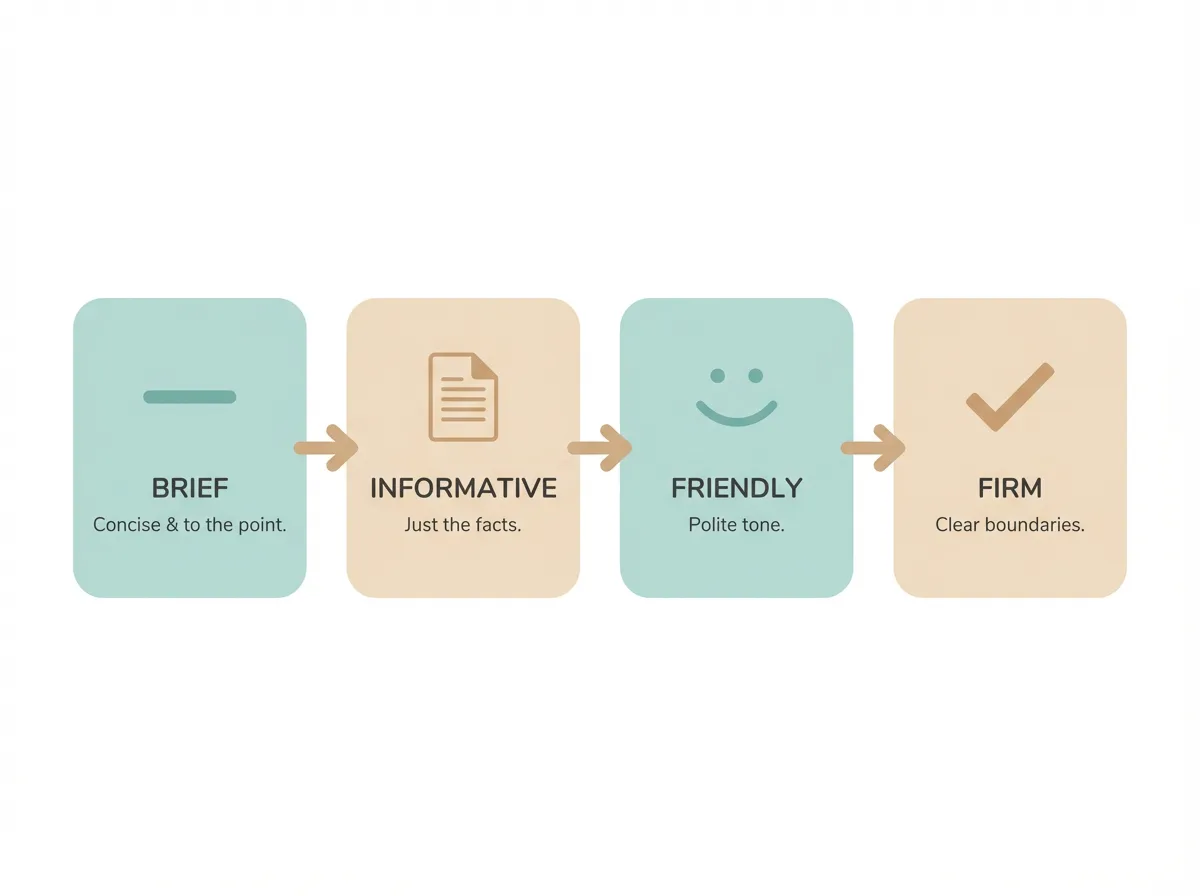
Bill Eddy, president of the High Conflict Institute and a licensed therapist, developed the BIFF Response® method specifically for these situations. BIFF stands for:
- Brief — Keep it short. Extra words become extra ammunition.
- Informative — Stick to facts, logistics, and proposals.
- Friendly — A single warm line ("Thanks for letting me know") prevents escalation without being fake.
- Firm — End the conversation cycle. Don't leave open-ended invitations for debate.
Every script below is built on this framework. You don't need to memorize the acronym — just use the scripts and the principles are baked in.
A Quick Note on Format
These scripts are written as text messages or emails because written communication gives you a paper trail and thinking time. If your co-parent insists on phone calls, consider responding: "I want to make sure I get the details right. Can you put that in a text or email so I can review it?"
Script 1: Requesting a Schedule Change
The flashpoint: You need to swap a weekend or adjust a pickup time, and you're dreading the "no" — or worse, the lecture about how you're always changing plans.
The Script
Hi [Name],
I have a conflict on [date] during my scheduled time. Would you be open to swapping that weekend/day with [specific alternative date]? The kids' routine would stay the same otherwise.
If that doesn't work for you, I'm also open to [backup option]. Let me know by [reasonable deadline] so we can both plan ahead.
Thanks.
Why It Works
- It leads with a concrete proposal, not a vague request. High-conflict co-parents thrive in ambiguity because it gives them room to argue.
- It offers a backup option, which shows flexibility and makes it harder for them to claim you're being unreasonable.
- It sets a deadline without being aggressive — "so we can both plan ahead" frames it as a mutual benefit.
If They Respond With an Attack
Your co-parent might reply: "You ALWAYS do this. You think the schedule revolves around you."
Your follow-up:
I understand it's frustrating when plans shift. I'm asking about this one specific date. Would the swap to [alternative date] work, or would you prefer [backup option]? Happy to go with whatever works best for the kids' schedule.
Notice: you're not defending yourself, explaining your conflict, or matching their tone. You're a broken record with warm edges.

Script 2: Discussing Money and Shared Expenses
The flashpoint: An unexpected expense comes up — medical bill, school trip, sports equipment — and money conversations always turn into scorekeeping.
The Script
Hi [Name],
[Child's name] needs [specific item/service]. The cost is [amount], and I've attached the [invoice/estimate/link]. Based on our agreement, this would be split [50/50 or however your order specifies].
If you'd prefer a different vendor or option, I'm open to comparing. Could you let me know by [date] so I can get it scheduled?
Thanks for looking at this.
Why It Works
- You anchor the conversation in documentation — an invoice, an estimate, a link — so there's no room for "you're making this up" or "that's too expensive."
- You reference your existing agreement, which moves the authority away from either of you and onto the document.
- You offer choice without offering chaos. "A different vendor" is a reasonable option; "let's rethink the whole thing" is not.
If They Refuse to Pay
I understand you have concerns. Our agreement does specify [reference specific clause]. I'd like to follow that so we're both consistent. If you believe it should be handled differently, we could revisit it through [mediation/our attorneys]. In the meantime, [child's name] needs this by [date], so I'll move forward and keep the receipt for our records.
This response is powerful because it doesn't beg, threaten, or lecture. It calmly names the next step and protects the child's need.
Script 3: Addressing a New Partner
The flashpoint: Your co-parent is upset that you're dating someone new, or they've introduced someone new and you have legitimate safety concerns about your child's exposure.
When Your Co-Parent Objects to Your New Partner
I appreciate your concern for the kids. I want to assure you I'm thoughtful about who is around them and when. Right now, I'm focused on keeping things stable for [child's name/children's names].
If there's a specific concern about the kids' wellbeing, I'm happy to discuss it. Otherwise, I think we're in a good place with the current arrangement.
When You Have Concerns About Their New Partner
Hi [Name],
[Child's name] mentioned [specific, factual observation — not an interpretation]. I'm not asking you to justify your personal life — I just want to make sure we're on the same page about [specific safety concern, e.g., supervision during overnights, seatbelt use, etc.].
Could we agree that [specific, reasonable request]? That would put my mind at ease. Thanks.
Why It Works
- It separates the personal from the parental. You're not commenting on their choices; you're speaking to a specific, child-centered concern.
- It leads with what the child said or did, which is harder to dismiss than your opinion.
- It ends with a concrete ask, not a vague worry.
Script 4: Handling Different Rules Between Households
The flashpoint: Your child comes home talking about screen-time rules, bedtimes, or dietary choices that conflict with yours. You want consistency but know you can't control the other household.
The Script
Hi [Name],
[Child's name] has been having a hard time with [specific behavior, e.g., falling asleep at bedtime, transitioning off screens]. I've been working on [your specific approach] at my house.
I'm not asking you to do the same — I know we each run our homes our way. But if there's any overlap we could agree on (like [one specific, small suggestion]), it might help with the transition between houses. What do you think?
Why It Works
- "I'm not asking you to do the same" disarms the defensiveness before it starts. High-conflict co-parents often hear any suggestion as a criticism.
- You're asking for one small overlap, not a wholesale change. This is negotiation, not correction.
- You frame it around the child's transition difficulty, which is a shared problem, not a blame game.
If They Respond With "Don't Tell Me How to Parent"
That's fair — I'm not trying to. I'll keep handling it on my end. If you notice [child's name] struggling with the same thing, we can always revisit. No pressure.
Then stop. You've planted the seed. Pressing further only feeds the conflict.

Script 5: Responding to Personal Attacks or Baiting
The flashpoint: Your co-parent sends a message designed to provoke — insults, blame, threats, or a dramatic retelling of your entire relationship history.
This is the hardest script because every cell in your body will want to correct the record. Don't. The courtroom, a mediator, or a therapist is where the record gets corrected. A text thread is where records get made — and you want yours to look calm.
The Script (When There's a Logistical Question Buried in the Attack)
I'm going to skip past the personal stuff and focus on the schedule question: yes, I can pick up at 3 p.m. on Saturday. See you then.
The Script (When There's No Logistical Content at All)
I don't think there's anything here that requires a response from me. If there's a scheduling or kid-related question, I'm happy to address it.
Or, if the situation warrants it:
(No response.)
Silence is a complete sentence when someone is baiting you.
Why It Works
- "I'm going to skip past the personal stuff" names the dynamic without engaging in it. It tells any future reader (a judge, a mediator) that you recognized the attack and chose not to escalate.
- It redirects to logistics, which is the only productive territory.
- It ends the volley. High-conflict communication is like a tennis match — these scripts drop the racket.
How to Actually Use These Scripts
Having the words is only half the battle. Here's how to make them stick:
-
Save them in your phone's notes app. Label them "Schedule," "Money," "New Partner," "Rules," and "Attacks." When a message comes in that spikes your adrenaline, open the note before you open the keyboard.
-
Wait before sending. A good rule of thumb: if your heart rate is up, you're not ready to respond. Give yourself at least 30 minutes — longer if the message is especially provocative.
-
Run it by a trusted friend or therapist. Not to vent, but to gut-check: "Does this sound neutral? Am I JADEing?" (JADE stands for Justify, Argue, Defend, Explain — four things you want to avoid with a high-conflict personality.)
-
Formalize agreements in writing. When a script leads to an actual agreement — a schedule swap, a cost split, a rule overlap — document it. AI-powered platforms like Servanda can help you turn informal text agreements into structured written records, so nothing gets lost or rewritten later.
-
Accept imperfect outcomes. Some conversations won't resolve. Some co-parents won't agree. The goal isn't consensus — it's protecting your peace and your children's stability.
FAQ
What if my co-parent refuses to communicate in writing?
You can respond to voicemails or calls with a follow-up text: "Thanks for the call. Just to confirm, here's what we discussed: [summary]. Let me know if I misunderstood anything." This creates a written record even when they prefer verbal communication, and courts generally view this kind of documentation favorably.
How do I co-parent with someone who twists everything I say?
Keep messages factual, short, and proposal-based. Avoid emotional language, sarcasm, or anything that requires interpretation. The scripts above are designed to be nearly impossible to misquote because they contain only logistics, options, and deadlines — not feelings or opinions.
Should I use a co-parenting app instead of regular texting?
Co-parenting apps like OurFamilyWizard or TalkingParents can be extremely helpful because messages are timestamped, uneditable, and admissible in court. If your conflict level is high enough that you're reading this article, it's probably worth switching to one. Many family courts will order their use if either party requests it.
What if my co-parent threatens me in a message?
Do not respond. Screenshot the message, save it in a secure location, and contact your attorney or local authorities depending on the severity. A threat changes the conversation from co-parenting communication to a safety issue, and it requires a legal response, not a scripted one.
Can these scripts work for in-person conversations too?
Yes, though they're harder to execute live because you lose the buffer of drafting time. If you must communicate in person, practice the script out loud beforehand and give yourself permission to say, "I need to think about that — I'll text you later today." Buying time is not avoidance; it's strategy.
Moving Forward One Message at a Time
You didn't choose to co-parent with someone who turns every text into a conflict. But you can choose how you respond — and that choice shapes what your children see, hear, and internalize about how adults handle disagreement.
These five scripts won't fix your co-parent. They won't erase the history or eliminate the stress. What they will do is give you a concrete starting point the next time your phone buzzes and your stomach drops. Copy them, customize them, and use them as a floor to stand on when the ground feels unsteady.
Every calm, boring, logistics-only message you send is a small act of protection — for your kids, for your case, and for your own mental health. You don't have to win the conversation. You just have to survive it with your dignity intact.
You've got the words now. Trust them.