
Setting Boundaries With a High-Conflict Co-Parent
It's 9:47 PM on a Tuesday. Your phone buzzes — again. Another text from your co-parent, this time accusing you of "ruining" your child's week because you packed the wrong sneakers. Before you can set the phone down, three more messages arrive in rapid succession: a demand to change next weekend's schedule, a sarcastic comment about your parenting, and a threat to "talk to my lawyer." Your stomach knots. You type a response, delete it, type another, delete that too. You know that whatever you say will be twisted, but silence will be weaponized as well.
If this feels familiar, you are not alone. Not all co-parenting relationships lend themselves to friendly collaboration, and pretending otherwise only deepens the exhaustion. What you need aren't platitudes about "keeping things amicable" — you need concrete boundaries, clear language, and a realistic framework for protecting both yourself and your children.
This guide will give you exactly that.
Key Takeaways
- Boundaries are not punishments — they are structural protections that reduce conflict and create predictability for your children.
- Parallel parenting is a legitimate, therapist-endorsed alternative when collaborative co-parenting repeatedly fails.
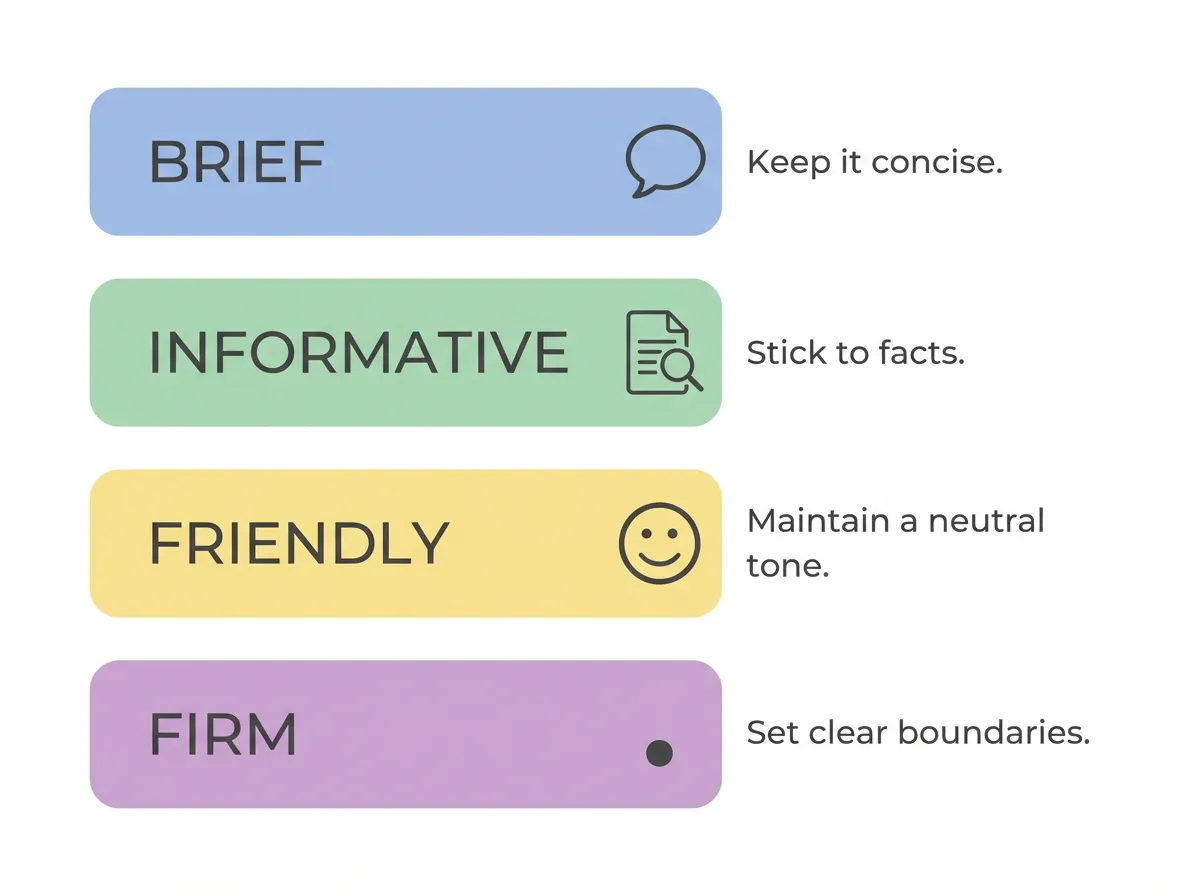
- The BIFF method (Brief, Informative, Friendly, Firm) gives you a ready-made script for responding to inflammatory messages.
- Written agreements and communication guardrails — such as app-only communication and 24-hour response windows — remove the ambiguity that high-conflict personalities exploit.
- You cannot control the other parent's behavior, but you can control your exposure to it, your response patterns, and the systems you put in place.
Why Traditional Co-Parenting Advice Falls Short
Most co-parenting resources assume a baseline of mutual goodwill. They suggest sitting down together over coffee to hash out schedules, using "I" statements during disagreements, and finding compromises that honor both perspectives. These are genuinely excellent strategies — when both parties are invested in cooperation.
But high-conflict co-parenting operates on different rules. One parent may consistently:
- Rewrite agreements after the fact or deny they were made
- Use the children as messengers or emotional pawns
- Escalate minor logistical issues into personal attacks
- Ignore boundaries and then accuse you of being "difficult" when you enforce them
- Flood you with texts, emails, or calls to maintain control
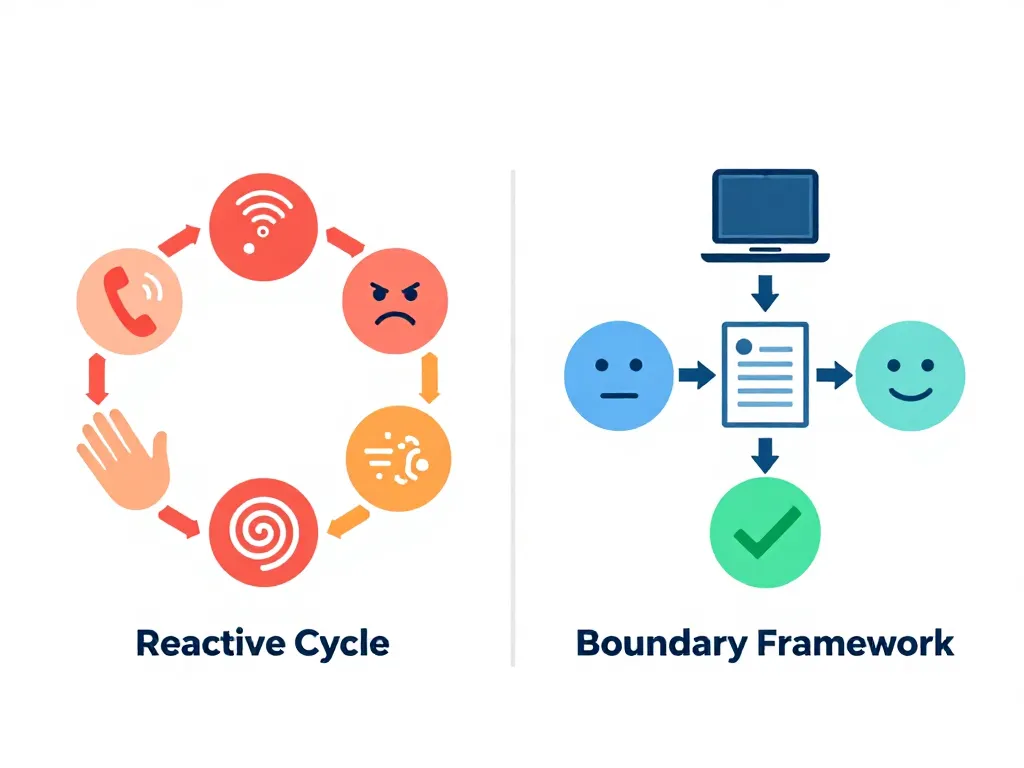
When you're dealing with this pattern, doubling down on collaborative strategies can actually make things worse. It gives the high-conflict parent more surface area to exploit, more conversations to derail, and more openings to pull you into reactive cycles.
Recognizing this isn't giving up. It's getting strategic.
Understanding Parallel Parenting: The Framework That Actually Works
What Parallel Parenting Is
Parallel parenting is a structured approach where both parents disengage from each other while remaining fully engaged with their children. Unlike cooperative co-parenting — which requires regular communication, shared decision-making, and flexibility — parallel parenting minimizes direct contact between parents and relies on clear, pre-established rules.
Think of it this way: cooperative co-parenting is like two pilots flying the same plane together. Parallel parenting is two separate flights arriving at the same destination.
When to Shift to Parallel Parenting
Consider parallel parenting when:
- Direct communication consistently escalates into conflict, regardless of the topic
- Your co-parent regularly violates verbal agreements
- You notice your children becoming anxious around exchanges or parental communication
- You spend significant mental energy anticipating or recovering from interactions with your co-parent
- A therapist, mediator, or attorney has suggested reducing direct contact
Parallel parenting is not about cutting off the other parent — it's about creating a buffer system that protects everyone, especially your kids.
Core Principles of Parallel Parenting
- Each parent has full authority during their parenting time. You don't need to approve how they run their household, and they don't get a vote in yours.
- Communication is limited to logistics only. No discussions about feelings, past grievances, or parenting philosophies.
- All communication is written. Email or a co-parenting app. No phone calls unless there's a genuine emergency.
- Exchanges follow a fixed routine. Same time, same place, same procedure — every time.

Setting Boundaries With a High-Conflict Co-Parent: A Step-by-Step Framework
Step 1: Define Your Non-Negotiables
Before you communicate any boundary, you need to know what you're protecting. Sit down — alone, without the emotional charge of a recent conflict — and write out your non-negotiable boundaries.
Examples:
- "I will not respond to messages that contain insults or personal attacks."
- "I will only discuss schedule changes via email, with at least 48 hours' notice."
- "I will not engage in conversations about our past relationship."
- "I will not relay messages from my co-parent through our children."
These are not requests you're making of your co-parent. These are commitments you're making to yourself about your own behavior. That distinction matters. You cannot force the other person to respect your boundaries, but you can control whether you enforce them.
Step 2: Communicate Boundaries Once, Clearly, in Writing
You don't need the other parent's agreement for your boundaries to be valid. But communicating them once — in writing — creates a clear record and removes the "I didn't know" defense.
Here's a sample script:
"Going forward, I'll be communicating about [children's names] through email only. I'll respond to messages about scheduling, medical needs, and school matters within 24 hours. I won't be responding to messages about other topics. I believe this will help us both stay focused on what matters most — the kids."
Notice what this message does: it's specific, it's forward-looking, it names what you will do (not just what you won't), and it anchors the change in the children's wellbeing. It doesn't blame. It doesn't explain your feelings. It doesn't invite negotiation.
Step 3: Use the BIFF Response Method
Developed by high-conflict communication expert Bill Eddy, the BIFF method is a framework for responding to provocative messages. Each response should be:
- Brief: Two to four sentences maximum. Every extra sentence is an extra thing to argue about.
- Informative: Stick to facts, dates, times, and logistics.
- Friendly: A neutral, businesslike warmth. Not cold, not effusive.
- Firm: End the conversation on this topic. No open-ended questions unless you genuinely need an answer.
Example in practice:
Your co-parent sends: "You obviously don't care about Jake's education. He said he didn't do any homework at your house all week. This is exactly why I should have full custody."
A BIFF response: "Jake completed his math worksheet and reading log on Tuesday and Thursday. His teacher confirmed he's on track. Let me know if there's a specific assignment you're concerned about."
What you did not do: defend your parenting, respond to the custody threat, match the emotional intensity, or explain how hurtful the message was. All of those reactions are understandable — and all of them would pour fuel on the fire.
Step 4: Build Structural Guardrails
Boundaries work best when they're built into systems rather than enforced through willpower alone. Here's how to create structural guardrails:
Communication guardrails: - Use a dedicated co-parenting app (OurFamilyWizard, TalkingParents, or AppClose) instead of texting. These apps create timestamped, uneditable records. - Set specific check-in windows — for example, you'll review and respond to co-parenting messages once daily at 7 PM. - Turn off push notifications from your co-parent so you check messages on your schedule, not theirs.
Exchange guardrails: - Choose a neutral, public exchange location (a parking lot, library, or school). - If exchanges are volatile, use a third party — a grandparent, family friend, or supervised exchange center. - Keep exchanges wordless if needed: a wave, the child walks between cars, done.
Decision-making guardrails: - For major decisions (medical, educational, relocation), agree in advance on a written process: one parent proposes in writing, the other responds within a set timeframe, and if there's no agreement, a mediator decides. - For day-to-day decisions during your parenting time, no consultation needed. What they eat for dinner, what time they go to bed, which park you visit — these are yours.
Tools like Servanda can help co-parents formalize these kinds of agreements in writing, creating a clear reference point when one party later disputes what was decided.
What to Do When Boundaries Are Tested
They will be. Count on it. A high-conflict co-parent will almost certainly push harder when you first set boundaries — this is sometimes called an "extinction burst." They may increase the volume of messages, loop in family members, escalate threats, or use the children to get around your guardrails.
Here's how to hold the line:
Don't JADE (Justify, Argue, Defend, or Explain)
When your boundary is challenged, the instinct is to explain your reasoning. Resist it. Justifications are treated as opening arguments in a debate. Instead, repeat the boundary without elaboration:
- "As I mentioned, I'm responding to schedule-related messages via email. I'll look for your email."
- "I've shared my availability for this weekend. Let me know which option works for you by Thursday."
Document Everything
Keep a dedicated folder — digital or physical — for all co-parenting communication. Save screenshots, print emails, note dates and times of violations. You may never need this documentation. But if you do — in court, in mediation, or with a therapist — having it organized and contemporaneous is invaluable.
Know When to Involve Professionals
Setting boundaries with a high-conflict co-parent doesn't mean you have to do it alone. Consider involving:
- A family therapist who specializes in high-conflict dynamics (for you, not necessarily for couples work)
- A parenting coordinator — a court-appointed or agreed-upon professional who makes binding decisions on day-to-day disputes
- An attorney if boundaries are being violated in ways that affect custody, safety, or your legal rights
Protecting Your Children in a High-Conflict Dynamic
Children are remarkably perceptive. Even when you think you're shielding them, they notice the tension in your voice when a text arrives, the way exchanges feel rushed and silent, the vague explanations about why Mom and Dad can't be in the same room.
What actually helps them:
- Never ask them to carry messages, report on the other parent, or choose sides. Even casually. Even when the other parent does it.
- Validate their feelings without editorializing. "It sounds like you had a confusing week. I'm glad you told me about it" is enough. You don't need to add your commentary about what caused the confusion.
- Keep your home stable and predictable. When the co-parenting dynamic is chaotic, your home being a calm, consistent place is the single greatest gift you can give.
- Get them their own therapist if needed. A child therapist gives them a space to process feelings that aren't filtered through either parent's perspective.
A Realistic Example: How Boundaries Changed One Family's Dynamic
When Marta and David divorced, David would text 15-20 times a day — about the kids, about money, about things Marta had supposedly said to mutual friends. Marta would respond to each one, trying to correct the record, which only generated more messages.
With guidance from a family therapist, Marta moved all communication to email. She told David: "I'll check email once a day at 8 PM and respond to anything about the kids within 24 hours." She stopped responding to texts entirely.
The first two weeks were brutal. David sent more texts, then angry emails, then involved his mother. Marta held the boundary. By week three, David's emails started getting shorter. By month two, they were averaging four to five logistical emails per week — a fraction of the previous chaos.
Did David become a collaborative co-parent? No. He still sent the occasional hostile message. But the system contained the conflict. Marta's anxiety dropped. The kids stopped hearing their mom argue on the phone. And Marta had energy left over for the part that actually mattered: being present with her children.
Frequently Asked Questions
How do I set boundaries with a co-parent who ignores them?
You enforce the boundary through your own behavior, not theirs. If they text when you've said you'll only use email, you don't respond to the text — you respond to the topic via email, if it's worth responding to at all. Consistency is everything. Over time, they learn that the only channel that gets a response is the one you've designated.
Is parallel parenting the same as not co-parenting?
No. Parallel parenting is still co-parenting — you're both actively parenting your children. The difference is that you're doing it with minimal direct interaction between the two of you. Major decisions are still shared (as outlined by your custody agreement), but the day-to-day coordination is handled through structured, low-contact systems rather than ongoing conversation.
What if my co-parent uses the kids to get around my boundaries?
This is one of the most painful tactics in a high-conflict dynamic. If your child comes home saying, "Dad wants to know why you didn't respond to his text," gently redirect: "If your dad needs to tell me something, he can email me. You don't need to worry about that." Then document the incident. If it's a pattern, raise it with your attorney or parenting coordinator.
Can I set boundaries without a court order?
Absolutely. Most boundaries are personal commitments about how you'll engage — they don't require legal backing. However, if your co-parent is violating a custody agreement or making you feel unsafe, a court order (such as a structured communication order or a restraining order) may be necessary. Consult an attorney if you're unsure.
How long does it take for boundaries to start working?
Expect things to get worse before they get better — typically two to four weeks of increased pushback. After that, most people see a gradual reduction in conflict over one to three months. The boundaries don't change the other person; they change the dynamic. And that's enough.
Moving Forward
Setting boundaries with a high-conflict co-parent is not a one-time event — it's an ongoing practice. There will be days when you respond to the bait, days when you second-guess yourself, and days when you wonder if the effort is worth it.
It is.
Every boundary you hold is a brick in the wall between your co-parent's chaos and your children's stability. You don't need the other parent to agree with your boundaries, approve of them, or even understand them. You need to enforce them consistently, document what matters, and keep your focus where it belongs: on the life you're building inside your own home.
You won't get this perfect. You don't have to. You just have to keep choosing structure over chaos, one interaction at a time.