
5 Silent Signs Your Co-Founder Conflict Is Fatal
You used to finish each other's sentences in pitch meetings. Now you can barely finish a Slack thread without someone going silent for three days.
Here's the thing nobody tells you about co-founder conflict: it almost never starts with a screaming match or a dramatic walkout. It starts with a skipped one-on-one. A decision made without consulting the other person. A growing sense that you're building two different companies under the same name. By the time most founders realize their partnership is in crisis, the damage has been compounding for months—sometimes years.
The data backs this up. Research from Harvard Business School professor Noam Wasserman found that 65% of high-potential startups fail due to conflict among co-founders. Not market failure. Not running out of money. People problems. And the founders in those failed partnerships almost always say the same thing afterward: "I saw the signs, but I told myself it was normal."
This article is about learning to tell the difference between normal tension and the kind that kills companies.
Key Takeaways
- Not all co-founder tension is equal. Healthy disagreement drives better decisions; avoidance, contempt, and unilateral action signal something fatal.
- The most dangerous conflicts are the quiet ones. Explosive arguments are actually easier to recover from than sustained withdrawal and resentment.
- Equity and role ambiguity are accelerants, not root causes. If you haven't formalized agreements around ownership and decision rights, every minor disagreement has existential stakes.
- There's a narrow window for intervention. Once co-founders start building separate power bases or fantasizing about going solo, reconciliation becomes exponentially harder.
- The single best predictor of survival is whether both founders still want to solve the problem together. If one person has mentally checked out, no framework or mediator can force re-engagement.
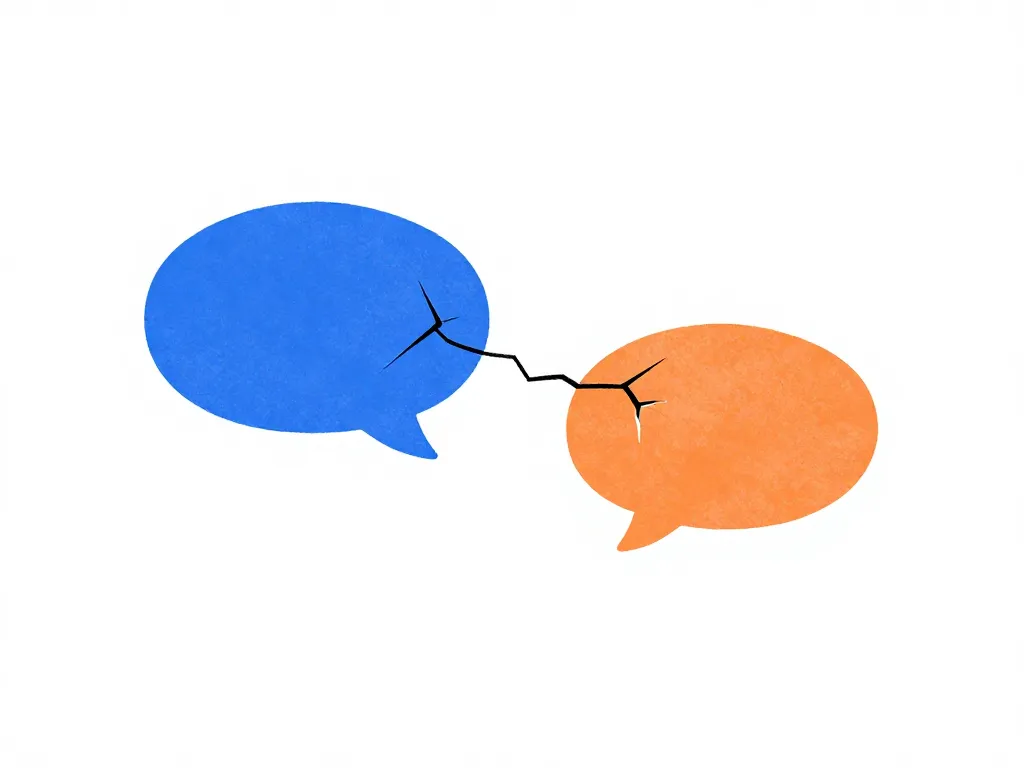
Why Co-Founder Conflict Stays Silent
Before we get to the signs, it helps to understand why co-founder conflicts tend to simmer rather than explode.
Unlike employees who can escalate to HR or quit without much consequence, co-founders are bound together by equity, legal agreements, shared investor relationships, and often deep personal history. The cost of confrontation feels enormous—so founders avoid it. They rationalize. They compartmentalize. They tell themselves the tension will resolve once the next funding round closes, or once the product ships, or once they hire a COO.
But avoidance doesn't reduce conflict. It ferments it. And by the time the pressure becomes unbearable, both founders have built up such thick layers of unspoken grievance that productive conversation becomes nearly impossible.
Here are the five patterns to watch for.
Sign 1: You're Having the Same Argument on a Loop
Every co-founder pair has recurring disagreements. That's normal. What's not normal is when the same argument keeps resurfacing without any resolution—and both of you have stopped trying to actually resolve it.
What this looks like in practice
- You disagree about hiring priorities. You discuss it. You reach a fragile compromise. Three weeks later, the same argument surfaces with the same positions, the same frustration, and the same non-resolution.
- One founder keeps pushing for profitability; the other keeps pushing for growth. Neither has changed their mind in a year. You've both stopped presenting new evidence—you're just restating your positions with increasing exhaustion.
- Decisions about product direction feel like trench warfare. Nobody's persuading anyone. You're just taking turns overruling each other.
Why it's fatal
Recurring arguments that never resolve usually signal a deeper values misalignment that neither founder wants to name. You're not really arguing about whether to hire an engineer or a salesperson—you're arguing about what kind of company you're building. And that's a conversation most co-founders are terrified to have honestly, because the answer might be: "We want different things."
A founder who posted on Hacker News about their co-founder split described it this way: "We spent eighteen months arguing about go-to-market strategy. It wasn't until after we split that I realized we'd never actually agreed on who our customer was."
What to do right now
Pick the one argument that keeps recurring. Write down—separately, not together—what you believe the real underlying disagreement is. Compare notes. If you discover you disagree about something fundamental (mission, values, risk tolerance, timeline), that's the conversation you actually need to have.

Sign 2: Decisions Are Being Made Unilaterally
This is one of the most reliable early indicators that a co-founder relationship is deteriorating, and it often hides behind reasonable-sounding justifications.
What this looks like in practice
- One founder hires a key team member without consulting the other, then presents it as a fait accompli. "I had to move fast."
- Strategic decisions—pricing changes, partnership agreements, feature prioritization—are made and communicated after the fact.
- One founder starts having private conversations with investors or board members that the other only learns about later.
Why it's fatal
Unilateral decision-making is almost never about efficiency. It's about one founder losing trust in the other's judgment—or losing patience with the process of reaching agreement. Either way, it signals that the decision-maker has already mentally downgraded the partnership from "equal collaboration" to "something I need to work around."
The founder being bypassed, meanwhile, experiences this as a profound violation—even if they might have agreed with the decision. It's not about the what; it's about the how. And each unilateral decision makes the next one easier to justify and harder to forgive.
What to do right now
Audit the last ten significant decisions your company made. How many involved genuine consultation between both founders before the decision was finalized? If more than two or three were made unilaterally, you have a governance problem that needs addressing immediately. Write down explicit decision-making rules: which decisions require consensus, which require consultation, and which can be made independently. Tools like Servanda can help co-founders formalize these agreements so that expectations are documented rather than assumed.
Sign 3: You've Stopped Sharing Bad News With Each Other
In healthy co-founder relationships, bad news flows freely—sometimes too freely. When founders start filtering what they share with each other, the partnership is in serious trouble.
What this looks like in practice
- A key customer churns and one founder doesn't mention it for a week, or frames it as less significant than it is.
- One founder discovers a serious product bug or financial issue and handles it quietly rather than surfacing it.
- You find yourself rehearsing how to present problems so your co-founder doesn't "overreact"—or you just avoid the conversation entirely.
- You're more candid with your head of engineering or your executive coach than you are with your co-founder.
Why it's fatal
Information withholding is a trust signal. When you stop sharing bad news with someone, you're telling yourself one of three stories: (1) they can't handle it, (2) they'll make it worse, or (3) it's not really their problem anymore. All three stories point to a partnership that has lost its foundation.
One founder wrote in a postmortem blog post: "I realized we were done when I noticed I was cc'ing my co-founder on emails for the record rather than for input. I didn't want his opinion anymore—I just wanted proof I'd informed him."
That shift—from seeking input to creating a paper trail—is a bright red line.
What to do right now
Ask yourself honestly: is there anything significant happening in your area of the business that your co-founder doesn't know about? If the answer is yes, examine why. If it's because you don't trust their reaction, that's the real problem to solve.
Sign 4: Conversations About Equity or Roles Have Become Radioactive
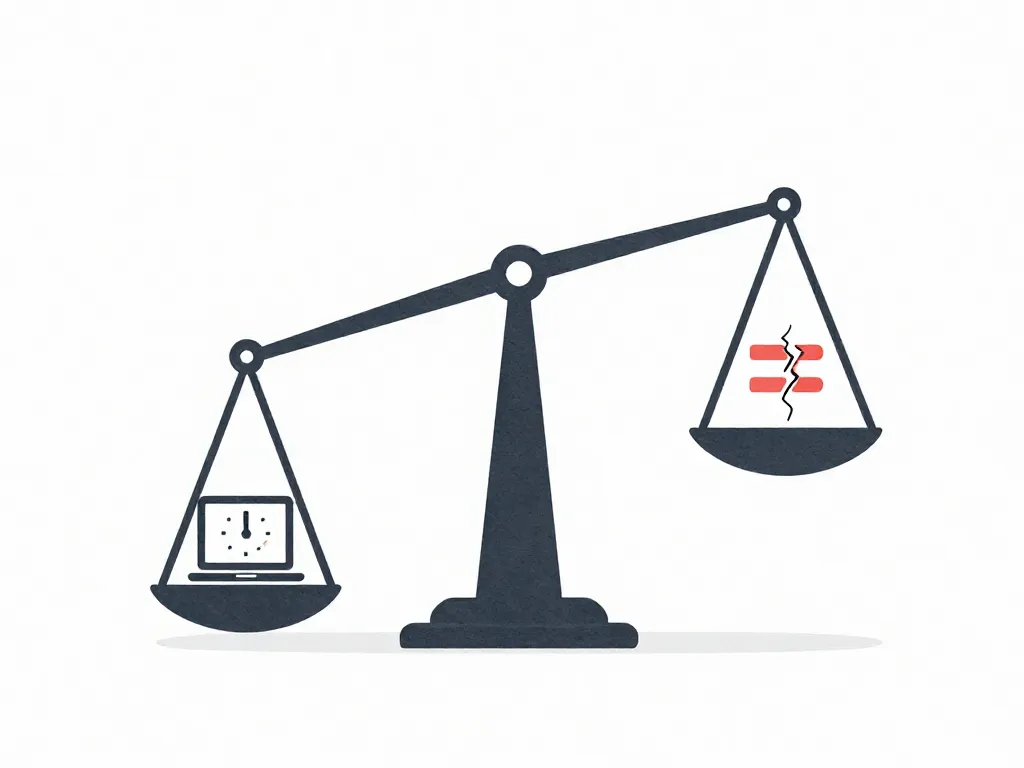
Every co-founder relationship needs to be able to revisit the terms of the partnership as the company evolves. When those conversations become impossible to have, you're in dangerous territory.
What this looks like in practice
- One founder feels they're contributing disproportionately but is afraid to raise it because the last time they did, it turned into a week-long cold war.
- Role boundaries have become blurry, and both founders are stepping on each other's toes, but any attempt to clarify responsibilities is perceived as a power grab.
- One founder's title or equity share no longer reflects their actual contribution—and everyone in the company can see it except the person it benefits.
- The vesting schedule, decision rights, or exit terms were never formalized, and now formalizing them feels like an act of aggression.
Why it's fatal
When founders can't talk about equity and roles, every other conflict becomes a proxy war. The argument about product strategy is really about who has final say. The disagreement about hiring is really about whose team is bigger. The tension over work hours is really about whether the equity split is fair.
Proxy wars are unresolvable because the real issue is never on the table. Founders can "win" every proxy battle and still lose the partnership, because the underlying resentment just finds a new venue.
A widely-shared Y Combinator postmortem described exactly this dynamic: two co-founders who split equity 50/50 at founding, but within two years one was working 70-hour weeks while the other had quietly shifted to part-time. Neither would name it. The company died not from a market problem but from accumulated bitterness that made every product decision feel like a referendum on fairness.
What to do right now
If you've been avoiding a conversation about roles or equity, schedule it. Not over Slack, not at the end of a long day—schedule a dedicated, structured conversation. Consider bringing in a neutral third party (a mutual advisor, a coach, or even a structured mediation tool) to keep the conversation productive. The longer you wait, the more painful this conversation becomes.
Sign 5: You've Started Building Separate Alliances Within the Company
This is the most advanced warning sign, and it often means you're already past the point of easy repair.
What this looks like in practice
- Engineers go to one founder for decisions; sales goes to the other. Not because of clear role division, but because people have learned who will give them the answer they want.
- Team members feel they need to "pick a side" or navigate around tension between the founders.
- One founder starts making comments to employees that undermine the other's authority, even subtly. "Yeah, I know [co-founder] said that, but here's what we're actually going to do."
- Board members or investors are getting different narratives from each founder.
Why it's fatal
When co-founder conflict starts spilling into the organization, it creates a political environment that poisons everything. Your best employees—the ones with options—will leave first. They didn't sign up to navigate a cold war between the founders. They signed up to build something.
A founder who went through a painful co-founder breakup described the moment they knew it was over: "Our VP of Product came to me and said, 'I need to know whose vision I'm building toward, because you and [co-founder] are telling me two different things.' That was the day I realized we weren't disagreeing anymore. We were competing."
What to do right now
Talk to two or three trusted team members individually. Ask them directly: "Do you ever feel like you're getting conflicting direction from me and [co-founder]?" If the answer is yes—or if they hesitate in a way that is the answer—you need to address this urgently. Your company's culture is absorbing your conflict whether you intend it to or not.
A Note on What's Still Fixable
If you're reading this and recognizing your own situation in one or two of these signs, don't panic. The presence of warning signs doesn't mean your partnership is doomed—it means it needs attention.
The founders who successfully navigate co-founder conflict typically share a few traits:
- Both people want to fix it. This is non-negotiable. One-sided effort doesn't work.
- They address the real issues, not the proxies. If the problem is equity fairness, talk about equity. If the problem is divergent visions, talk about vision.
- They create structure where there was ambiguity. Written agreements about decision-making authority, role boundaries, and conflict resolution processes aren't bureaucratic—they're protective.
- They get outside help before they're desperate. An advisor, a founder-therapist, a mediator—someone who isn't embedded in the emotional dynamics.
If you're seeing three or more of these signs simultaneously, the situation is more serious. It doesn't necessarily mean the partnership should end, but it likely means you can't fix it alone, and you can't fix it slowly.
Frequently Asked Questions
How do you know if co-founder conflict is normal or a real problem?
Healthy co-founder conflict involves disagreement about specific decisions, both people engaging constructively, and issues actually getting resolved. When the same arguments repeat without resolution, when one or both founders start avoiding or working around each other, or when the conflict begins affecting team morale—those are signs you've crossed from productive tension into dysfunction.
Can a co-founder relationship survive a serious conflict?
Yes, but only if both founders are genuinely committed to repairing it. Many successful companies—including ones you've heard of—have weathered serious co-founder disagreements. The key differentiator is whether both people are willing to name the real issues and change their behavior, not just agree to "try harder."
When should co-founders consider splitting up?
Consider a split when you've exhausted good-faith efforts to resolve your differences and one or both founders has fundamentally lost trust in the other's judgment or commitment. Other clear signals: you have irreconcilable visions for the company's future, or the conflict is actively damaging the team and business. A structured, fair separation is almost always better than a slow, resentful decline.
What's the best way to bring up co-founder tension without making it worse?
Frame it as a partnership maintenance conversation, not an accusation. Try something like: "I want to make sure we're aligned, and I've been noticing some tension around [specific topic]. Can we set aside an hour this week to talk it through?" Starting with specific observations rather than generalizations ("you always...") keeps the conversation productive.
Should co-founders have a formal agreement about how to handle disagreements?
Absolutely. A decision-making framework and a conflict resolution process should be part of your co-founder agreement from day one. This includes: who has final say in which domains, how you'll handle deadlocks, and what happens if one person wants to exit. Having these agreements in writing—before you need them—removes enormous pressure from high-stakes moments.
Moving Forward
Co-founder conflict isn't a moral failure. It's a structural challenge that comes with the territory of building something ambitious with another human being. The founders who navigate it well aren't the ones who never disagree—they're the ones who build systems for disagreeing productively, who confront difficult truths early, and who treat their partnership as something that requires ongoing maintenance, not just initial chemistry.
If you recognized your situation in this article, the best thing you can do today is name it. Not in a Slack message, not in a passing comment—in a real, scheduled, honest conversation. The window for easy intervention is always smaller than you think.
The 65% statistic doesn't have to be your story. But ignoring the signs won't change it. Seeing them clearly—and acting—might.