Tone Matters More Than Words in a Fight
It's a Tuesday evening. One partner asks, "Did you pay the electric bill?" The other answers, "Yes, I paid it." Harmless enough on paper. But replay that scene with a heavy sigh before the question, arms crossed, eyebrows raised — and suddenly the same seven words land like an accusation. The other partner hears, You're irresponsible and I'm tired of picking up your slack. A fight ignites, and neither person can quite pinpoint why, because technically nobody said anything wrong.
Psychologists studying the most common relationship arguments have found that tone matters more than words when it comes to what actually starts — and sustains — a conflict. A CNBC-featured psychologist recently flagged "sour tone or attitude" as the single biggest catalyst for recurring arguments, ahead of money, chores, or in-laws. The problem isn't what you argue about. It's how you sound when you say it.
Why Your Tone of Voice Hits Harder Than Your Words
The Brain Processes Tone Before Language
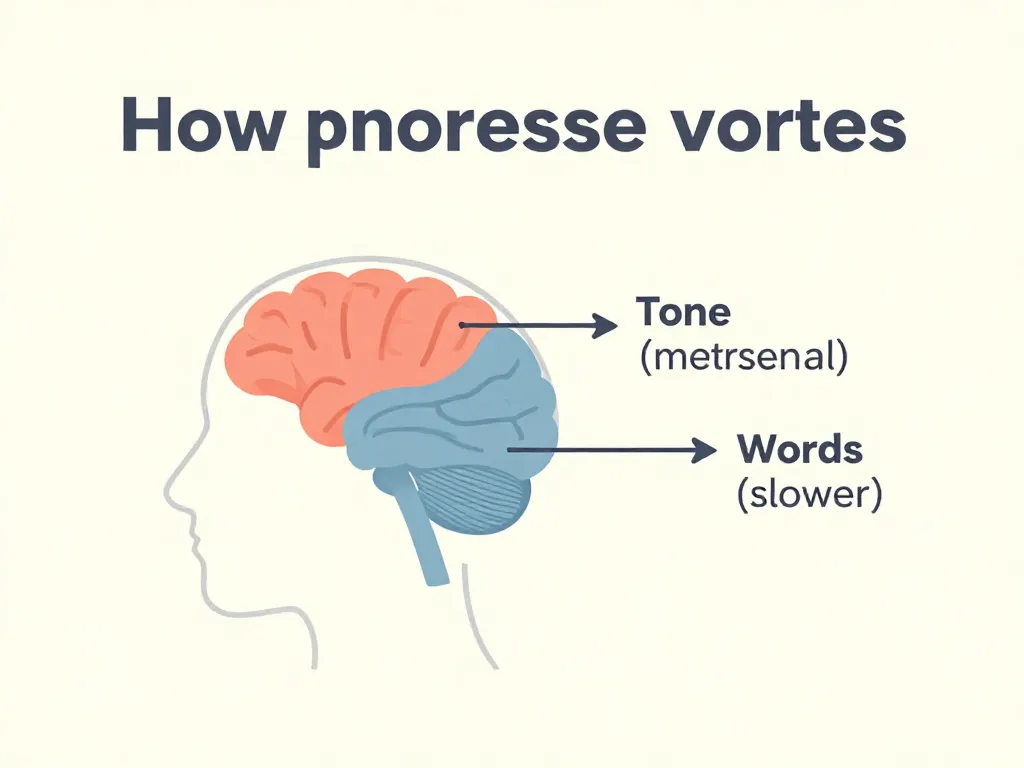
Neuroscience gives us a clear reason tone matters more than words: the brain decodes how something is said faster than it decodes what is said. The amygdala — the brain's threat-detection center — responds to vocal pitch, speed, and volume in milliseconds, well before the prefrontal cortex has finished processing the sentence's meaning. When your partner hears a sharp or dismissive tone, their nervous system has already shifted into a defensive posture before the actual content of your words registers.
This is why you can say something perfectly reasonable — "I just think we should talk about the budget" — and still trigger a fight. If the delivery carries an undertone of contempt, impatience, or condescension, your partner's brain receives a threat signal. They're no longer hearing a request for a conversation. They're hearing an attack.
The 7-38-55 Rule (and What It Actually Means)
Albert Mehrabian's communication research, sometimes called the 7-38-55 rule, suggests 7% of emotional meaning comes from words, 38% from tone of voice, and 55% from body language. While this study specifically measured communication about feelings and attitudes, the core insight holds up in relationship research: when emotions are involved, how you sound dominates how you're understood.
In a fight between partners, emotions are always involved. That means tone isn't just a minor variable. It's the primary channel through which your partner interprets your intentions.
The Subtle Tone Weapons Most Couples Don't Recognize
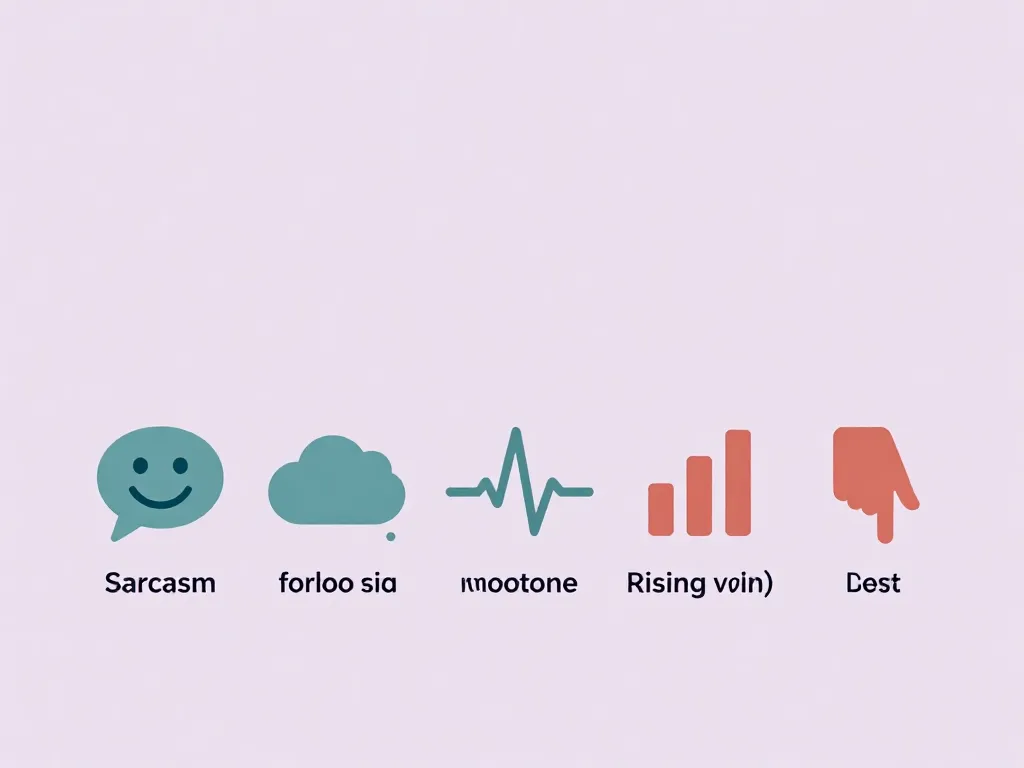
Most couples can identify yelling as a problem. Fewer recognize the quieter tonal patterns that do just as much — sometimes more — damage. Here are the ones relationship therapists see most often:
1. Sarcasm Disguised as Humor
What it sounds like: "Oh wow, you loaded the dishwasher. Should I throw a parade?"
Why it's destructive: Sarcasm allows the speaker to express genuine frustration or contempt while maintaining plausible deniability. If the partner reacts, the speaker can retreat to "I was just joking." This creates a maddening double bind: the listener knows they've been stung but has no socially acceptable way to address it without being told they're "too sensitive."
What it sounds like: A loud exhale before responding, or an audible breath when the partner mentions a topic.
Why it's destructive: A sigh communicates exasperation, boredom, or resignation — all without using a single word. It tells the other person, This conversation is a burden to me. You are a burden to me. Research by Dr. John Gottman at the University of Washington identifies this kind of nonverbal dismissal as a form of contempt, the single strongest predictor of divorce.
3. The Flat, Emotionless Monotone
What it sounds like: One-word answers. "Fine." "Sure." "Whatever."
Why it's destructive: Emotional withdrawal through tone is a form of stonewalling. The speaker may believe they're keeping the peace, but the listener experiences it as abandonment. The message received is: I've checked out. You're not worth engaging with.
4. The Rising Volume Creep
What it sounds like: Neither partner yells, but voices gradually climb in pitch and volume across the conversation.
Why it's destructive: Because no one technically "yelled," neither partner feels responsible for the escalation. But the nervous system doesn't need a shout to activate a stress response. A progressively louder conversation triggers the same fight-or-flight cascade, making resolution increasingly unlikely with each decibel.
5. The Condescending Over-Explanation
What it sounds like: Speaking slowly, over-enunciating, using a patient "teacher" voice. "Let me explain this to you very simply..."
Why it's destructive: This tone positions the speaker as the rational adult and the listener as a child. Even if the words themselves are calm and measured, the power imbalance encoded in the delivery makes the listener feel belittled, not heard.
What's Really Happening Beneath a Harsh Tone
Here's the part that's easy to miss: the partner using a harsh tone usually doesn't realize it. They feel justified. They think they're being direct, or efficient, or even calm. Meanwhile, the listening partner is flooded with cortisol and adrenaline, hearing something that sounds nothing like what the speaker intended.
This disconnect is the engine of recurring arguments. Consider this real-world pattern:
Maya and Jordan have been together for six years. Their most frequent argument is about household tasks. Maya feels she carries a disproportionate share of the mental load. When she brings it up, she uses a clipped, matter-of-fact tone — because she's trying not to be emotional about it. Jordan hears coldness and judgment. He shuts down. Maya interprets his silence as indifference, which confirms her frustration. Her tone sharpens further. The cycle repeats weekly.
Notice: neither person is using cruel words. Neither person is trying to hurt the other. But the tonal pattern — clipped delivery met with emotional withdrawal — creates a loop that no amount of word-editing will fix. The words were never the problem.

How to Change Your Tone (Without Faking It)
Advice like "just use a softer voice" is useless if you're genuinely frustrated. Tone isn't something you can simply paste over your real feelings. Lasting change requires addressing the emotion underneath the delivery. Here's a framework that actually works:
Step 1: Catch the Physiological Cue Before You Speak
Your body knows you're about to use a harsh tone before your mouth does. Common warning signals include:
- Jaw tightening
- Shallow breathing or a held breath
- Heat in the chest or face
- Clenched hands
- An urge to speak immediately, before the other person finishes
Practice: When you notice any of these signals during a conversation with your partner, pause for one full breath cycle (in through the nose, out through the mouth) before responding. This creates a two-second gap between your emotional reaction and your vocal output. That gap is often the difference between a productive conversation and a week-long cold war.
Step 2: Name the Emotion, Out Loud, Before Making Your Point
This is the single most effective tone-regulation technique supported by couples research. Before stating your concern, explicitly name what you're feeling.
Instead of: (clipped tone) "The kitchen is a mess again."
Try: "I'm feeling overwhelmed right now, and walking into a messy kitchen tipped me over the edge."
The first version forces your partner to decode your tone to figure out what's wrong. The second version does that work for them. It also naturally softens your delivery, because labeling an emotion engages the prefrontal cortex and dampens amygdala reactivity — literally calming you down as you speak.
Step 3: Ask for a Tone Check Instead of a Content Check
Most couples, when arguments stall, ask each other, "What did I say that was so wrong?" This question is almost always a dead end, because the words were usually defensible.
A more honest and productive question:
"How did that land? Did my tone match what I was trying to say?"
This question accomplishes three things:
1. It signals that you care about impact, not just intent.
2. It gives your partner permission to name the real issue ("You sounded annoyed") without accusing you of saying something wrong.
3. It opens a collaborative channel: you're both working on the delivery together, rather than arguing about the content.
Step 4: Establish a Low-Stakes "Tone Signal"
Some couples benefit from agreeing on a neutral, non-confrontational signal that either partner can use when the other's tone is escalating. This works best when it's:
- Agreed upon in advance, during a calm moment — never introduced mid-fight
- Non-verbal or very brief — a specific hand gesture, a single word like "volume," or even a gentle tap on the table
- Treated as information, not criticism — the receiving partner agrees to hear it as "your tone shifted" rather than "you're being a jerk"
This approach works because it interrupts the tonal escalation cycle before either partner's nervous system is fully activated.
Step 5: Debrief After Conflicts Cool Down
The best time to work on tone is not during a fight. It's 24 to 48 hours later, when both partners' nervous systems have returned to baseline. Set aside 15 minutes to revisit the conversation with curiosity:
- "When I said X, what did you hear?"
- "I think I sounded more frustrated than I actually was. Here's what I was really feeling..."
- "What would have helped you hear my point without feeling attacked?"
These post-conflict conversations are where real pattern change happens. If you find that the same tonal cycles keep surfacing and the two of you struggle to break them on your own, AI-powered mediation platforms like Servanda can provide structure — helping you document what actually triggers escalation and build specific agreements around how you'll communicate in recurring hot-spot moments.
The Tone Shift That Prevents 80% of Recurring Arguments
Researchers at the Gottman Institute found that the outcome of a conversation can be predicted with over 90% accuracy based on the first three minutes. Specifically, what they call a "harsh startup" — beginning a discussion with criticism, sarcasm, or contempt in your tone — almost guarantees a negative outcome.
The flip side is equally powerful: a soft startup dramatically increases the odds of resolution.
A soft startup isn't about being meek or avoiding the issue. It has three components:
- Start with "I" instead of "you." "I've been stressed about finances" vs. "You spent too much again."
- Describe the situation without assigning blame. "The credit card bill was higher than I expected" vs. "You clearly don't care about our budget."
- Make a specific, positive request. "Can we sit down Saturday and look at the numbers together?" vs. "You need to get your spending under control."
None of these adjustments require you to suppress your concern. You're still raising the issue. You're still being honest. The difference is entirely in the tonal and structural framing — and that difference is what determines whether your partner hears a teammate or a prosecutor.
When Tone Problems Run Deeper
Sometimes persistent tone issues aren't just a bad habit — they're a signal of deeper unresolved pain. If one or both partners consistently use contemptuous, dismissive, or hostile tones despite genuine efforts to change, it may indicate:
- Accumulated resentment from unaddressed past conflicts
- Attachment wounds — a partner who grew up in a home where emotions were punished may default to flat or sarcastic tones as self-protection
- Burnout or depression — chronic stress erodes vocal warmth, making a partner sound harsh even when they don't feel hostile
In these cases, tone work alone won't be enough. Individual or couples therapy can help surface and process the underlying material that keeps showing up in how you speak to each other.
Frequently Asked Questions
Why does my partner get upset even when I haven't said anything mean?
Your partner's brain detects tone — including sharpness, sarcasm, or coldness — milliseconds before it fully processes your words. Even if your sentence is perfectly reasonable, a dismissive or impatient delivery triggers a threat response in their nervous system, making them feel attacked regardless of your actual content.
How do I control my tone of voice when I'm already angry?
Rather than trying to fake a calm voice, focus on catching your body's early warning signals — jaw tightening, shallow breathing, heat in your chest — and pause for one full breath before responding. Then name the emotion you're feeling out loud before making your point, which engages the rational part of your brain and naturally softens your delivery.
What is a soft startup and how does it prevent fights?
A soft startup means beginning a difficult conversation with an "I" statement, describing the situation without assigning blame, and making a specific positive request instead of a demand. Gottman Institute research shows that the first three minutes of a conversation predict its outcome with over 90% accuracy, so starting gently dramatically increases your chances of reaching a resolution.
What are the most damaging tone patterns in a relationship?
The most destructive tone patterns include sarcasm disguised as humor, performative sighing, emotionless monotone responses, gradually rising volume, and condescending over-explanation. Many of these are subtle enough that neither partner recognizes them as harmful, yet they trigger the same stress responses as outright yelling and can erode trust over time.
When should we get professional help for communication problems?
If one or both partners consistently default to contemptuous, dismissive, or hostile tones despite genuine efforts to change, it may signal deeper issues like accumulated resentment, attachment wounds from childhood, or burnout and depression. In these cases, individual or couples therapy can help address the underlying emotional material that keeps surfacing in your tone.