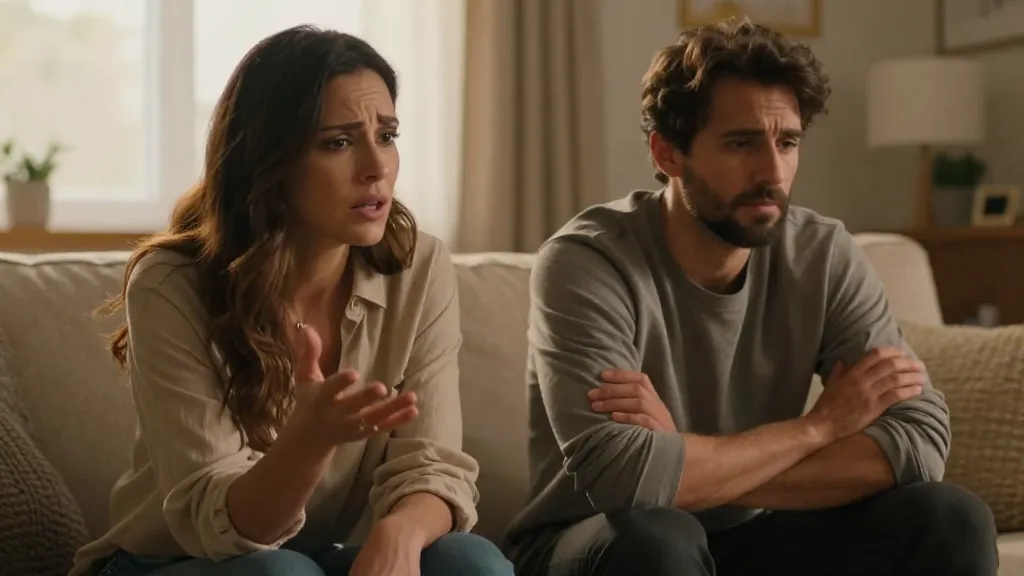
Tone of Voice Is Destroying Your Relationship
You ask your partner if they remembered to pay the electric bill. That's it. Seven ordinary words. But something in how you said it — a slight edge, a flicker of impatience, a pitch that landed somewhere between question and accusation — and suddenly you're in a full-blown argument about responsibility, respect, and who does more around the house.
A 2025 YouGov study on the most common relationship fights found that tone of voice ranks among the top triggers for conflict between couples. Not finances, not chores, not even in-laws — tone. The thing most of us never consciously think about is quietly corroding trust, warmth, and connection in relationships everywhere.
The words you choose matter far less than the way you deliver them. And if you and your partner keep having the same fight without understanding why, your tone of voice in your relationship is the invisible culprit.

Why Tone Matters More Than Words
In the 1960s, psychologist Albert Mehrabian conducted research that's been debated ever since — but the core insight holds up: when there's a mismatch between what someone says and how they say it, listeners overwhelmingly trust the tone over the words. Decades of subsequent communication research has confirmed the pattern.
Think about the sentence: "Sure, that's fine."
Said warmly, it's agreement. Said flatly, it's resignation. Said with a sigh and an eye roll, it's a grenade.
The words didn't change. The meaning completely did.
Your Brain Is Wired to Detect Threat in Tone
Our nervous systems evolved to scan vocal cues for signs of danger long before we developed language. A sharp tone activates the amygdala — your brain's threat-detection center — before the prefrontal cortex (the rational, word-processing part) even finishes parsing the sentence.
In practical terms: your partner's body has already decided they're under attack before their brain finishes hearing what you actually said. By the time they respond, they're not responding to your words. They're responding to the alarm their nervous system just pulled.
This is why the classic defense — "All I said was..." — never works. You're arguing about the script. They're reacting to the performance.
The Sarcasm Trap and Other Tone Pitfalls
Not all harmful tones sound like yelling. In fact, the most relationship-damaging tones are often subtle. Here are the patterns that show up most frequently in couples' conflicts:
1. The Sarcastic Sting
"Oh wow, you loaded the dishwasher. Someone call the news."
Sarcasm feels clever to the speaker and contemptuous to the listener. Relationship researcher John Gottman identified contempt — often delivered through sarcastic tone — as the single strongest predictor of divorce. It communicates: I'm above you. You're not worth a direct conversation.
2. The Exhausted Sigh-and-Speak
"I'll just... do it myself." (heavy exhale)
This isn't yelling. It's barely even a complaint. But the subtext — You're useless, and I'm a martyr — lands like a hammer. The sigh does more damage than the sentence.
3. The Clipped, Cold Efficiency
"Fine. Okay. Whatever you want."
Every word here is technically agreeable. The tone says: I have withdrawn from this relationship and from you. Emotional withdrawal, delivered through flat or clipped vocal tone, triggers panic in partners who are attachment-sensitive — which, to varying degrees, is most of us.
4. The "Helpful" Condescension
"Okay, let me explain this slowly..."
Framed as patience, experienced as superiority. This tone pattern is especially corrosive because the speaker genuinely believes they're being reasonable, making them defensive when called out.
What's Really Happening Under the Tone
Tone isn't random. It's a signal. Usually, it's leaking an emotion that the speaker either doesn't recognize or doesn't feel safe expressing directly.
- The sharp tone often masks anxiety: I'm scared we're going to overdraft again and I don't know how to say that without starting a fight.
- The sarcastic tone often masks hurt: I feel like I'm invisible in this household and I don't know how to ask for recognition without sounding needy.
- The flat tone often masks overwhelm: I'm so depleted I've stopped being able to perform warmth, and I don't know how to tell you I'm drowning.
Understanding the source of your tone — or your partner's — changes the conversation from "Why are you being a jerk?" to "What's going on underneath this?"
How to Actually Fix Your Tone
Step 1: Learn Your Vocal Triggers
Spend a week noticing — without judging — the moments your tone shifts. You don't need to fix anything yet. Just observe.
Common trigger patterns include:
- Feeling unheard (you've said it three times already)
- Feeling blamed (their question sounds like an accusation to your ears)
- Physical depletion (hunger, fatigue, overstimulation)
- Accumulated resentment (it's not about the dishes — it's about the last 40 times)
Keep a note on your phone if it helps. "Tuesday, 7pm — got sharp about dinner plans. Was actually anxious about money." The pattern will become obvious faster than you expect.
Step 2: Name the Feeling Before It Hijacks Your Voice
Before you respond to your partner in a charged moment, pause and internally name what you're feeling.
Not what you're thinking ("They never help") — what you're feeling ("I feel overwhelmed and alone in managing the house").
Affect labeling reduces amygdala activation. In plain language: naming the emotion takes some of its power away before it reaches your vocal cords.
Then, if you can, say the feeling out loud instead of letting it seep into your tone:
- Instead of "Did you even look at the bank account?" (accusatory tone) → "I'm feeling anxious about money right now. Can we look at the account together?"
- Instead of "Fine, I'll handle it" (martyred sigh) → "I'm feeling overwhelmed. I need help with this, and I don't know how to ask without sounding like I'm nagging."
Step 3: Create a Tone Agreement With Your Partner
This is proactive work you do outside of conflict — during a calm moment, maybe over coffee on a weekend morning.
Have an honest conversation structured around these questions:
- "What tone from me triggers you the most?" (Let your partner describe it. Don't defend. Just listen.)
- "What does that tone make you feel?" (Not think. Feel.)
- "What tone from you triggers me the most?" (Same process in reverse.)
- "What's a phrase either of us can say to flag tone in the moment — without it sounding like an attack?"
Some couples use a simple code word. Others agree on a phrase like "I think your tone is telling me something — what's going on?" The specific words matter less than the shared understanding that tone is a legitimate thing to address, and flagging it is an act of care, not criticism.
Tools like Servanda can help couples formalize these kinds of agreements in writing — creating a shared reference point you can return to when emotions make it hard to remember what you both committed to.
Step 4: Repair Quickly When Your Tone Misfires
You will mess this up. Your partner will mess this up. The goal isn't perfection — it's fast repair.
A good tone repair sounds like:
- "I heard how that came out. That's not what I meant. Let me try again."
- "I was sharper than I needed to be. I'm sorry. I'm actually just stressed about work."
- "Can I get a redo on that sentence?"
Repair the tone without being asked to. When you catch your own tone and correct it voluntarily, it builds enormous trust. It tells your partner: I'm paying attention. How I make you feel matters to me.

When It's Not Just Tone — Recognizing Deeper Patterns
Sometimes tone problems are the symptom, not the disease. If you or your partner find that a harsh, contemptuous, or cold tone is your default rather than an occasional misfire, that can signal:
- Chronic, unexpressed resentment that has accumulated over months or years
- Emotional burnout in the relationship — you've stopped investing energy in how you come across because you've stopped believing it matters
- Attachment patterns from childhood — if you grew up in a home where sharp tone was the norm, you may not hear it in yourself
All of these benefit from outside support — whether that's couples therapy, individual work, or structured tools that help you communicate with more intention.
The honest question to sit with: Is my tone something that occasionally goes sideways, or has it become the climate of my relationship?
What Your Tone Is Really Saying to Your Partner
Every tone carries an implicit message about the relationship.
| Tone |
Words might say |
Partner actually hears |
| Sharp / impatient |
"Did you call the landlord?" |
"I don't trust you to handle things." |
| Sarcastic |
"Nice job." |
"I think you're incompetent." |
| Flat / withdrawn |
"It's fine." |
"I've given up on us." |
| Condescending |
"Let me explain." |
"I think I'm smarter than you." |
| Warm / direct |
"I need your help with this." |
"I respect you. We're a team." |
Your tone is your relationship's weather. Your partner can endure a storm. They can't endure a permanent winter.
Frequently Asked Questions
Why does my partner get upset even when I say something perfectly reasonable?
Your partner's brain is wired to detect threat through vocal cues before it finishes processing the actual words. If your tone carries an edge of impatience, accusation, or condescension, their nervous system registers danger and triggers a defensive reaction — regardless of how logical your words are.
How do I control my tone of voice when I'm already frustrated?
Rather than relying on willpower to sound pleasant, pause before speaking and name the specific emotion you're feeling internally — such as "I feel overwhelmed" or "I feel unheard." This affect-labeling technique reduces the emotional intensity in your brain before it reaches your voice. When possible, say the feeling out loud instead of letting it leak into your delivery.
Is sarcasm really that bad in a relationship?
Yes — relationship researcher John Gottman identified contempt, which is most often delivered through sarcastic tone, as the single strongest predictor of divorce. Sarcasm communicates superiority and dismissiveness to the listener. Over time, it erodes the sense of safety and mutual respect that healthy relationships depend on.
How do you bring up your partner's tone without starting another fight?
The most effective approach is to establish a shared agreement about tone during a calm, conflict-free moment — not in the heat of an argument. Together, choose a neutral phrase like "I think your tone is telling me something — what's going on?" that both of you recognize as a caring check-in rather than a criticism. Tools like Servanda can help you formalize these kinds of agreements so you have a shared reference point when emotions run high.
What if my partner's harsh tone is constant and not just occasional?
A consistently harsh, cold, or contemptuous tone may signal deeper issues such as chronic unexpressed resentment, emotional burnout, or ingrained communication patterns from childhood. This doesn't mean the relationship is doomed, but it does suggest that the tone problem is a symptom of something larger that benefits from couples therapy, individual work, or structured communication tools.