
Why You Fight With Your Roommate (It's Not Why You Think)
It starts with a sink full of dishes. Or maybe it's the thermostat. Or the fact that their partner has been sleeping over for the fifth night in a row. You feel the frustration climbing, and eventually, it boils over — a passive-aggressive text, a slammed door, or a confrontation that leaves everyone feeling worse.
But here's the thing most roommates never realize: the dishes aren't the problem. Neither is the thermostat, the noise, or the groceries that keep disappearing from the fridge. The real reason you keep fighting with your roommate has less to do with what you're fighting about and almost everything to do with how each of you handles conflict. When two people with mismatched conflict styles share a living space, even small disagreements can spiral into ongoing resentment. Understanding why you fight with your roommate — at the root level — is the first step toward actually making things better.
Key Takeaways
- The surface issue is rarely the real issue. Most roommate fights are fueled by mismatched conflict styles, not dirty dishes or loud music.
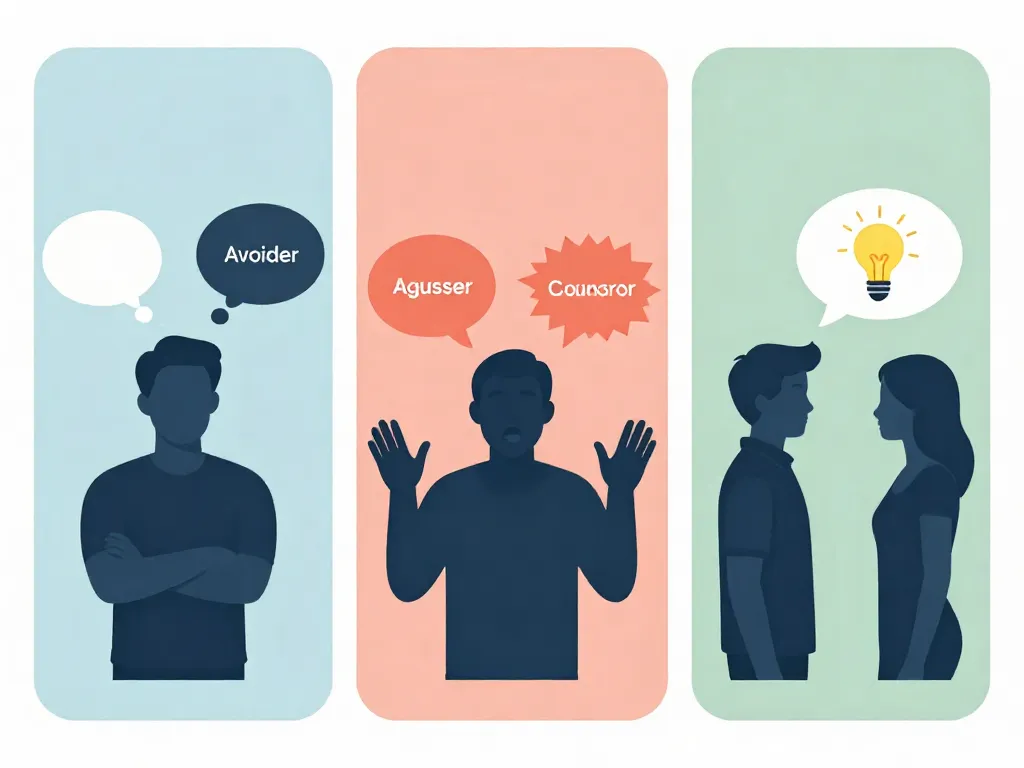
- There are three dominant conflict styles — avoidant, aggressive, and collaborative — and most people default to one without realizing it.
- Your conflict style isn't permanent. Once you identify your patterns, you can consciously shift toward more productive approaches.
- Naming the dynamic is half the battle. Simply telling your roommate "I think we handle disagreements differently" can defuse months of tension.
- Written agreements prevent style clashes from escalating. When expectations are documented, there's less room for misinterpretation.
The Real Reason Roommates Fight
Research on interpersonal conflict consistently shows that people in close-quarters relationships — whether romantic partners, family members, or roommates — rarely fight about what they say they're fighting about. A study published in the Journal of Applied Social Psychology found that the strongest predictor of roommate dissatisfaction wasn't messiness, noise, or even incompatible schedules. It was perceived unfairness and the inability to resolve disagreements effectively.
In other words, the problem isn't that your roommate leaves crumbs on the counter. The problem is what happens — or doesn't happen — when you try to address it.
Every person walks into a shared living situation carrying years of learned behavior about how to handle friction. Maybe you grew up in a household where people yelled when they were upset, so that feels normal to you. Maybe conflict was avoided entirely in your family, so the mere idea of confrontation makes your stomach drop. These ingrained patterns are called conflict styles, and when two incompatible styles collide under one roof, the results can be explosive — or silently corrosive.
The Three Conflict Styles (And How to Spot Yours)
Conflict resolution researchers generally identify several styles, but for roommate dynamics, three dominant patterns show up again and again. Most people lean heavily toward one, especially under stress.
The Avoider
What it looks like: You'd rather let something slide than bring it up. You tell yourself it's "not worth the argument" or that you're being "the bigger person." You might vent to friends instead of talking to your roommate directly. When your roommate does bring up an issue, you minimize it ("It's fine, don't worry about it") or withdraw.
What's actually happening: Avoidance feels like peacekeeping, but it's actually resentment on a slow drip. Every ignored issue adds a layer of frustration until the dam breaks — usually over something minor that has nothing to do with the real accumulated grievances.
Common signs: - You've thought "I just won't say anything" more than three times this month - You've complained about your roommate to someone else but never to them - You feel tension in your body when you come home but can't pinpoint why - You've left notes instead of having face-to-face conversations
The Aggressor
What it looks like: When something bothers you, you address it immediately — and intensely. You might raise your voice, use accusatory language ("You always..." "You never..."), or bring up a list of past offenses when one new issue comes up. You see yourself as direct and honest. Your roommate might see you as intimidating.
What's actually happening: Aggressive conflict style often comes from a place of genuine frustration and a belief that being forceful is the only way to be heard. But it tends to put the other person on the defensive, which means the actual issue rarely gets resolved. Instead, the conversation becomes about tone, volume, and hurt feelings.
Common signs: - Your roommate has said you're "overreacting" or "too intense" - Arguments tend to escalate quickly - You feel a rush of adrenaline when bringing up issues - You've said things in the heat of the moment that you later regretted
The Collaborator
What it looks like: You try to address issues calmly and look for solutions that work for both people. You use language like "I've noticed..." or "Can we figure this out together?" You're willing to compromise and you check in regularly.
What's actually happening: This is the style most likely to lead to lasting resolution. But it's also the least common default — it requires emotional regulation, vulnerability, and practice. Even natural collaborators can slip into avoidance or aggression when they're stressed, tired, or feel like their efforts aren't being reciprocated.
Common signs: - You initiate conversations about household dynamics proactively - You ask questions before making assumptions - You can separate the issue from the person - You're reading this article, which already suggests some self-awareness

When Styles Collide: The Real Source of Friction
Now here's where it gets interesting — and where most roommate relationships go wrong. It's not having a particular conflict style that causes problems. It's the mismatch.
Consider these common pairings:
Avoider + Aggressor
This is the most volatile combination. The aggressor brings up an issue forcefully. The avoider shuts down or walks away. The aggressor feels ignored and escalates. The avoider feels attacked and retreats further. Neither person gets what they need, and resentment builds on both sides.
Real scenario: Jordan noticed their roommate Alex was consistently using Jordan's cookware without washing it. Jordan (avoider) said nothing for weeks, hoping Alex would notice. When Alex (aggressor) confronted Jordan about a separate issue — leaving lights on — Jordan exploded about the cookware, the fridge, and six other things they'd been silently cataloging. Alex felt blindsided. Jordan felt like they'd finally been "honest." Both felt unheard.
Avoider + Avoider
This pairing looks peaceful on the surface. No arguments, no raised voices. But underneath, both people are accumulating grievances, making assumptions about each other's intentions, and slowly disengaging from the relationship. Eventually, one person moves out "for other reasons" — but the real reason is months of unaddressed tension.
Aggressor + Aggressor
Frequent, loud arguments that may resolve individual issues in the short term but create an exhausting, hostile living environment. Both people are always braced for the next conflict, and the home stops feeling like a safe space.
Collaborator + Anyone
This pairing has the best odds, but only if the collaborator doesn't burn out. If a collaborator is consistently met with avoidance or aggression, they may eventually give up and adopt one of those styles themselves — which is when things really deteriorate.
How to Break the Cycle
The good news: conflict styles aren't personality traits carved in stone. They're habits. And habits can change. Here's how to start.
1. Name Your Default Style
Before your next disagreement, take an honest look at how you've handled past ones. Ask yourself:
- When was the last time I brought up an issue with my roommate directly? How did I do it?
- Do I tend to let things build up or address them immediately?
- How would my roommate describe my approach to disagreements?
You might even ask a trusted friend for their honest assessment. Sometimes we're the last to see our own patterns.
2. Name the Dynamic, Not the Blame
One of the most powerful things you can say to a roommate is: "I think we handle disagreements differently, and I think that's making things harder than they need to be."
This sentence does something remarkable — it reframes the conflict as a shared problem rather than one person's fault. It opens the door to a conversation about process rather than a rehash of every individual grievance.
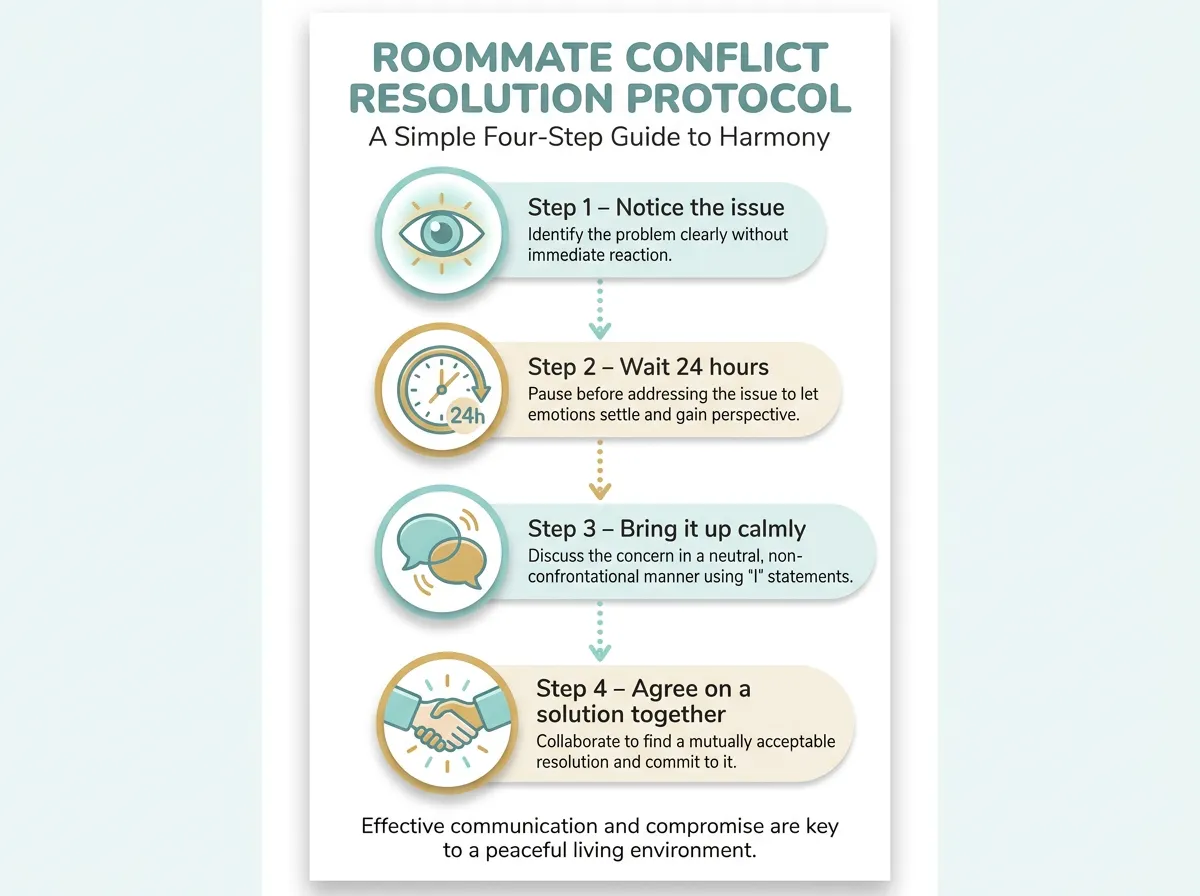
3. Agree on a Conflict Protocol
This sounds formal, but it doesn't have to be. It just means having a brief conversation — ideally during a calm moment, not during a fight — about how you'll handle issues when they come up. Some questions to answer together:
- When should issues be raised? (Right away? Within 24 hours? At a weekly check-in?)
- How should they be raised? (In person? Over text? Using specific language like "I" statements?)
- What's off-limits? (Yelling? Bringing up past issues? Involving other housemates?)
- What happens if we can't agree? (Take a break and revisit? Bring in a neutral third party?)
Tools like Servanda can help roommates formalize these agreements in writing, so there's a clear reference point when emotions start running high.
4. Practice the 24-Hour Rule
When something bothers you, give yourself 24 hours before deciding how to address it. This serves two purposes:
- For avoiders, it creates a deadline. You can't let it slide indefinitely — you've committed to revisiting it within a day.
- For aggressors, it creates a buffer. You get to process the initial emotional spike before engaging, which usually leads to a calmer, more productive conversation.
After 24 hours, ask yourself: Is this still bothering me? If yes, bring it up. If it genuinely isn't, let it go — but be honest with yourself about whether you're truly over it or just avoiding.
5. Separate the Person From the Pattern
Your roommate isn't leaving dishes in the sink at you. They aren't playing music loudly to disrespect you. In most cases, they're simply operating from different habits, priorities, or awareness levels. When you catch yourself assigning motive ("They clearly don't care about me"), pause and replace it with curiosity ("I wonder if they realize this bothers me").
This single mental shift — from assumption to curiosity — can prevent more fights than any chore chart ever will.
6. Schedule Low-Stakes Check-Ins
Don't wait for a problem to talk about how things are going. A quick monthly check-in (even five minutes over coffee) normalizes the conversation around shared living. Some roommates find it helpful to frame it simply:
- What's working well?
- What could work better?
- Is there anything we should revisit?
When these conversations become routine, individual issues stop feeling like a big deal. They become just... maintenance.
Why Self-Awareness Is the Real Fix
Most roommate advice focuses on logistics: make a chore schedule, split the bills evenly, set quiet hours. And that advice isn't wrong — it's just incomplete. Logistics only work when both people have the tools to navigate the inevitable moments when the system breaks down. And systems always break down.
The roommates who make it work long-term aren't the ones who never disagree. They're the ones who understand their own tendencies, recognize their roommate's tendencies, and meet somewhere in the middle. They know that a fight about the electricity bill is sometimes actually a fight about feeling taken for granted. They know that silence isn't peace — it's just deferred conflict.
Understanding why you fight with your roommate starts with understanding yourself. That's harder than blaming the other person, but it's the only approach that actually works.
Frequently Asked Questions
Is it normal to fight with your roommate a lot?
Yes, some friction is completely normal when sharing a living space. What matters more than the frequency of disagreements is how they're handled. If fights keep repeating without resolution, it usually signals a conflict style mismatch rather than incompatibility as people.
How do I talk to my roommate about a problem without starting a fight?
Start by choosing a calm, private moment — never when either of you is stressed or rushing out the door. Use specific observations ("I noticed the kitchen was left messy twice this week") rather than character judgments ("You're so messy"). Ask for their perspective before proposing a solution.
What if my roommate refuses to talk about issues?
Your roommate might be an avoider, which means direct confrontation feels threatening to them. Try offering a lower-stakes format: a shared notes document, a brief text, or a structured check-in with specific prompts. Make it clear you're looking for a solution, not a fight.
Should roommates have written agreements?
Absolutely. Written agreements aren't a sign of distrust — they're a sign of clarity. Having shared expectations documented takes the pressure off memory and reduces the "I thought we agreed" arguments that erode roommate relationships over time.
Can a bad roommate relationship be fixed?
In most cases, yes — if both people are willing to examine their own patterns, not just the other person's behavior. The situations that can't be fixed are usually ones where one person refuses to engage at all. If both roommates are willing to have an honest conversation about dynamics, that willingness alone is a strong foundation.
Moving Forward
The next time you feel that familiar frustration rising — the clenched jaw, the sarcastic text drafted and deleted three times — pause. Ask yourself: Am I reacting to what just happened, or to how this person handles conflict differently than I do?
That question alone can change everything. It won't make the dishes magically clean themselves. It won't soundproof the walls. But it will help you see your roommate as a person navigating the same awkward, messy reality of shared living — just with different wiring.
Understanding why you fight with your roommate gives you something blame never can: the power to actually change the pattern. Start with yourself, invite your roommate into the conversation, and build something better than a cold war punctuated by passive-aggressive Post-it notes. You both deserve a home that feels like one.