
1 Year Relationship Check-In: 16 Questions to Ask
You've been together a year. Nothing is broken, but you've never actually sat down and asked how it's going. That conversation goes much better when you walk in with the questions already written.
Start with the four below, which only really land at the one-year mark. Then work through the 12 that follow, which are the full check-in and work every year after this one. All of them are phrased the way you'd actually say them, so you can read them aloud or adapt them.
The Four Questions for Year One
The first year ends somewhere specific. The early chemistry has settled, you've had your first few real disagreements, and the decisions ahead of you are bigger than the ones behind you: living together, money, families, whether this is the shape you want long term. These four aim at that.
"What did you find out about me this year that you didn't expect?"
"When you picture us a year from now, what's different?"
"Is there a decision you've been putting off bringing up with me? Moving in, money, holidays, family?"
"What's one thing you've been doing to keep the peace that you'd rather stop doing?"
That last one tends to be the most revealing. First years run on accommodation, and a lot of it is invisible until someone is asked directly.
The 12 Questions
Looking back at the year
1. The one that reminds you it's been a good year.
"What's one moment this past year where you felt closest to me?"
It may not be what you'd have guessed. One partner might name the weekend away in June; the other, the night they cried about work and felt genuinely heard. Both answers tell you what makes that person feel loved.
2. The brave one.
"Is there anything I did this year that hurt you, that we never really finished talking about?"
Don't fix it on the spot. Hear it, say back what you heard, and decide together whether it needs its own conversation later.
3. The one couples skip.
"What's something you're proud of us for?"
Maybe you got through a move, a hard stretch with someone's family, or just kept showing up during a boring season. Name it out loud. Let it count.

Closeness and intimacy
4. The foundation question.
"Do you feel safe being honest with me right now? Is there anything that makes that harder?"
If your partner hesitates, that isn't a failure. It's information. Maybe they feel fine everywhere except money. Maybe past disagreements went badly enough that they've started holding opinions back.
5. The one people avoid.
"How are you feeling about our physical intimacy? What would you want more of, or less of?"
Phrase it as position rather than accusation. Not "you never" or "why don't we," but "here's where I am, where are you?"
6. The open door.
"Is there something you've been wanting to tell me but haven't found the right moment for?"
This can surface anything from a career plan to a small ache like "I miss when we cooked together on Sundays." Give it silence. Don't rush to answer.
The practical stuff that causes real fights
7. The fairness question.
"Is there anywhere the split of who does what feels off to you?"
Chores, money, planning, emotional labour, remembering birthdays. The question is not "do you do enough," it's "does the way we divided this still fit our actual lives?" Suppose one partner took over all the cooking when the other started a demanding job, and that job ended eight months ago. Nobody renegotiated. That's how a small imbalance becomes a standing resentment.
8. The most useful question on this list.
"What's an argument we keep having, and what do you think it's actually about?"
Repeating arguments are rarely about their surface topic. The dishes fight is usually about feeling unseen. The spending fight is usually about two different definitions of safety. Naming the pattern together is most of the work.
9. The maintenance question.
"Are there any agreements or boundaries we should update?"
Holiday plans, phone use, work hours, how much notice you give each other before making plans. Arrangements you made as new-ish partners may not fit you now.
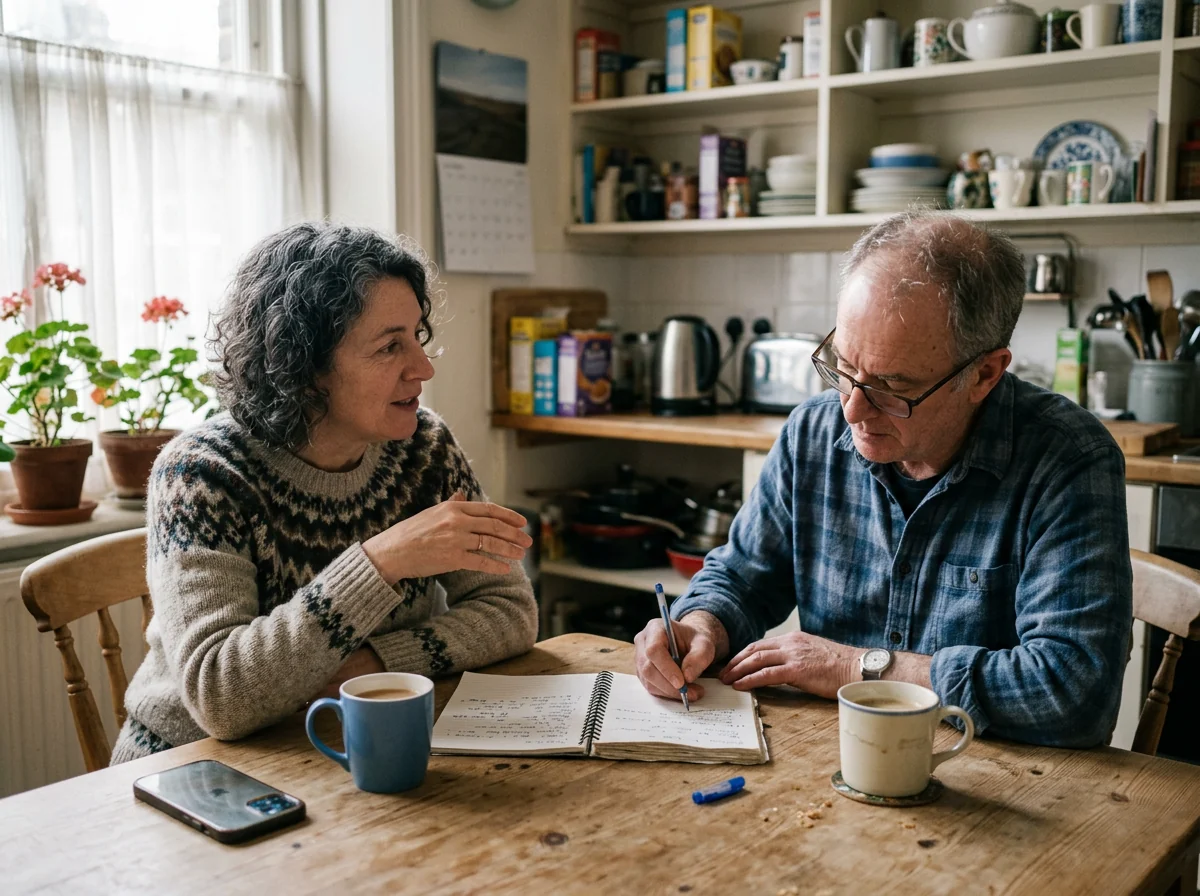
Looking at the year ahead
10. The individual one.
"What's one thing you want for yourself this year, and how can I help?"
You're two separate people who chose each other. Backing your partner's own growth isn't a risk to the relationship.
11. The shared one.
"What's one thing you'd like us to do or build together this year?"
A trip, a weekly dinner, a savings goal. What matters is having something ahead of you that you both chose.
12. The recalibration.
"What does feeling loved look like for you right now? Has that changed?"
What someone needs isn't fixed. Someone who wanted time above all else may now need reassurance after a rough year. Asking every year keeps you aimed at who your partner is now.

How to Set It Up
Pick the time deliberately. Not hungry, not exhausted, not twenty minutes before someone's parents arrive. A quiet evening, a long walk, or a weekend morning slightly outside the routine.
Agree the format first. Take turns per question, or write answers separately then swap. Deciding in advance stops it drifting.
Send the questions ahead. People answer better when they've had a day to think, and it signals that this isn't an ambush.
One rule: curiosity over defence. If something stings, your job in that moment is to ask a follow-up, not to counter. You get your turn.
If the conversation produces actual commitments, write them somewhere you'll both see them again. Tools like Servanda help turn "we should probably" into something specific enough to hold each other to.
After the Conversation
- Write down two or three takeaways. Not a plan with fourteen items. The things you each most want to be different.
- Book a 15-minute follow-up for three months out. One coffee, one question: how are we doing on what we said?
- Leave the big thing alone for now. If something heavy surfaced, it needs its own conversation, and sometimes a therapist. Acknowledging it is enough for tonight.
- Keep the notes. Next year the most interesting thing you'll read is what you wrote this year.
Frequently Asked Questions
Are one-year check-in questions different from a general annual check-in?
Mostly no, which is why the 12 above work at year one and at year ten. What's specific to the first year is that you're still discovering each other's conflict patterns and facing a run of first big decisions, which is why the four questions at the top focus on what's coming rather than what happened.
How do I bring this up without my partner thinking something is wrong?
Say what it's for before you say what it is:
"I want to do something for our anniversary that isn't just dinner. Can we do an hour of proper questions about how the year went, good and bad?"
Sending the list ahead helps more than anything else.
What if the check-in surfaces something we can't resolve?
Stop trying to finish it that night. Write it down as the one thing to come back to, agree a specific next step, and if it keeps not resolving, a couples counsellor is a reasonable next move rather than a last resort.
Is a one-year check-in too early?
A year is roughly when the first real patterns become visible, which makes it a useful moment rather than an early one. Couples who wait until something breaks are having the same conversation under much worse conditions.