Couples Actually Fight About Nothing Most Often
It starts with a sigh. Maybe it's the way your partner closes the cabinet door a little too hard, or a one-word reply to a question you thought was simple. Ten minutes later, you're in a full-blown argument—voices raised, feelings hurt—and neither of you can point to what actually caused it.
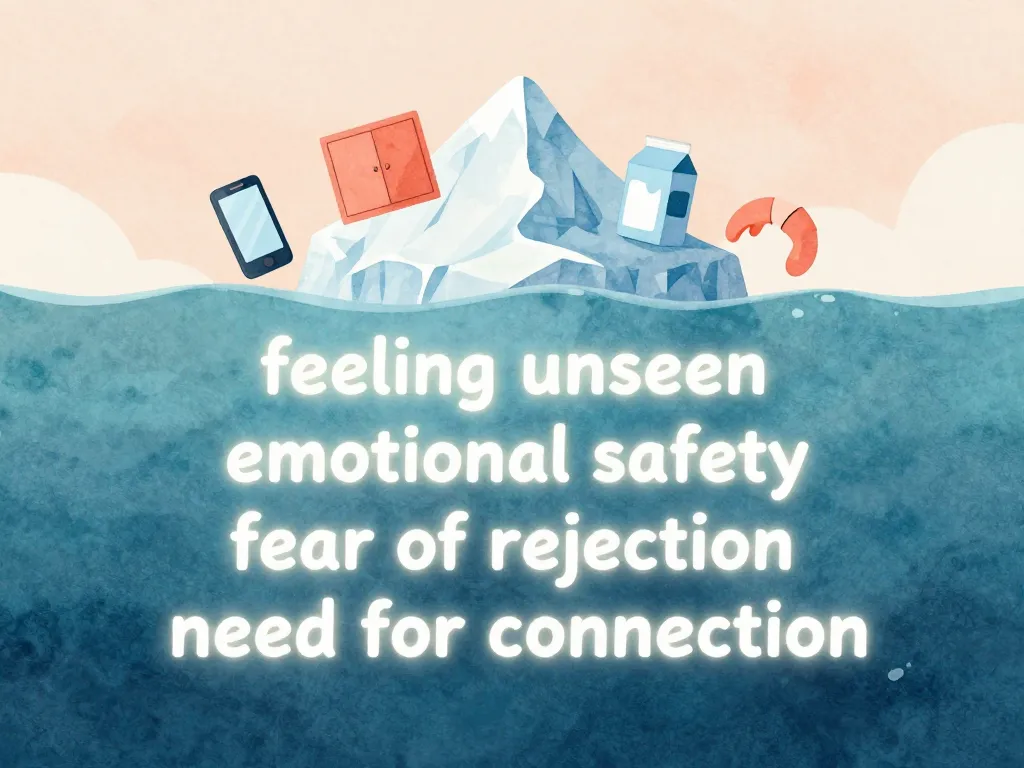
Decades of relationship research, most notably from the Gottman Institute, reveal something that surprises almost everyone: the number one thing couples fight about is essentially "nothing." Not money. Not sex. Not the in-laws. The fights that recur most often have no identifiable topic at all. They're ignited by fleeting moments—a tone of voice, a glance at a phone, a forgotten detail—that seem absurdly small on the surface but carry enormous emotional weight underneath.
Why Do Couples Fight About Nothing? The Research
Dr. John Gottman and his team at the University of Washington spent over 40 years studying thousands of couples in what became known as the "Love Lab." Among the most striking findings: when researchers coded what couples argued about, the most frequent category wasn't finances, household labor, or parenting. It was interactions with no discernible topic—moments that escalated from zero to conflict in seconds, with neither partner able to articulate a clear cause.
This aligns with broader research on relationship conflict. A 2019 study published in Family Process found that the emotional tone of an interaction predicted conflict escalation far more reliably than the subject being discussed.
The Emotional Bid Theory
Gottman introduced a concept that helps explain these "nothing" fights: emotional bids. An emotional bid is any attempt one partner makes to connect—a question, a touch, a comment about something they noticed, even a sigh. Bids can be tiny and easy to miss:
- "Look at that dog across the street."
- A hand placed on your shoulder while you're reading.
- "How was your meeting today?"
- A quiet exhale after a long day.
Each bid is essentially your partner saying, "Are you there? Do you see me? Do I matter to you right now?"
Partners respond to bids in one of three ways:
- Turning toward (acknowledging the bid): "Oh wow, that's a cute dog."
- Turning away (ignoring or missing the bid): Silence. Eyes stay on the phone.
- Turning against (responding with hostility): "I'm busy. Can you stop interrupting me?"
Gottman's research found that couples who stayed together long-term turned toward each other's bids 86% of the time. Couples who eventually divorced? Only 33% of the time.
When a bid is missed or dismissed, the bidding partner rarely says, "I just made an emotional bid and you turned away from it." Instead, the hurt registers below conscious awareness. It comes out sideways—as irritation over a cabinet door, sarcasm about a forgotten errand, or a cold silence that neither person can explain.
That's a "nothing" fight. It's not about nothing. It's about everything—but neither partner has the language for it in the moment.
What "Nothing" Fights Actually Look Like
Example 1: The Phone Glance
What happened: Priya is telling Marcus about a frustrating interaction with her boss. Mid-sentence, Marcus glances at a notification on his phone. He looks back up in two seconds.
What Priya says: "You know what? Never mind."
What Marcus hears: An abrupt shutdown with no clear reason.
What Priya feels: I'm not important enough to hold his attention for sixty seconds. This always happens.
What Marcus feels: She's overreacting. I was listening. Here we go again.
Within five minutes, they're arguing about "nothing"—but the real issue is a pattern of Priya feeling unseen and Marcus feeling unfairly criticized.
Example 2: The Grocery Tone
What happened: Jess asks Sam, "Did you get the oat milk?" Sam hears an accusatory tone—Did you forget again?—even though Jess meant it as a neutral question.
What Sam says: "Why do you always assume I forgot?"
What Jess says: "I literally just asked a question."
Now they're fighting about how the question was asked, which quickly morphs into a meta-argument about who's "too sensitive" and who's "too critical." The oat milk is irrelevant. What's at stake is whether Sam feels trusted and whether Jess feels safe asking simple questions.
Example 3: The Weekend Non-Plan
What happened: It's Saturday morning. Alex suggests going to the farmers' market. Jordan says, "Sure, whatever you want." Alex reads this as indifference.
What Alex wanted: Enthusiasm. A sign that Jordan wanted to spend time together, not just compliance.
What Jordan intended: Genuine agreeableness—letting Alex choose because Alex enjoys choosing.
By noon, Alex is distant. Jordan is confused. Neither brings it up directly, but the tension leaks into every subsequent interaction until one of them snaps about something unrelated—the messy kitchen, the parking spot, the way Jordan chews.
None of these fights are about phones, oat milk, or farmers' markets. They're about whether each person feels emotionally safe, valued, and connected.

The Real Reasons "Nothing" Fights Escalate
If the surface topic is meaningless, why do these moments blow up so easily?
1. Emotional Debt Accumulates Silently
Every missed bid, every swallowed frustration, every moment you thought "It's not worth bringing up" doesn't disappear. It accumulates. Researchers call this negative sentiment override—a state where so many small hurts have piled up that your brain begins interpreting even neutral interactions as negative.
When you're in negative sentiment override, "Did you get the oat milk?" genuinely sounds like an attack—because your nervous system is primed for one.
2. The Brain Doesn't Distinguish Between Big and Small Threats
When you feel dismissed or unimportant—even briefly—your brain's threat detection system activates the same way it would for a larger conflict. The amygdala doesn't grade on a curve. A micro-rejection (a turned back, a distracted "mm-hmm") triggers the same fight-or-flight chemicals as an overt criticism.
This is why your physical response—racing heart, clenched jaw, the urge to withdraw—often feels disproportionate to what just happened. Your body is responding to the pattern, not the moment.
3. You're Fighting the Ghost of Every Previous Fight
Most couples who argue about nothing aren't actually arguing about this one instance. They're re-litigating a theme that has shown up dozens or hundreds of times. The current moment is just the latest data point in a long-running story:
- "You never listen to me."
- "I always come last."
- "You think I'm incompetent."
- "Nothing I do is enough."
These narratives run like background software. When a new moment—however small—matches the pattern, the entire emotional history floods in.
How to Stop Fighting About Nothing: 5 Practices That Work
You can't eliminate every moment of friction. But you can change what happens after the friction occurs.
1. Name the Feeling, Not the Complaint
When you feel a flash of irritation or hurt, pause before reacting and ask yourself: What am I actually feeling right now?
Instead of: "You're always on your phone."
Try: "I felt unimportant just now when I was talking and you looked away. I know it was quick, but it stung."
This gives your partner something real to respond to instead of a vague accusation to defend against.
2. Learn to Recognize Bids—Especially Subtle Ones
Spend one week actively noticing your partner's bids for connection. A comment about the weather, a shared photo, even a complaint about work can be a bid disguised as small talk.
When in doubt, turn toward. Acknowledge what your partner said. Make eye contact. Put the phone down for ten seconds. These micro-responses are the compound interest of a healthy relationship.
3. Interrupt the Escalation Script
Most couples have a predictable escalation pattern. One person criticizes, the other gets defensive, which triggers more criticism, which triggers withdrawal. Gottman calls this the "demand-withdraw" cycle, and it's the engine behind most "nothing" fights.
You can interrupt it with a simple, agreed-upon phrase:
- "I think we're doing the thing again."
- "Can we pause? I don't want us to spiral."
- "I'm getting flooded. Can I have ten minutes and then come back to this?"
The key: agree on this language when you're calm, not mid-argument. Discuss it during a neutral moment and give each other permission to use it without it being treated as avoidance.
4. Do Weekly Emotional Check-Ins
Don't wait for frustration to build until it erupts over a cabinet door. Set aside 20 minutes once a week—no distractions, no problem-solving, just a structured conversation where each partner answers:
- What went well between us this week?
- Is there anything that felt off that I haven't mentioned?
- What do I need more of right now?
This practice drains the emotional debt before it reaches critical mass. It also builds the habit of naming needs directly instead of encoding them in sighs and slammed drawers.
For couples who find that verbal check-ins devolve into arguments themselves, tools like Servanda can help by providing structured prompts and a written framework for capturing what each partner needs—turning vague frustrations into clear, mutual agreements you can both reference later.
5. Repair Early and Often
Gottman's research found that what separates thriving couples from struggling ones isn't the absence of conflict—it's the speed of repair. Happy couples don't avoid "nothing" fights entirely. They recover from them quickly.
A repair attempt can be remarkably simple:
- A touch on the arm during a tense moment.
- "I'm sorry. That came out wrong."
- A self-deprecating joke that breaks the tension.
- "I love you. I don't want to fight about this."
The willingness to repair—and the willingness to accept a repair attempt—is one of the strongest predictors of long-term relationship success.
When "Nothing" Fights Signal Something Bigger
Persistent "nothing" fights can sometimes point to deeper issues that benefit from professional support:
- Unprocessed individual trauma that makes certain tones or behaviors triggering.
- Attachment insecurity where one partner constantly needs reassurance and the other constantly needs space.
- Contempt or chronic stonewalling, which Gottman identifies as two of the "Four Horsemen" that predict relationship dissolution.
If you find that you're unable to break the cycle despite genuine effort, couples therapy—particularly Gottman Method or Emotionally Focused Therapy (EFT)—can provide the scaffolding to address what's beneath the surface.
FAQ
Is it normal for couples to fight about nothing?
Absolutely. Research consistently shows that trivial-seeming triggers cause more frequent arguments than major topics like money or parenting. The key is to understand what's driving them and repair quickly.
Why does my partner get upset over small things?
When someone reacts strongly to something that seems minor, it's almost always because the small thing echoed a deeper, recurring emotional need—like feeling heard, respected, or prioritized. Their reaction isn't really about the small thing; it's about a pattern they may not even be able to articulate.
How do I stop arguing with my partner over trivial stuff?
Start by shifting your focus from the topic to the feeling. When a small moment starts to escalate, pause and ask yourself (or your partner), "What are we actually upset about right now?" Over time, practice recognizing emotional bids, conducting weekly check-ins, and agreeing on a phrase that helps you both pause before spiraling.
What does it mean when couples fight all the time about different things?
If the topics keep changing but the emotional flavor stays the same—one person feeling dismissed, the other feeling criticized—you're likely dealing with a recurring underlying theme, not a series of separate problems. Identifying that theme ("I don't feel like a priority" or "I feel like I can't do anything right") is more useful than solving any individual argument.
Can fighting about nothing ruin a relationship?
It can, but not because of any single fight. The danger is in the pattern: repeated cycles of missed bids, escalation, and failed repair gradually erode trust and emotional safety. This pattern is changeable once both partners understand what's happening and commit to responding differently.
Moving Forward: It Was Never About Nothing
The next time you find yourself mid-argument and can't figure out how you got there, remember: you're not fighting about nothing. You're fighting about everything that didn't get said. Every unacknowledged bid, every swallowed frustration, every moment you needed your partner's attention and didn't get it—they all live in that "nothing."
The path forward isn't about eliminating conflict. It's about decoding it. When you learn to see the emotional bids hidden inside mundane moments, when you turn toward instead of away, when you name the real feeling instead of arguing about the metaphor—that's when the "nothing" fights lose their power.
You don't need to be perfect at this. You just need to be willing to look beneath the surface, repair when you stumble, and keep choosing each other in the smallest moments. Because that's where your relationship actually lives—not in the grand gestures, but in how you respond when your partner sighs at the end of a long day.