The Housework Fight Every Couple Has (Fix It)
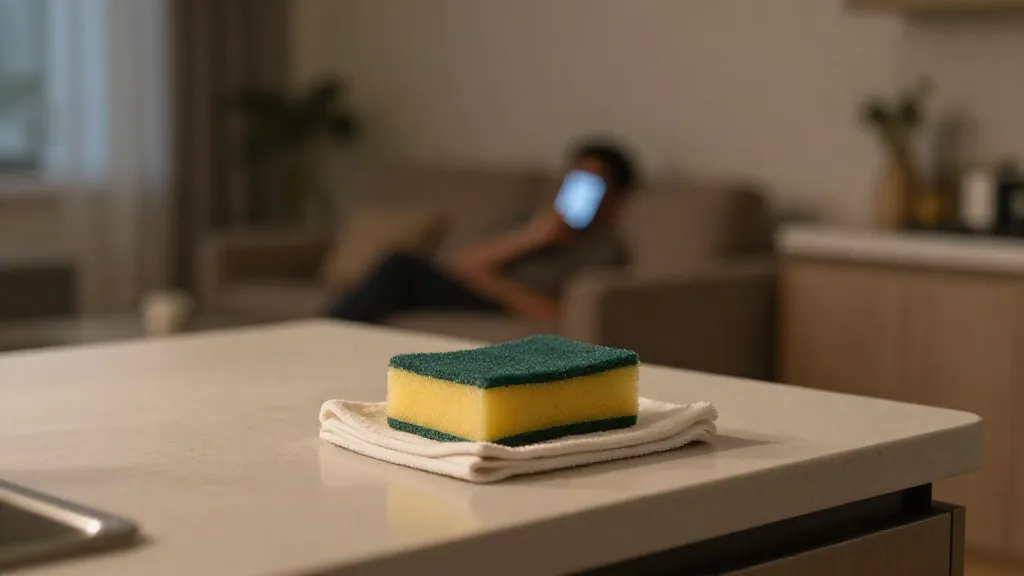
It starts with a sink full of dishes. Or maybe it's the laundry basket that's been sitting at the bottom of the stairs for three days. Or the garbage that's overflowing — again — while your partner scrolls their phone on the couch.
You don't say anything the first time. Or the second. By the third, something cracks. "Do I have to do everything around here?" And just like that, you're in the housework fight. The one that every couple has, the one that never quite gets resolved, and the one that leaves both people feeling frustrated, unheard, and a little bit lonely.
Here's what most couples don't realize: the housework fight is almost never about housework. It's a proxy war — one fought over respect, fairness, and whether or not you feel valued by the person who's supposed to be your partner. Understanding that shift is the first step toward actually fixing it.
Key Takeaways
- Housework arguments are proxy conflicts for deeper needs — respect, fairness, appreciation, and feeling like an equal partner.
- "Invisible labor" is real and often unacknowledged. The person who notices, plans, and manages household tasks carries a cognitive burden that goes far beyond the physical chores.
- Scorekeeping never works. Dividing chores 50/50 sounds fair but misses the point. Focus on equity (what feels fair to both of you) rather than exact equality.
- One concrete conversation using the framework in this article can do more than months of passive-aggressive dish-slamming.
- Written agreements reduce repeat fights. When you formalize who does what — and revisit it regularly — you remove ambiguity and resentment.

Why the Housework Fight Is Never Really About Housework
Let's start with what the research says. A Pew Research Center survey found that sharing household chores ranks among the top three issues associated with a successful marriage — right alongside faithfulness and a good sexual relationship. And yet, study after study shows that the division of household labor remains one of the most common sources of conflict in relationships.
But here's the part that matters: when people describe their frustration over chores, listen to the language they use.
- "I feel like I'm the only one who cares about this house."
- "He doesn't see what needs to be done."
- "She acts like what I do doesn't count."
- "I'm not their parent."
None of those statements are really about mopping floors. They're about feeling invisible, undervalued, or trapped in a role you didn't sign up for. The dirty dish is the evidence, but the crime is something much bigger: I don't feel like we're equals in this relationship.
Until you address the deeper conflict underneath, no chore chart in the world will save you.
The Invisible Labor Problem
One of the biggest drivers of the housework fight is something researchers call cognitive labor or invisible labor — the mental work of running a household that never shows up on a to-do list.
This includes:
- Noticing that the toilet paper is running low
- Planning what's for dinner on Tuesday
- Tracking the kids' school schedules, doctor appointments, permission slips
- Delegating tasks (and then being told you're "nagging")
- Anticipating — knowing that if you don't buy more dog food today, there won't be any tomorrow
This labor is exhausting. And it's disproportionately carried by one partner — often, though not always, by women. The frustration isn't "You didn't take out the trash." It's "I had to think about the trash, notice the trash, remind you about the trash, and follow up about the trash — and you want credit for the 45 seconds it took to carry the bag outside?"
When one partner carries the bulk of cognitive labor, they're effectively working as the household manager while also doing their share of physical chores. That's two jobs. And if the other partner doesn't recognize that second job exists, resentment builds fast.
A Quick Test
Ask yourself: If your partner went away for a week, would the household still function smoothly? Or would you suddenly realize you don't know where the kids' extra bedsheets are, when the electric bill is due, or what day recycling goes out?
If the answer reveals a significant knowledge gap, invisible labor is unevenly distributed in your relationship. That's not an accusation — it's an opportunity.

Why "Just Tell Me What to Do" Makes It Worse
This is one of the most common — and most misunderstood — dynamics in the housework fight.
Partner A is overwhelmed. Partner B says, sincerely, "Just tell me what to do and I'll do it." Partner A explodes. Partner B is baffled.
Here's why that phrase backfires: "Just tell me what to do" sounds helpful, but what it actually communicates is "I don't see what needs to be done on my own, and I'm placing the burden of management on you." It turns Partner A into a boss issuing orders rather than an equal sharing responsibility.
The fix isn't to stop offering help. It's to take ownership rather than waiting for instructions.
Instead of "Just tell me what to do," try:
- "I'm going to handle dinner tonight — any preferences?"
- "I noticed we're low on groceries. I'll go after work."
- "I'm going to take over laundry this week. All of it."
The difference is subtle but seismic. One approach asks your partner to manage you. The other shows you're paying attention and taking initiative. That's what respect looks like in action.
The Scorecard Trap (And What to Do Instead)
Many couples try to resolve the housework fight by splitting everything 50/50. You take trash, I take dishes. You cook Mondays, I cook Tuesdays.
It sounds perfectly logical. And it almost always fails.
Here's why: strict scorekeeping turns your home into an accounting office. Every missed task becomes a breach of contract. Every "I did more" moment becomes ammunition. You start measuring love in units of labor, and suddenly your relationship feels transactional.
Worse, 50/50 doesn't account for the fact that life isn't static. Some weeks, one partner has a hellish time at work. Some months, one partner is dealing with a health issue, a family crisis, or just a rough patch. Rigid systems crack under real-life pressure.
Aim for Equity, Not Equality
Equity means both partners feel like the arrangement is fair — even if the exact distribution isn't identical at any given moment. It requires ongoing conversation, flexibility, and trust.
Here's a framework that works better than a chore chart:
1. Name every task — including invisible ones. Sit down together and list everything that goes into running your household. Don't just list "cooking" — break it down: meal planning, grocery shopping, prepping, cooking, cleaning up. Include cognitive tasks: scheduling, remembering, researching, coordinating.
Most couples are genuinely surprised by how long this list is. That surprise is valuable — it creates a shared understanding of the real workload.
2. Assign based on preference, skill, and capacity — not gender. Who actually enjoys cooking? Who doesn't mind yard work? Who has more flexibility in their schedule this season? Dividing tasks by genuine preference reduces friction because you're less likely to resent a task you voluntarily chose.
3. Agree on standards. This is a sneaky source of conflict. If one partner's standard for "clean kitchen" is wiped counters and the other's includes scrubbing the backsplash, you'll fight about whether the job was actually done. Talk about what "done" looks like for the tasks that matter most to each of you.
4. Build in regular check-ins. A five-minute conversation once a month: "How's this working? What feels off? What do we need to adjust?" This prevents small frustrations from calcifying into major resentment. Tools like Servanda can help couples formalize these agreements in writing and revisit them over time, so nothing gets lost in the fog of daily life.
5. Ditch the performance review. When your partner does a task, resist the urge to critique how they did it. If the dishes are clean but loaded "wrong" in the dishwasher, let it go. Micromanaging your partner's contributions teaches them that their effort will never be good enough — and they'll stop trying.

What to Say When the Fight Is Already Happening
Let's be practical. You're reading this article, but tonight you might still end up staring at a pile of shoes by the door and feeling that familiar heat rise in your chest. Here's how to navigate the moment without doing damage.
Step 1: Pause and Name the Real Feeling
Before you say anything, ask yourself: What am I actually feeling right now?
- Disrespected?
- Taken for granted?
- Exhausted and unsupported?
- Like I'm carrying this relationship alone?
That feeling is what needs to be communicated — not a critique of your partner's cleaning habits.
Step 2: Use the "When / I Feel / Because" Frame
This isn't therapy jargon — it's just a practical way to say what you mean without triggering defensiveness.
- "When I come home and the kitchen looks the same as when I left, I feel like my effort to keep things running doesn't matter, because it seems like I'm the only one who notices."
Compare that to: "You never clean up after yourself." Same frustration. Wildly different outcome.
Step 3: Ask a Genuine Question
After you've expressed your feeling, open the door:
- "What's getting in the way for you?"
- "Is there something about how we've divided things that isn't working?"
- "How can we make this feel fair for both of us?"
You might learn something unexpected. Maybe your partner is overwhelmed at work and hasn't said anything. Maybe they genuinely don't notice certain messes because they grew up in a household where those things weren't prioritized. Maybe they feel like their contributions in other areas (finances, childcare, emotional support) aren't being counted.
None of that excuses an uneven workload. But understanding the why helps you build a solution that actually sticks.
When One Partner Simply Won't Engage
Let's address the harder scenario. You've tried the conversation. You've explained how you feel. And your partner shrugs, deflects, or says "You're overreacting."
This is a different problem — and a more serious one. When a partner consistently refuses to share household responsibility despite knowing it causes pain, the issue has moved beyond logistics. It's become a question of whether they respect your needs enough to act on them.
Before escalating to ultimatums, consider:
- Write it down. Sometimes people hear things differently when they read them. A calm, honest letter or email can cut through the noise of an argument.
- Set a specific, time-bound request. Not "I need you to help more" but "Can you take full ownership of dinner three nights a week for the next month, and we'll check in on how it's going?"
- Seek outside support. A couples counselor or mediator can provide the neutral ground some couples need to have this conversation productively.
If your partner repeatedly dismisses your needs in this area, it's worth examining whether that pattern extends to other parts of your relationship. Chronic refusal to share domestic responsibility is, at its core, a refusal to treat you as an equal.
A Note About Gratitude (It Goes Both Ways)
Here's something that gets lost in the housework fight: appreciation matters, even for expected contributions.
No, you shouldn't have to throw a parade because your partner did the dishes. But a genuine "Thanks for handling that" goes further than most people realize. Research from the Gottman Institute shows that couples who regularly express gratitude — even for mundane, everyday tasks — report significantly higher relationship satisfaction.
This isn't about performative thankfulness. It's about seeing your partner's effort and acknowledging it. Both partners. Every day. Even when it's "just" the dishes.
Frequently Asked Questions
How do you divide household chores fairly in a relationship?
Start by listing every task — including invisible ones like planning and scheduling — and then divide them based on preference, skill, and current capacity rather than outdated assumptions. Review the arrangement monthly and adjust as life changes. Fairness isn't about a perfect 50/50 split; it's about both partners genuinely feeling like the system works.
Why do I get so angry about my partner not doing chores?
The anger usually isn't about the chore itself — it's about what the undone chore represents. When your partner doesn't do their share, it can feel like they don't respect your time, don't value your comfort, or don't see you as an equal. Recognizing that the real issue is about feeling valued can help you communicate more effectively.
Is it normal for couples to fight about housework?
Absolutely. Disagreements about household chores consistently rank among the most common sources of conflict for couples across all demographics. The fights become a problem not because they happen, but when they go unresolved and breed long-term resentment. Having a clear, revisited agreement about who handles what can break the cycle.
How do I talk to my partner about doing more around the house without nagging?
Focus on expressing how the imbalance makes you feel rather than cataloging what your partner hasn't done. Use specific requests ("Could you take over grocery shopping this month?") instead of vague complaints ("You need to help more"). And agree together on standards and expectations so follow-up doesn't feel like monitoring.
What if my partner says they "don't see" the mess?
This is common and usually genuine — people have different thresholds for noticing disorder. The solution isn't to wait until they "see" it your way. Instead, agree on specific tasks each person owns completely, so noticing becomes irrelevant. If you own the task, you handle it from start to finish — no reminders needed.
Moving Forward Together
The housework fight isn't a sign that your relationship is broken. It's a sign that something important — fairness, respect, feeling valued — needs attention. And that's actually good news, because those are things you can work on together.
Start with one conversation. List the tasks. Talk about what fair feels like, not just what it looks like on paper. Check in regularly. Express gratitude for the mundane stuff. And when the fight does flare up — because it will — pause long enough to ask yourself what you're really upset about.
The dishes will always need doing. But the way you navigate who does them and why it matters will shape the health of your relationship for years to come. That's worth getting right.