The Housework Fight: Why Chores Ruin Marriages
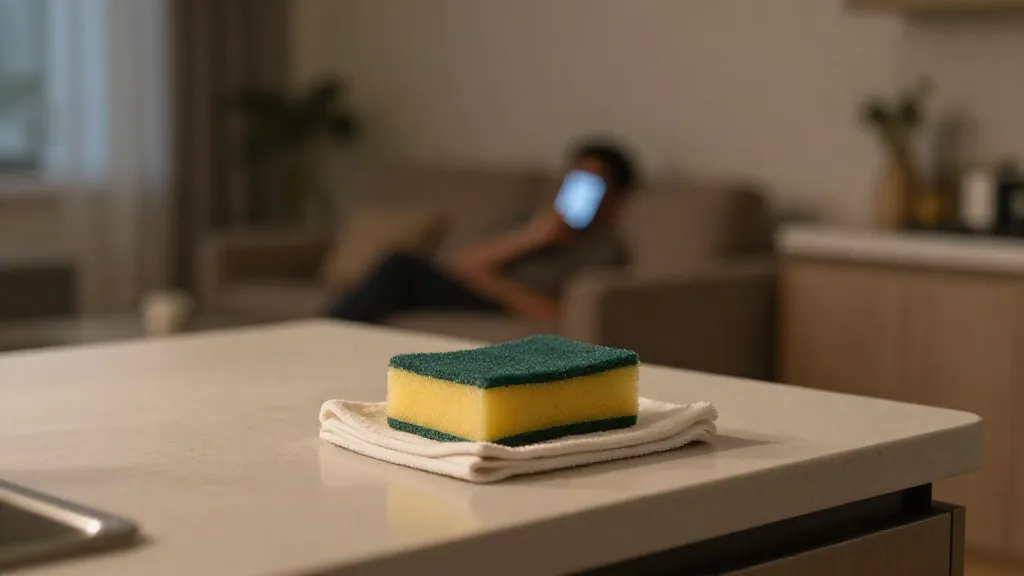
It's 9:47 on a Tuesday night. The kids are finally asleep. You walk into the kitchen and see the sink full of dishes, the counter sticky with something unidentifiable, and the recycling overflowing onto the floor. Your partner is on the couch, scrolling their phone. Something hot flashes behind your eyes—not quite anger, not quite sadness. Something more like: Do you not see this? Do you not see me?
You say something. Maybe it comes out sharper than you intended. Maybe you don't say anything at all, and that silence is worse. Either way, you've just stepped into one of the most common—and most underestimated—conflicts in any relationship: the housework fight.
Research consistently ranks the division of household labor among the top five issues couples argue about. Yet most people dismiss it as petty. "It's just dishes." But it's never just dishes. It's about feeling seen, valued, and respected by the person who promised to be your partner.
Key Takeaways
- Housework fights aren't about chores—they're about feeling valued. The dirty kitchen is a symptom; the real wound is a perceived imbalance of care and effort.
- Invisible labor is the hidden accelerant. The mental load of planning, tracking, and managing a household often falls disproportionately on one partner and goes entirely unacknowledged.
- "Helping" is part of the problem. When one partner "helps" the other with chores, it reinforces that the household is one person's responsibility.
- A structured task-splitting conversation can prevent years of resentment. The Audit-Assign-Adjust method outlined below gives you a concrete process to follow.
- Written agreements reduce repeat arguments. Putting your division of labor in writing eliminates ambiguity and creates accountability without nagging.

Why the Housework Fight Is Never Really About Housework
Let's get the data out of the way first. A 2023 Pew Research Center survey found that sharing household chores ranks among the top three factors people say are "very important" for a successful marriage. Meanwhile, studies published in the Journal of Marriage and Family have repeatedly linked perceived unfairness in the division of labor to lower relationship satisfaction—for both men and women.
But numbers only tell part of the story.
When Sarah, a 38-year-old marketing manager, describes her frustration with her husband, Mike, she doesn't list tasks. She describes a feeling: "It's like I'm running a project that he occasionally volunteers for. I have to notice, plan, delegate, and follow up. Even when he does something, I had to ask. And then I'm the nag."
Mike's version sounds different: "I feel like nothing I do is right. I cleaned the whole bathroom Saturday, and she pointed out I forgot the mirrors. It's demoralizing."
Both of them are hurting. And both of them are right.
The housework fight persists in marriages because it sits at the intersection of three emotional fault lines:
- Fairness — "Am I pulling my weight? Are they pulling theirs?"
- Recognition — "Does my partner see what I contribute?"
- Identity — "What does it say about me—or us—if this is how we divide our life?"
When these questions go unanswered, every unwashed pan becomes evidence in a silent trial.
The Invisible Labor Problem
You've probably heard the term "mental load" or "invisible labor." It refers to the cognitive and emotional work of running a household—remembering the pediatrician appointment, noticing the toilet paper is low, knowing which kid outgrew which shoes, tracking the family calendar, planning meals for the week.
This work is real. It is exhausting. And it is almost entirely invisible to the person who isn't doing it.
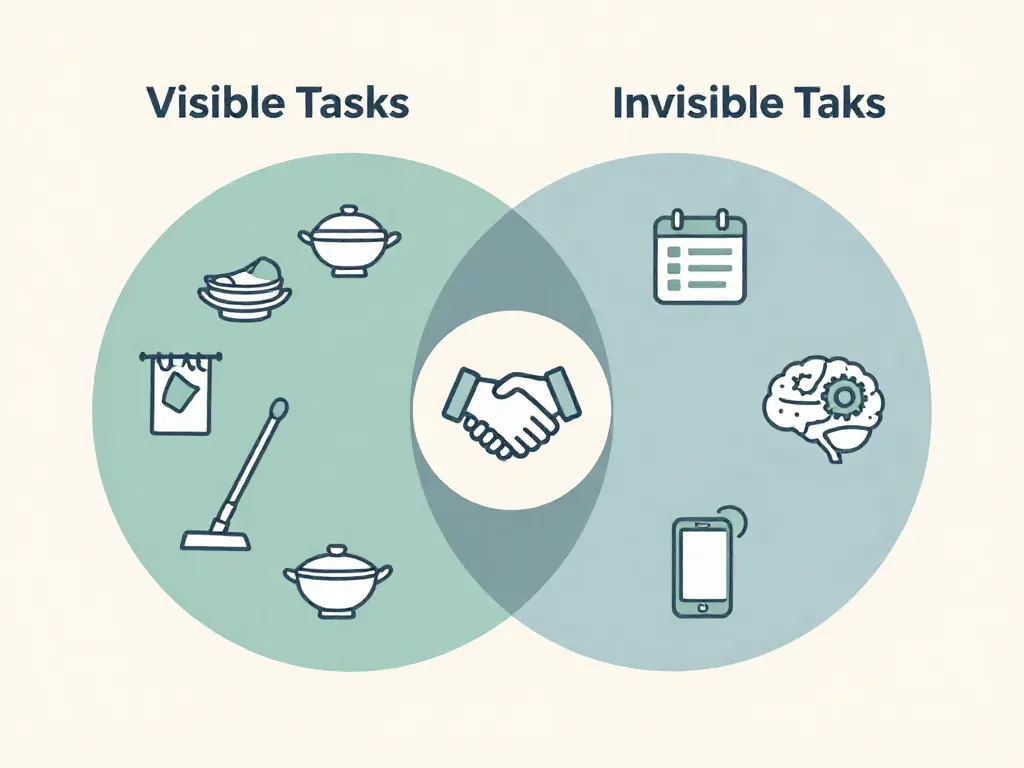
Research from the UCL Institute of Education found that women in heterosexual couples still perform significantly more of this cognitive labor, even in households where physical tasks are split relatively evenly. The result is what sociologist Allison Daminger calls a "lopsided partnership"—one person is the household manager, the other is the household employee.
This dynamic is toxic for intimacy. The manager feels resentful and alone. The employee feels criticized and controlled. And both people feel misunderstood.
Why "Just Ask Me to Help" Makes It Worse
One of the most common responses from the partner doing less invisible labor is: "Just tell me what you need me to do."
This feels reasonable on the surface. But it actually reinforces the very dynamic causing the conflict. It positions one partner as the boss and the other as the assistant waiting for instructions. It keeps the mental load squarely on one person's shoulders.
True partnership means both people notice, both people plan, and both people act—without being prompted.
That's the goal. But how do you actually get there?
The Audit-Assign-Adjust Method: A Practical Framework
Generic advice like "just talk about it" doesn't work because the housework fight is structurally complex. You need a process, not a pep talk. Here's one that works.
Step 1: The Household Audit (Do This Together)
Sit down with your partner—not during a fight, not when either of you is exhausted—and create a comprehensive list of every task that keeps your household running. Every single one.
This includes the obvious: - Cooking - Dishes - Laundry (washing, folding, putting away) - Vacuuming and mopping - Bathroom cleaning - Grocery shopping - Taking out trash and recycling
And the invisible: - Scheduling doctor and dentist appointments - Managing the family calendar - Researching summer camps, schools, or activities - RSVPing to invitations - Buying birthday gifts - Noticing when supplies are low and restocking - Coordinating childcare and pickups - Handling bills and insurance - Meal planning - Emotional labor (checking in on extended family, remembering friends' milestones)
Most couples are stunned by how long this list gets. That's the point. You can't split what you can't see.
Step 2: Assign Based on Preference, Skill, and Schedule—Not Gender
Once you have your list, go through each task and discuss:
- Who currently does this?
- Who is better suited to do this? (Skill, schedule, proximity—not gender.)
- Who actively dislikes this task the least?
- Can this be eliminated, automated, or outsourced? (Grocery delivery, robot vacuums, and hiring a biweekly cleaner are not indulgences—they're relationship insurance.)
The goal isn't a perfectly even 50/50 split. The goal is a split that both partners feel is fair. Perceived fairness matters more than mathematical equality.
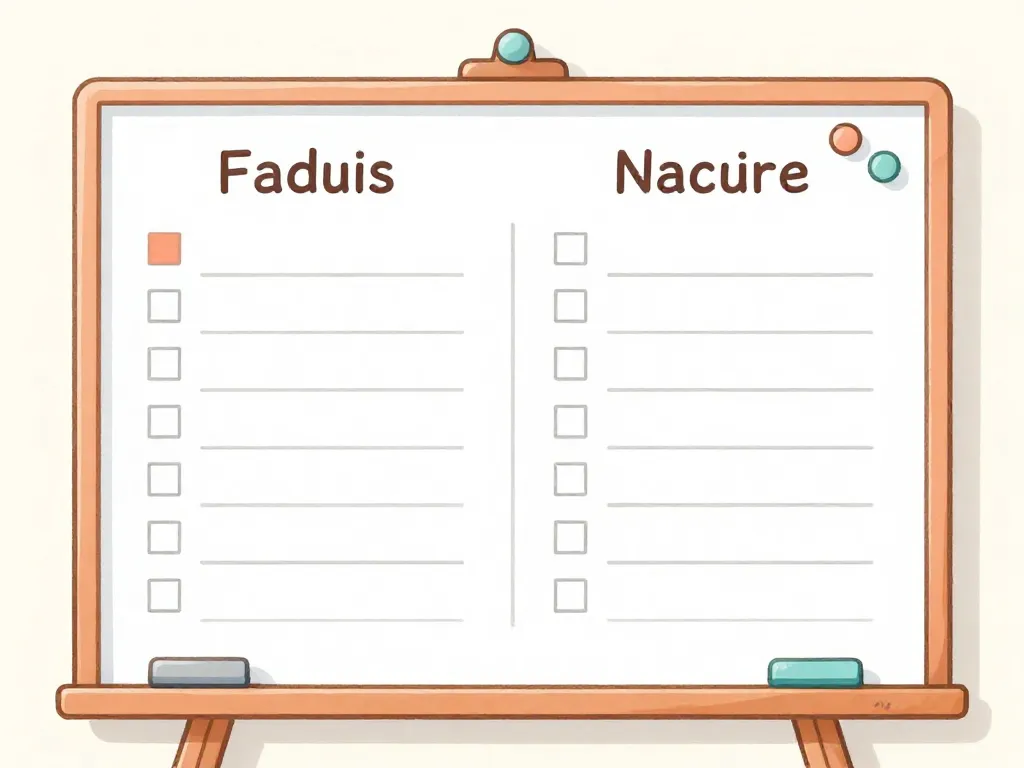
Assign clear ownership. Not "we both do laundry." Instead: "Alex owns laundry from start to finish. Jamie owns kitchen cleanup after dinner every night." Ownership means you don't wait to be told.
Step 3: Adjust Every 90 Days
Life changes. Seasons shift. Someone gets a new job. A baby arrives. What felt fair in January may feel crushing by April.
Build in a recurring check-in—every three months is a good cadence. Treat it like a low-stakes performance review for your household. Ask each other:
- What's working well in our current split?
- What feels unsustainable or unfair right now?
- What needs to change for the next quarter?
This isn't a complaint session. It's maintenance. Relationships need maintenance the same way a house does—ignore it long enough and something breaks.
Common Traps That Keep Couples Stuck
Even with a solid framework, certain patterns can sabotage your progress. Watch for these:
The Scorekeeper Trap
Counting tasks and comparing totals turns your partnership into a transaction. If you're tracking who did more this week to win an argument, you've already lost. The audit process is meant to create structure, not ammunition.
The Perfectionism Trap
"He loaded the dishwasher wrong." "She never folds the towels the way I like."
If your partner does a task differently than you would, that is not the same as doing it wrong. Correcting, redoing, or hovering over your partner's chores sends a clear message: I don't trust you to handle this. It also guarantees they'll stop trying.
Ask yourself: Is this a genuine health or safety issue, or is it a preference? If it's a preference, let it go.
The Martyr Trap
Some people take on more and more work without saying anything, then explode months later. If you're silently accumulating resentment, that's not selflessness—it's avoidance. Your partner can't fix a problem they don't know exists.
The "I Work More Hours" Trap
Paid work hours do not cancel out household obligations. If one partner works 50 hours a week outside the home, that is a relevant factor in the conversation—but it doesn't mean the other partner should handle 100% of domestic labor. The stay-at-home or lower-earning partner's time is equally valuable.
What to Do When the Conversation Gets Heated
Let's be honest: even with the best intentions, this topic can escalate quickly. The housework fight touches on identity, gender expectations, family of origin patterns, and deep feelings of being unappreciated.
Here are three ground rules for when the temperature rises:
-
Describe impact, not character. Say "When the dishes pile up and I'm the one who cleans them, I feel exhausted and invisible" instead of "You're lazy and you don't care."
-
Acknowledge before problem-solving. Before jumping to a solution, validate what your partner is feeling. "I hear you. That does sound overwhelming" goes further than you think.
-
Put your agreements in writing. This sounds formal, but it's powerful. A written record of who owns what eliminates the ambiguity that fuels repeat arguments. You don't need a legal document—a shared note on your phone works. Tools like Servanda can help you create structured agreements so your conversation doesn't evaporate the next morning.
What the Research Says About Couples Who Get This Right
The good news: couples who successfully renegotiate their household division of labor report significant improvements in relationship satisfaction. A longitudinal study from the Council on Contemporary Families found that equitable sharing of housework is now one of the strongest predictors of a couple's happiness and sexual satisfaction.
This isn't just about getting the house clean. It's about building a relationship where both people feel like genuine partners—not a manager and a reluctant employee, not a martyr and an oblivious bystander.
When both people feel that the partnership is fair, resentment doesn't build. And when resentment doesn't build, there's room for warmth, humor, desire, and all the things that made you choose each other in the first place.
Frequently Asked Questions
How do you split chores fairly without keeping score?
Fairness isn't about counting tasks—it's about both partners feeling like the arrangement is equitable. Use the household audit to make all tasks visible, assign ownership based on practical factors, and check in every 90 days. If both people feel the load is manageable and respected, the numbers don't need to match perfectly.
Why does my partner not see the mess?
Different people have genuinely different thresholds for noticing clutter, dirt, and disorder. This isn't moral failure—it's perceptual difference, often shaped by how someone grew up. The solution isn't to wait for them to "see" it; it's to agree on shared standards and assign clear ownership so noticing becomes less relevant.
Is it normal for couples to fight about housework?
Absolutely. Housework consistently ranks among the top five issues couples argue about, alongside money, sex, parenting, and in-laws. The problem isn't the fighting itself—it's when the same fight happens over and over without resolution. A recurring argument is a signal that something structural needs to change.
Should we hire someone to clean the house to save our relationship?
Outsourcing some household labor can be a smart investment in your relationship, especially if both partners are stretched thin. But it only addresses the physical tasks. You'll still need to manage the invisible labor—scheduling the cleaner, deciding what to prioritize, handling the logistics. Outsourcing works best as part of a larger conversation about how you share the full load.
What if my partner refuses to discuss housework?
A partner who shuts down the conversation may be feeling defensive, ashamed, or overwhelmed. Try approaching from your own experience rather than their behavior: "I'm burning out and I need us to figure this out together." If they still refuse to engage, that's a signal that a neutral third party—a couples therapist or mediator—could help create safety for the conversation.
Moving Forward Together
The housework fight will keep showing up in your marriage until you address what's underneath it: the question of whether both people feel valued, seen, and treated as true partners.
This isn't about perfectly folded towels or a spotless kitchen. It's about building a shared life where neither person feels like they're carrying the weight alone.
Start with the audit. Be honest about what you see. Assign ownership without defensiveness. Write it down. And come back to the conversation every few months—not because something is broken, but because tending to your partnership is one of the most important things you'll ever do.
The dishes will always be there. The question is whether you'll face them as a team.