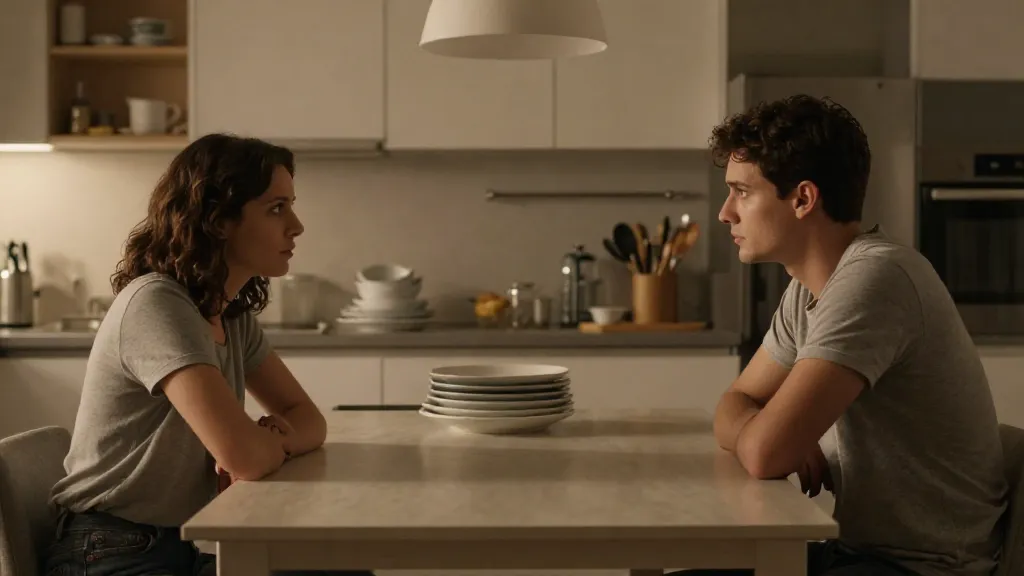
The Parenting Fight That Can Break Your Marriage
It starts small. One of you lets the kids stay up past bedtime. The other enforces lights-out at 8 p.m. sharp. Nobody says anything the first time. By the fifth time, somebody snaps—not at the kids, but at each other.
"You're too soft on them." "You're too controlling."
Suddenly, a disagreement about bedtime isn't about bedtime at all. It's about respect. It's about feeling undermined. It's about two people who love their children fiercely but can't agree on how to raise them—and the resentment is starting to bleed into everything else.
Parenting disagreements consistently rank among the top four sources of conflict for couples, alongside money, household labor, and intimacy. But unlike a budget argument, a parenting fight carries an extra emotional charge: the fear that your partner's approach might actually harm your child. That fear makes compromise feel impossible—and silence feel dangerous.
This article is about what's really happening beneath those fights, and what you can do before the parenting conflict fractures your marriage.
Key Takeaways
- Parenting fights are rarely about the surface issue. Beneath arguments about screen time or discipline styles are unspoken needs for respect, autonomy, and feeling like an equal partner.
- The "undermining loop" is the real threat. When one parent overrules the other in front of the kids, it triggers a cycle of resentment that damages both the co-parenting and romantic relationship.
- Your childhood is in the room. Each partner brings inherited parenting blueprints from their own upbringing—and those blueprints often clash without either person realizing why.
- Alignment doesn't mean agreement on every detail. Successful co-parenting couples build shared principles and leave room for individual style.
- Repair conversations matter more than the fight itself. How you reconnect after a parenting disagreement predicts relationship health far more than whether the disagreement happened.

Why Parenting Disagreements Hit Harder Than Other Conflicts
Most couples can negotiate about money and eventually find a workable budget. But parenting feels existential. When your partner enforces a rule you disagree with—or ignores a rule you set—it can feel like a direct attack on your judgment, your values, and your identity as a parent.
Research from the Gottman Institute shows that parenting conflicts activate a unique combination of triggers:
- Identity threat: "If I'm wrong about this, what kind of parent am I?"
- Protectiveness: "My child could be hurt by your approach."
- Power struggle: "Why does your way automatically win?"
- Legacy pressure: "I promised myself I'd never raise my kids the way I was raised."
These layers make parenting fights stickier and harder to resolve than most other couple conflicts. You're not just disagreeing—you're defending your deepest beliefs about what a good childhood looks like.
The Stakes Feel Higher Because They Are
When a couple argues about how to spend a bonus check, the worst outcome is a bad purchase. When they argue about how to discipline a child, the perceived worst outcome is a damaged human being. That asymmetry explains why parenting disagreements escalate faster, involve more emotional flooding, and are harder to de-escalate.
It also explains why couples often avoid the conversation entirely—until the resentment becomes unbearable.
The Four Parenting Fights That Do the Most Damage
Not all parenting disagreements carry equal weight. These four patterns show up repeatedly in couples who report that parenting conflicts are eroding their relationship.
1. The Discipline Divide
What it sounds like: "You let them get away with everything" vs. "You're too harsh on them."
One partner leans permissive. The other leans authoritative—or authoritarian. The real problem isn't the style itself; it's the polarization effect. When one parent feels the other is too lenient, they compensate by becoming stricter. The lenient parent then softens even more to balance the harshness. Both partners drift further apart, each convinced the other is the problem.
Example: Marco and Priya agreed their seven-year-old needed consequences for hitting his sister. But Marco favored time-outs while Priya believed in taking away privileges for the rest of the day. Neither approach was objectively wrong—but in front of their son, they contradicted each other. Their son quickly learned to go to the "easier" parent, which made both Marco and Priya furious—at each other.
2. The Screen Time War
What it sounds like: "An hour of iPad won't kill them" vs. "Their brains are turning to mush."
Screen time disagreements have exploded in the past decade because there's no established cultural norm to fall back on. Previous generations didn't face this particular decision, which means couples can't default to "how we were raised." That leaves a vacuum filled by anxiety, conflicting studies, and parenting influencers on social media—none of which help two real people find a workable compromise in their specific household.
3. The Labor Imbalance
What it sounds like: "I do everything for these kids" vs. "Nothing I do is ever enough for you."
This isn't strictly a parenting disagreement—it's a parenting role disagreement. Who handles school communication? Who schedules the dentist appointments? Who stays home when a child is sick? When one partner carries a disproportionate share of the invisible labor of parenting, the resentment doesn't stay contained to the parenting domain. It leaks into intimacy, affection, and the willingness to give each other the benefit of the doubt.

4. The In-Law Interference
What it sounds like: "Your mother told our kid he doesn't have to listen to me."
When extended family members undermine parenting decisions, the conflict between partners often becomes a proxy war about loyalty. "Are you on my team, or your parents' team?" This is one of the fastest ways a parenting fight can escalate into a full-blown marital crisis—because it fuses parenting, family-of-origin issues, and trust into a single explosive package.
What's Really Underneath the Fight
If you strip away the specific topic—screen time, discipline, bedtime—most parenting fights between partners are actually about three unspoken needs:
- Respect: "I need you to treat my opinion as equally valid, even when you disagree."
- Autonomy: "I need to be trusted to make parenting decisions without being corrected or overruled."
- Unity: "I need to know we're on the same team, even when we see things differently."
When these needs go unspoken, they surface as criticism, defensiveness, and contempt—the exact behaviors that relationship researcher John Gottman identifies as predictors of divorce.
Here's the uncomfortable truth: the parenting fight that can break your marriage usually isn't about parenting at all. It's about whether two people can navigate disagreement without one person feeling dismissed, controlled, or alone.
How to Fight About Parenting Without Damaging Your Marriage
You will disagree about parenting. That's not the problem. The problem is how you disagree—and whether you have a process for working through it. Here's a framework that works.
Step 1: Take the Fight Behind Closed Doors
This is non-negotiable. When parents argue about rules or discipline in front of children, two things happen:
- The child learns to exploit the gap between parents.
- The overruled parent feels humiliated, which poisons the next conversation.
The rule: In the moment, support the decision your partner made. Discuss it privately afterward. This isn't about blind obedience—it's about presenting a united front and giving yourselves space to talk without an audience.
Step 2: Name the Need, Not Just the Position
Instead of arguing about what the rule should be, talk about why you feel so strongly.
| Position | Underlying Need |
|---|---|
| "No screens during dinner" | "I need us to have family connection time" |
| "Let him figure it out himself" | "I need our child to develop resilience" |
| "She needs stricter consequences" | "I'm afraid she won't learn accountability" |
When you understand your partner's underlying need, you often discover you share the same goal—you just disagree about the method. Methods are negotiable. Values rarely need to be.
Step 3: Build Principles, Not a Rulebook
Couples who try to agree on every parenting micro-decision exhaust themselves. Instead, align on three to five core parenting principles and let each partner apply them in their own style.
Example principles: - We prioritize emotional safety in our home. - Consequences are logical, not punitive. - We each get to be the "lead parent" in our areas of strength. - We revisit rules every six months as the kids grow.
This approach respects both partners' autonomy while maintaining alignment. Consider formalizing your shared principles with a tool like Servanda—writing them down transforms vague agreements into clear commitments you can revisit when tensions rise.
Step 4: Schedule a Parenting Check-In
Don't wait for a blowup. Set a recurring time—biweekly or monthly—to discuss what's working and what isn't. Keep it structured:
- What's going well? (Start with acknowledgment, not complaints.)
- What's one thing that needs adjustment? (One thing. Not a laundry list.)
- What do we each need from the other this week? (Specific, behavioral requests.)
This prevents the pressure-cooker effect where small frustrations accumulate into explosive arguments.

Step 5: Repair After the Fight
Even couples who follow every best practice will still have parenting fights that get ugly. What matters most is the repair.
Effective repair sounds like:
- "I got heated because this touches something deep for me. I'm sorry I shut you down."
- "I don't think you're a bad parent. I think we just see this differently, and I want to find a middle ground."
- "I realized I was reacting to how my parents handled this, not to what you actually said."
Repair doesn't mean you resolved the issue. It means you've re-established that you're on the same team. Resolution can come later—reconnection can't wait.
When Your Own Childhood Is Running the Show
One of the most overlooked dynamics in parenting fights is the power of inherited patterns. Each partner arrives at parenthood with an internal template shaped by how they were raised.
- A parent who grew up in a chaotic household may crave strict structure.
- A parent who grew up with rigid rules may overvalue freedom and spontaneity.
- A parent whose emotions were dismissed may be hypervigilant about validating their child's feelings.
These templates operate on autopilot. And when two autopilots conflict, the result feels deeply personal—because it is deeply personal. Understanding your own parenting template (and your partner's) doesn't resolve the disagreement, but it removes the accusation. You stop seeing your partner as the enemy and start seeing them as someone who's also trying to give their child what they themselves needed.
When to Seek Outside Support
Not every parenting disagreement requires professional help. But some patterns signal that a couple is stuck:
- You have the same fight more than five times without any change in behavior.
- One partner has completely disengaged from parenting decisions ("Do whatever you want").
- The kids are showing stress symptoms directly linked to parental conflict.
- You've stopped touching, laughing, or talking about anything other than logistics and kids.
A couples therapist who specializes in family systems can help you untangle the parenting disagreement from the relationship wound underneath it. This isn't a sign of failure—it's a sign that you're taking both your marriage and your children's well-being seriously.
FAQ
Is it normal for couples to fight about parenting?
Absolutely. Parenting disagreements are among the most common sources of conflict for couples, right alongside money and household responsibilities. The issue isn't whether you disagree—it's whether those disagreements get resolved or fester into chronic resentment.
How do you co-parent when you have different discipline styles?
Start by agreeing on shared principles rather than identical methods. One parent can be the "gentle redirect" parent and the other can be the "clear consequences" parent—as long as both approaches align with your agreed-upon values and neither parent undermines the other in front of the children.
Can parenting disagreements cause divorce?
They can contribute to it, yes—especially when the disagreement becomes a proxy for deeper issues like feeling disrespected, unheard, or alone in the relationship. Research suggests it's not the topic of the conflict but the pattern of interaction (criticism, contempt, stonewalling) that predicts divorce.
How do I talk to my partner about parenting without starting a fight?
Choose a calm moment (not during or immediately after an incident with the kids). Lead with curiosity rather than criticism: "Help me understand why you handled it that way" lands very differently than "Why did you do that?" Focus on one specific situation rather than broad character statements.
What if my partner refuses to discuss parenting disagreements?
A partner who shuts down is often flooded with emotion or afraid the conversation will turn into an attack. Try softening your approach first. If they remain disengaged after multiple gentle attempts, suggest a structured conversation with a therapist or mediator who can create safety for both of you.
Moving Forward Together
The parenting fight that can break your marriage is rarely the one you expect. It's not the dramatic blowup over a single decision—it's the slow accumulation of feeling unheard, overruled, and alone in the most important job you'll ever share.
But here's what the research—and real couples—consistently show: the marriages that survive and even deepen through the parenting years aren't the ones where partners always agree. They're the ones where partners learn to disagree without losing each other.
That means fighting behind closed doors. Naming the real need underneath the surface argument. Building shared principles that leave room for individual style. And repairing—every single time—when things go sideways.
Your children don't need perfect parents. They need parents who show them what it looks like to navigate conflict with honesty, respect, and love. That lesson starts with how you treat each other.