Who Does More Chores? Solving the Housework War
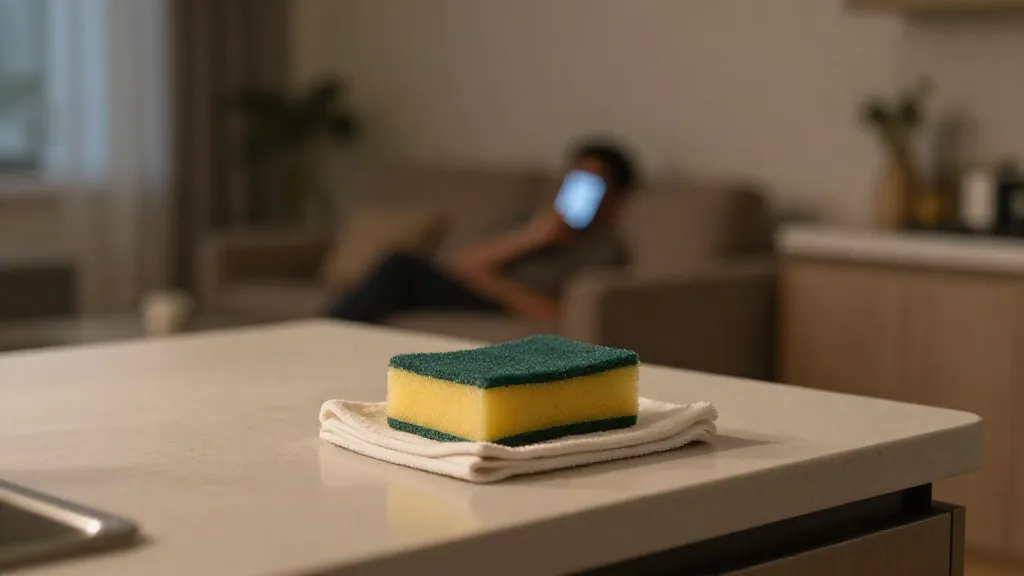
It's 9 PM on a Tuesday. The dishes are piled in the sink, the laundry basket is overflowing, and nobody has wiped down the counters in days. One partner sighs loudly — a sigh that carries the weight of every unfolded towel and unstacked plate from the past six months. The other partner, scrolling on the couch, feels the temperature in the room shift. "What?" they ask. "Nothing," comes the reply. But it's never nothing.
If this scene feels familiar, you're far from alone. Housework division is consistently ranked among the top five sources of conflict in romantic relationships, and the rise of remote work has only intensified the tension. When the boundaries between office and home dissolve, so do the unspoken agreements about who handles what. The result? A slow, corrosive buildup of resentment that turns dish soap into a weapon and vacuuming into a scoreboard.
This article isn't going to tell you to "just talk about it." Instead, it offers concrete strategies you can implement this week to stop the chore war for good.
Key Takeaways
- Resentment over housework rarely stems from laziness — it stems from invisible labor, mismatched standards, and assumptions that were never examined out loud.
- A "fair" split doesn't mean 50/50 — it means a division that accounts for each person's schedule, energy, strengths, and preferences.
- Audit before you argue — most couples are shocked by the gap between perception and reality when they actually track who does what.
- Written agreements outperform verbal ones — putting your chore plan on paper (or in an app) dramatically reduces backsliding.
- Revisit the plan regularly — life changes, and your housework system should change with it.

Why the Housework War Is Really About Something Deeper
Let's get something out of the way: the fight about dishes is almost never about dishes.
When one partner fumes over an uncleaned kitchen, what they're often actually feeling is unseen, undervalued, or taken for granted. The chore itself is a container for a much bigger emotional experience.
Research from the Gottman Institute consistently shows that household labor disputes are proxy battles for respect, equity, and partnership identity. When someone feels they're carrying a disproportionate share, the internal narrative becomes: "If they really cared about me, they'd notice. They'd help without being asked."
Meanwhile, the other partner may genuinely not register the mess — not out of disrespect, but because their threshold for "this needs cleaning" is calibrated differently.
This mismatch creates a cycle:
- Partner A notices a task, does it, and feels unappreciated.
- Partner B doesn't notice the task was done, so offers no acknowledgment.
- Partner A grows resentful and starts keeping a mental scoreboard.
- Partner B senses the tension but feels blindsided when it erupts.
- Both partners feel misunderstood.
Sound familiar? Breaking this cycle requires more than goodwill — it requires structure.
The Invisible Labor Problem
Before you can solve housework division, you have to account for a category of work that often goes completely untracked: invisible labor (sometimes called the "mental load").
Invisible labor includes:
- Noticing that the soap dispenser is empty
- Planning meals for the week
- Remembering that the dog's vet appointment is Thursday
- Scheduling the plumber, the babysitter, the oil change
- Tracking when school forms are due
- Monitoring household supplies before they run out
None of these tasks show up on a chore chart, yet they consume enormous cognitive bandwidth. In many relationships, one partner carries the vast majority of this mental load, often without either person fully realizing it.
Consider this example: Priya and Dan both work full-time. Dan handles all the cooking and takes out the trash. Priya does laundry and cleans bathrooms. On paper, the split looks even. But Priya is also the one who meal-plans, maintains the grocery list, books medical appointments for the kids, tracks when bills are due, RSVPs to every social event, and notices when the air filter needs replacing. By the time evening rolls around, she's mentally exhausted in ways that don't show up on any chart.
Until invisible labor is named and shared, no chore division will ever feel truly fair.

Step 1: The Housework Audit — See the Full Picture
Before renegotiating anything, both partners need to see reality clearly. This means conducting a housework audit, and it works best when you approach it as a team project rather than an accusation.
Here's how to do it:
Create a Complete Task Inventory
Sit down together and list every single household task — visible and invisible. Don't filter. Don't editorialize. Just list.
Categories to cover:
- Kitchen: cooking, dishes, wiping surfaces, cleaning appliances, grocery shopping
- Laundry: washing, drying, folding, putting away, ironing
- Cleaning: vacuuming, mopping, bathrooms, dusting, tidying common areas
- Maintenance: yard work, minor repairs, car upkeep, seasonal tasks
- Administrative: bills, insurance, taxes, scheduling, correspondence
- Childcare (if applicable): morning routines, homework, bedtime, school communication
- Pet care: feeding, walks, vet visits, grooming
- Emotional/social labor: planning gatherings, remembering birthdays, maintaining family relationships
Assign Current Ownership Honestly
Next to each task, note who currently handles it — or whether it's shared. Do this independently first, then compare notes. The gaps between your two lists will be illuminating.
Track for One Week
Perceptions are unreliable. Both partners tend to overestimate their own contributions (psychologists call this the egocentric bias). Spend one week actually logging what each person does. Use a shared spreadsheet, a whiteboard on the fridge, or even a simple notes app.
The goal isn't to "win." The goal is shared visibility.
Step 2: Negotiate a New Division Based on Reality, Not Assumptions
Once you have the audit data, it's time to redesign the system. Here are the principles that make this work:
Divide by Preference and Skill, Not Gender Roles
Forget assumptions about who "should" do what. Some people find cooking meditative; others find it stressful. Some people don't mind scrubbing a toilet but despise folding laundry.
Go through your task list together and have each person rate each task: - Don't mind it — "I can do this without resentment" - Tolerate it — "Not my favorite, but fine" - Dread it — "This task actively drains me"
Allocate tasks so that each person takes on more of what they don't mind and fewer of what they dread. Where dreaded tasks overlap (nobody wants to clean the shower drain), alternate on a set schedule.
Account for Time and Energy Asymmetry
A 50/50 split sounds fair in theory, but life is rarely symmetrical. If one partner works 60-hour weeks and the other works 30, a 50/50 chore split may actually create inequity, not resolve it.
The better metric: total contribution to the household should feel roughly proportional to each person's available capacity. This includes paid work, childcare, commuting, and health constraints.
Explicitly Assign the Invisible Tasks
This is the step most couples skip, and it's the one that matters most. Take the invisible labor items from your audit and assign them just like physical chores.
For example: - Dan takes over meal planning and grocery list management - Priya continues tracking medical appointments, but Dan handles school communication - Bill-paying rotates monthly
When cognitive tasks have a named owner, they stop defaulting to the person who "just notices things first."

Step 3: Write It Down and Make It Stick
Verbal agreements fade. Within two weeks, most couples drift back to old patterns unless their new arrangement is externalized — meaning it lives somewhere outside both partners' heads.
Effective ways to formalize your plan:
- A shared digital document that both partners can reference and update
- A physical chart on the fridge (simple, visible, and surprisingly effective)
- A recurring calendar event with assigned tasks for each person
- A structured agreement tool — platforms like Servanda can help couples create written household agreements and revisit them when circumstances change, which reduces the chance of misunderstandings resurfacing
Whatever format you choose, include: - Who owns each task - How often it needs to happen - What "done" looks like (this prevents the "I cleaned the kitchen" / "You didn't wipe the stove" standoff)
Step 4: Build In Regular Check-Ins
A chore plan isn't a one-time fix. It's a living system that needs maintenance — just like the house it manages.
Schedule a 15-minute household check-in every two weeks or once a month. Keep it light. Use these questions:
- What's working well in our current setup?
- Is anything feeling unbalanced right now?
- Has anything changed (new job, new schedule, illness, travel) that means we should adjust?
- Is there a task neither of us is doing that we should address? (Outsource? Automate? Lower our standards?)
These check-ins prevent resentment from accumulating silently. They replace the explosive "I do everything around here!" with a calm, structured conversation.
What to Do When Standards Don't Match
One of the most underrated sources of chore conflict is different cleanliness standards. One partner wants the kitchen spotless after every meal; the other is fine letting dishes soak overnight. Neither standard is objectively "right."
Strategies for bridging the gap:
- Define "done" together. For each task, agree on what the minimum acceptable outcome looks like. Write it down. ("Kitchen clean" means: dishes washed and put away, counters wiped, stove wiped, floor swept.)
- The higher-standard partner gets to ask, not criticize. If you want it done to a specific level, say so kindly and specifically — before the task begins, not after.
- Accept imperfection in exchange for participation. If your partner folds towels differently than you would, that's not a problem to solve. Refolding someone's work teaches them that their effort doesn't count.
- Outsource strategically. If a particular task causes constant friction and you can afford it, hire help for that one thing. A biweekly cleaning service for bathrooms might be cheaper than couples therapy.
The Remote Work Wrinkle
Remote and hybrid work has reshuffled household dynamics in ways many couples haven't fully processed. If one partner works from home and the other commutes, new tensions emerge:
- The at-home partner may start doing more chores during the workday "because they're right there" — then resent it.
- The commuting partner may assume things are handled "since you're home anyway."
- Both partners may lose the clear boundary between "work hours" and "home hours," making it harder to define when chores should happen.
The fix: Treat work-from-home hours as work hours, full stop. Chores done during the workday are a bonus, not an expectation. Renegotiate the division based on actual free time, not physical proximity to the laundry room.
FAQ
How do you split chores fairly when one partner works more hours?
Fairness doesn't require an identical split — it requires a proportional one. Look at each person's total weekly commitments (paid work, commuting, childcare) and divide remaining household tasks so that both partners end up with roughly comparable downtime. If one person works 50 hours and the other works 30, the second partner might handle 60-65% of household tasks.
What if my partner just doesn't care about a clean house?
Different cleanliness thresholds are real and valid. The solution isn't to force your standards on your partner or silently do everything yourself. Instead, negotiate minimum standards you both can live with, define what "done" means for each task, and accept that some things may be done differently than you'd do them.
How do I bring up chore inequality without starting a fight?
Timing and framing matter enormously. Don't raise it in the heat of frustration. Choose a calm moment and frame it as a systems problem, not a character flaw: "I think our current setup isn't working well for either of us — can we redesign it together?" Leading with "I" statements and a collaborative tone makes your partner an ally, not a defendant.
Should we use a chore chart as adults?
Absolutely, and there's nothing childish about it. Externalized systems reduce cognitive load, eliminate ambiguity, and prevent the "I forgot" excuse. Whether it's a whiteboard, a shared app, or a simple spreadsheet, having a visible plan keeps both partners accountable without nagging.
Is it okay to hire help instead of dividing chores?
Yes — if it's financially feasible, outsourcing specific tasks (cleaning, laundry, lawn care) can be a smart investment in your relationship. The key is to make that decision together and ensure it doesn't just benefit one partner's comfort while the other still carries the invisible labor.
Conclusion
The housework war isn't really about who scrubs the toilet or takes out the trash. It's about feeling like your effort is seen, your time is respected, and your partnership is genuinely shared. The good news is that this is a solvable problem — not with vague promises to "help out more," but with clear audits, honest negotiation, written plans, and regular check-ins.
Start this week. Sit down together, list every task (visible and invisible), and build a system that reflects your actual lives — not inherited assumptions about who should do what. Your future selves, standing in a clean kitchen at 9 PM with nothing to argue about, will thank you.