
Why You and Your Partner Fight About Nothing
It starts over something so small you can barely name it afterward. Maybe they loaded the dishwasher "wrong." Maybe you sighed at the wrong moment. Maybe someone took too long to respond to a text. Twenty minutes later, you're both seething, the original spark is long forgotten, and one of you mutters, "I don't even know what we're fighting about anymore."
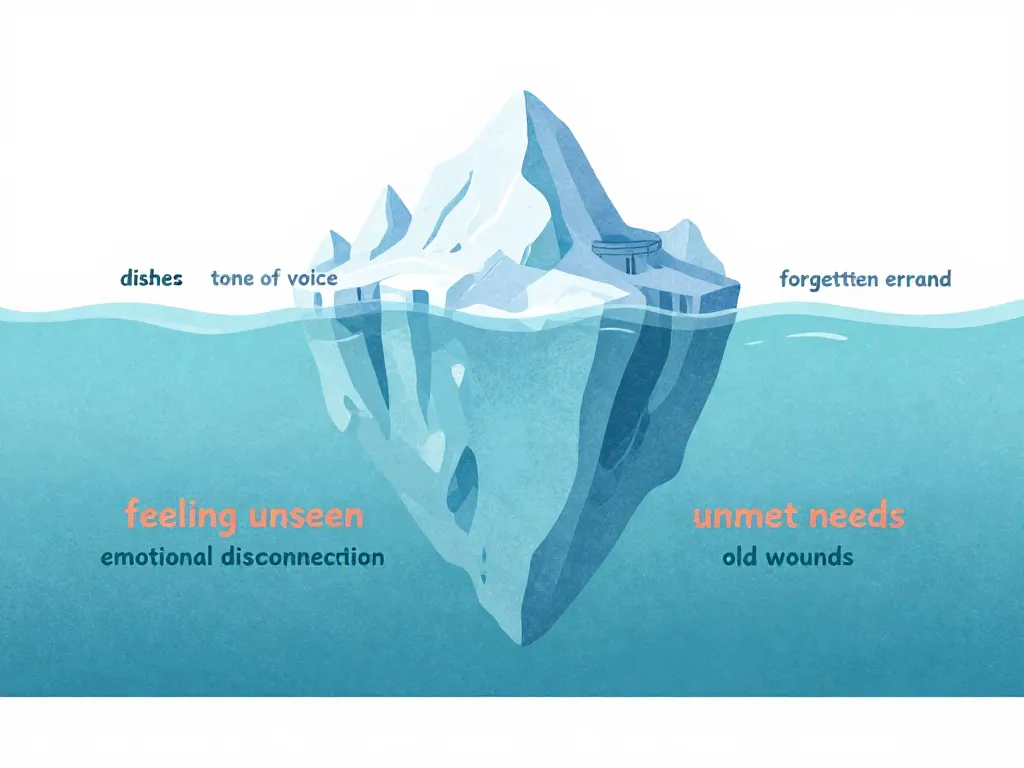
You're not alone. According to relationship researcher Dr. John Gottman, the number one thing couples fight about is literally nothing — vague, hard-to-pin-down conflicts that seem to erupt out of thin air. These aren't fights about money, chores, or in-laws in any meaningful sense. They're fights that use those topics as a stage, while the real drama is happening somewhere deeper, in the unspoken emotional currents running beneath the surface.
This article unpacks why you and your partner fight about nothing, what those fights are actually about, and — most importantly — what you can do to break the pattern starting today.
Key Takeaways
- "Nothing" fights aren't random. They're almost always rooted in deeper unmet emotional needs — feeling unseen, unappreciated, or emotionally disconnected from your partner.
- The trigger is never the real issue. The dishwasher, the text, the tone of voice — these are surface-level sparks. The fuel is underneath.
- Gottman's research shows most couple conflicts are perpetual. About 69% of relationship problems are unsolvable, meaning the goal isn't to "win" but to understand each other.
- You can interrupt the cycle today. Simple shifts — like pausing to ask "What am I actually feeling right now?" — can transform a nothing fight into a moment of genuine connection.
- Written agreements on recurring friction points can prevent the same fight from replaying endlessly.
What Does It Mean to Fight About Nothing?
A "nothing fight" has a few telltale characteristics:
- Neither person can clearly articulate the problem. If someone asked, "What are you arguing about?" both partners would struggle to give a coherent answer.
- The intensity doesn't match the topic. You're having a level-eight emotional reaction to a level-two situation.
- It feels eerily familiar. You've had this exact fight before — maybe dozens of times — with slightly different details each round.
- It ends without resolution. Someone shuts down, someone storms off, or you both just... stop. Nothing gets solved. The tension lingers.
If this sounds familiar, it's because nothing fights are one of the most universal experiences in long-term relationships. They're also one of the most misunderstood.
Why Couples Really Fight About Nothing
The reason these fights feel so confusing is that they operate on two levels simultaneously: the content level (what you're ostensibly arguing about) and the emotional level (what's actually going on). Almost all nothing fights are driven by the emotional level.
Here's what's usually happening underneath.
1. You're Experiencing Emotional Disconnection
Dr. Sue Johnson, the creator of Emotionally Focused Therapy (EFT), describes most relationship conflict as a "protest against disconnection." When you feel emotionally distant from your partner — even if you can't consciously name it — your nervous system treats it as a threat. You become hypervigilant. Small things that you'd normally shrug off suddenly feel intolerable.
The fight about how they forgot to pick up milk isn't about milk. It's about the question your brain is really asking: Are you still there for me? Do I still matter to you?
Example: Priya and James have been busy with work for weeks. They haven't had a real conversation in days. One evening, Priya asks James to help with dinner, and he says, "In a minute" without looking up from his phone. Priya snaps. James gets defensive. Within five minutes, they're in a full-blown argument about "respect" — but neither can explain exactly what happened. The real issue: Priya has been feeling invisible, and James's distracted response confirmed her fear.
2. An Unmet Need Has Gone Unexpressed
Many of us were never taught to identify our emotional needs, let alone voice them. So instead of saying, "I need to feel appreciated," we say, "You never do anything around here." Instead of, "I'm feeling lonely," we pick apart how they spent their Saturday.
Nothing fights are often the pressure release valve for needs that have been building silently for days, weeks, or months.
3. You're Stuck in a Negative Cycle
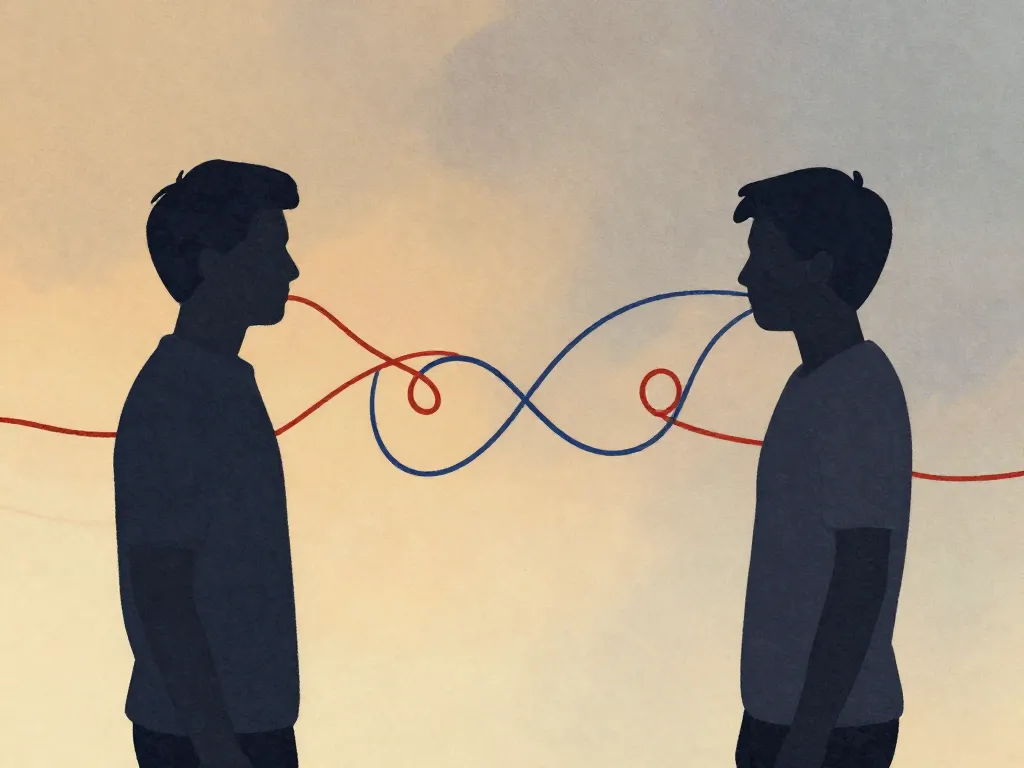
Every couple develops what therapists call an "interactional cycle" — a predictable pattern of action and reaction during conflict. Common ones include:
- Pursue-Withdraw: One partner pushes for connection (often through criticism or complaints), while the other shuts down or pulls away.
- Attack-Attack: Both partners escalate, trying to be heard by getting louder.
- Withdraw-Withdraw: Both partners go silent, and resentment builds under the surface.
These cycles become automatic. A tiny trigger — a certain tone of voice, a forgotten errand — activates the cycle, and suddenly you're deep in a fight that feels like it came from nowhere. It didn't come from nowhere. It came from the pattern.
4. Old Wounds Are Getting Activated
Sometimes the reason a small moment hits so hard is that it touches something much older — a childhood experience of being dismissed, a past relationship where your feelings didn't matter, a family dynamic where love felt conditional.
Your partner leaves their shoes by the door and it shouldn't bother you, but it does, because somewhere in your history, someone else's small carelessness meant something much bigger.
This isn't weakness. It's human. But when we don't recognize it, we end up fighting our partner over things that actually belong to a different time and place.
How to Stop Fighting About Nothing
You can't eliminate conflict from a relationship — nor should you want to. Conflict, handled well, is how two separate people negotiate a shared life. But you can stop the cycle of bewildering, draining nothing fights. Here's how.
Step 1: Pause and Name What You're Actually Feeling
When you notice a fight starting to escalate — or when you feel that familiar surge of irritation over something minor — stop. Before you say anything else, ask yourself:
- What am I actually feeling right now? (Not thinking — feeling. There's a difference.)
- When did this feeling start? (Was it really when they left the cabinet open, or was it earlier today?)
- What do I need right now that I'm not getting?
This isn't easy in the moment, especially if your nervous system is already activated. But even a 90-second pause can interrupt the automatic cycle.
Try this language: "Hold on — I'm having a big reaction and I don't think it's actually about [the surface issue]. Give me a second to figure out what's going on."
This single sentence can change the entire trajectory of a conversation.
Step 2: Look for the Pattern, Not the Problem
Stop trying to solve the content of the argument (who's right about the dishes, the schedule, the text message). Instead, zoom out and look at the pattern.
Ask yourselves:
- Do we keep having this same fight with different details?
- What roles do we each play? (Who pursues? Who withdraws?)
- What usually triggers it? (Stress? Busyness? After time with certain people?)
When you can name the cycle — "We're doing the thing again where I push and you shut down" — you take away much of its power. You shift from being inside the cycle to being observers of it, together.

Step 3: Speak in Needs, Not Complaints
Gottman's research shows that the way a conversation starts determines its outcome 96% of the time. If it starts with criticism or contempt, it almost never recovers.
Instead of leading with what your partner did wrong, lead with what you need:
| Instead of this... | Try this... |
|---|---|
| "You never listen to me." | "I need to feel heard right now. Can you put your phone down?" |
| "Why do I have to do everything?" | "I'm feeling overwhelmed. I need us to figure out how to share this." |
| "You don't care about me." | "I've been feeling disconnected from you and I miss being close." |
This isn't about being "nice" or suppressing your frustration. It's about being accurate. The complaint is a story about your partner. The need is the truth about you.
Step 4: Create Agreements Around Recurring Friction Points
If the same triggers keep appearing — how household labor is divided, how you handle weeknight plans, how much alone time each person needs — it's worth making explicit agreements rather than relying on assumptions.
Sit down during a calm moment (never mid-fight) and discuss:
- What's the recurring issue?
- What does each person need?
- What's a specific arrangement we can both commit to?
Tools like Servanda can help couples formalize these kinds of agreements in writing, making it easier to revisit and adjust them before frustration boils over again.
Step 5: Repair, Repair, Repair
Gottman's research found that what separates thriving couples from struggling ones isn't the absence of conflict — it's the presence of repair attempts. A repair attempt is any effort to de-escalate tension during or after a fight:
- A touch on the arm
- A bit of humor (when the timing is right)
- Saying, "I'm sorry, that came out wrong"
- "Can we start over?"
- Even just a softened facial expression
The key is that both partners need to be willing to receive repair attempts, not just make them. If your partner tries to lighten the mood or reach out mid-argument, let them. That moment of softening is more important than whatever point you were about to make.
What If We Keep Getting Stuck?
Some patterns are deeply entrenched, and that's okay. If you find that:
- The same nothing fights keep happening despite your best efforts
- One or both of you shut down completely during conflict
- Old wounds are consistently driving your reactions
- You feel more like roommates than partners
...it may be time to work with a couples therapist, particularly one trained in Emotionally Focused Therapy (EFT) or the Gottman Method. These approaches are specifically designed to help couples identify and change the deeper patterns beneath surface-level conflicts.
Seeking professional support isn't a sign that your relationship is failing. It's a sign that you care enough to invest in it.
FAQs
Is it normal for couples to fight about nothing?
Absolutely. Gottman's research identified "nothing" as the most common topic of couple conflict. Most long-term partners experience these vague, hard-to-define arguments regularly. The issue isn't that they happen — it's whether you can recognize the deeper needs beneath them and respond to each other with curiosity instead of defensiveness.
How do I stop getting triggered by small things my partner does?
Start by getting curious about your own reactions. When something minor provokes a big emotional response, it's usually connected to a deeper need or an older wound. Journaling, mindfulness, or even just a brief pause to ask yourself "Why is this hitting me so hard?" can help you separate the present moment from the emotional history you're carrying.
What's the difference between a normal argument and a sign of a bigger problem?
Normal arguments involve temporary frustration but leave both partners feeling like they're still on the same team. Warning signs include contempt (mocking, eye-rolling, name-calling), stonewalling (one partner completely shutting down repeatedly), or a persistent feeling that you're not safe to express your emotions. If these patterns are present, professional support can make a significant difference.
How do I bring up deeper feelings without starting another fight?
Timing and framing matter enormously. Choose a calm moment — not during or immediately after a conflict. Use "I" statements focused on your own experience ("I've been feeling disconnected lately") rather than "you" statements that assign blame. Inviting your partner into the conversation ("Can we talk about something I've been noticing?") tends to land much better than ambushing them with a grievance.
Can fighting about nothing actually be good for a relationship?
It can be — if you use it as information. Nothing fights are signals. They're telling you that something underneath needs attention. Couples who learn to decode these signals and talk about the real issues often end up feeling closer and more understood than couples who never fight at all but also never go beneath the surface.
Moving Forward Together
Fighting about nothing is one of the most frustrating experiences in a relationship — precisely because the lack of a clear "problem" makes you feel like there's no clear solution. But now you know: these fights aren't really about nothing. They're about the emotional undercurrents that every couple navigates — the need to feel seen, valued, safe, and connected.
The next time a nothing fight starts brewing, you have a choice. You can follow the old pattern, or you can pause, get curious, and ask the braver question: What's really going on here — for me, and for us?
That question won't make conflict disappear. But it will transform conflict from something that erodes your relationship into something that deepens it. And that shift — from fighting against each other to reaching for each other — is where the real work, and the real reward, begins.